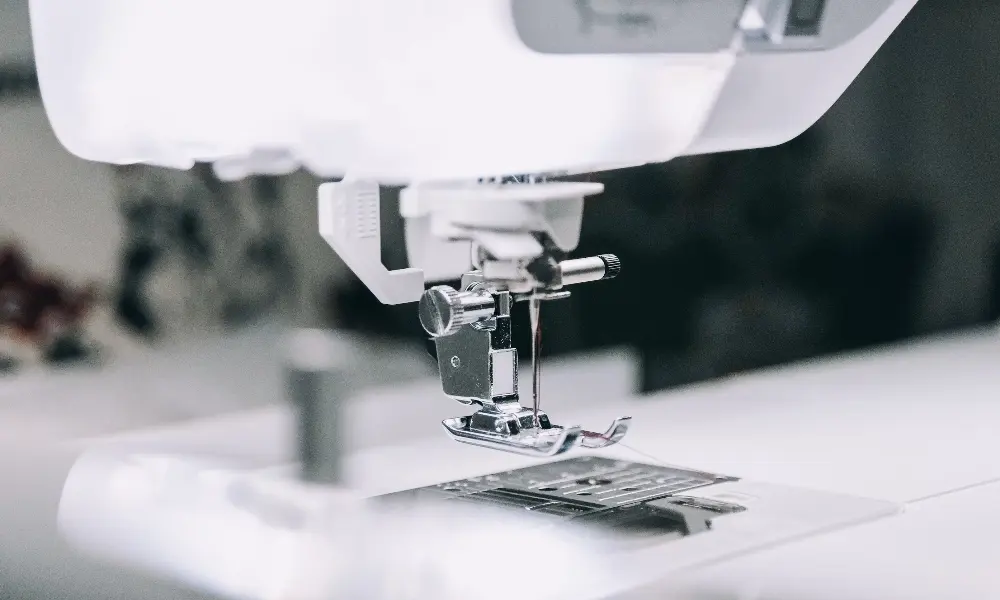
Seam finishing options affect more than edge appearance. They decide how well a garment survives washing, how many extra machines and attachments a line needs, and how much labor each seam consumes. Serging, pinking, binding and overcast finishing solve related problems, but they are not interchangeable. The right choice depends on fabric structure, seam stress, production volume and the quality standard the customer expects. This article explains what each method actually does, where it falls short, and how to match finishing methods to the machines and workflow in a garment factory.
How Serging Controls Raw Edges and Stretch
Serging, the operation many factories call overlocking, trims the raw edge and wraps it with looped thread in one pass. This makes it the standard first choice for production seams on knits, activewear, jersey and stretch wovens because the loop structure extends with the fabric instead of breaking when the seam is pulled. The differential feed also controls how much the fabric is pushed or held back, which reduces wavy edges on lightweight knits and stretched out seams on tight-fitting garments.
The common configurations are 3-thread, 4-thread and 5-thread safety stitches. A 3-thread overlock is lighter and suitable for edges that will receive a separate coverstitch or hem. A 4-thread or mock safety stitch combines edge finishing with a seam. A 5-thread safety stitch adds a chainstitch for stronger structural seams in areas such as crotch gussets or side seams on stretch denim.
Serging is not ideal when the edge must stay flat or when added bulk would show through a fine fabric. It also adds maintenance: the cutting knife, loopers and differential feed must be set together, and a dull knife can produce uneven trimming before the operator notices the defect in the stitch.

When Pinking Works and Where It Falls Short
Pinking cuts a zigzag or scalloped edge that interrupts the straight yarn path and slows fraying. It is a low-cost finish for stable woven fabrics, linings, sample garments and temporary seam allowances. Pinking needs no thread, but it is not a closed edge. It does not prevent yarns from working loose under repeated washing, and it has limited strength on loosely woven or heavily stressed seams.
In a production line, pinking is more likely to appear in cutting or sample room work than as the main finish on a commercial garment. Use it when the seam will be enclosed, lightly worn, or anchored by another construction step. Do not treat pinking as a substitute for serging or binding on an exposed raw edge that will carry load or pass through industrial laundering.
Binding for Clean Enclosed Finishes
Binding encloses the raw edge inside a folded strip of bias tape, self fabric or contrast trim. It creates a clean, durable finish that is visible on the inside of the garment, so it works well for unlined jackets, tailored vests, bags, home textiles and medium to heavy woven garments. The strip is usually cut on the bias or prepared separately, then fed through a folder or binder attachment mounted on a single-needle lockstitch or chainstitch machine.
The operator must maintain consistent strip width, edge guide position, needle placement and folding pressure. If the strip shifts, the binding can miss the raw edge on one side. Binding adds material, labor and some bulk. On thick multi-layer crossings, such as a side seam meeting a hem, the folder may need a different setting or a reduced strip width. Choose binding when appearance and edge security matter more than minimum sewing time.
Overcast Stitches and Their Machine Options
Overcasting wraps the raw edge with thread in a looped or zigzag formation, but it is not always the same operation as serging. Some factories use a dedicated overlock or zigzag machine without the trimming knife when they only need to contain an edge after the main seam is already sewn. This makes overcasting useful for built-in or bagged lining edges, single-ply edge finishing on stable wovens, and placements where the seam allowance must stay intact for later pressing or fitting adjustments.
Compared with full serging, overcasting can produce less cutting waste and a lighter edge, but it does not create a complete seam in the same pass. The finish is only as stable as the thread and stitch length allow, so highly frayable fabrics may still need binding or a denser overedge stitch. The main decision is whether the factory wants edge containment only, or edge trimming and seam construction in one operation.
Choosing the Right Finish for Fabric and Seam Stress
Choose the finish from the combined requirements of the fabric, the seam stress and the production target, not from a general preference.
| Finish option | How it works | Strongest use | Main limitation | Typical machine or tool |
|---|---|---|---|---|
| Serging | Trims and wraps the raw edge in one pass | Knit and stretch garments needing secure seams | Adds bulk on delicate fabrics and needs knife maintenance | Overlock or serger with differential feed |
| Pinking | Cuts zigzag notches to slow fraying | Low-stress linings, stable wovens and temporary handling | Does not enclose the edge and has limited wash durability | Pinking shears or pinking machine |
| Binding | Folds a strip over the raw edge and stitches it down | Tailored wovens, unlined jackets and visible interior seams | Requires more labor and material, and adds bulk at crossings | Lockstitch machine with binder or folder attachment |
| Overcast | Wraps the edge with looped stitches | Stable wovens or added finish after seaming | Not a primary security seam on high-stress knits | Zigzag or overlock machine with overcast setting |
Knits, swimwear and activewear usually need serging because stretch recovery matters more than a perfectly flat edge. Stable wovens and tailored garments can justify binding because the customer sees the inside finish and compares it with the outer construction. Pinking is acceptable only for hidden, low-stress edges where no thread finish is required. Overcasting is a useful bridge when the seam is already sewn and the factory wants to contain the raw edge without removing seam allowance.
Equipment and Workflow Considerations
Seam finishing affects line layout and machine count. If most products are knit, the line may be built around a bank of overlock machines and a smaller number of coverstitch machines. If tailored woven garments dominate, a single-needle lockstitch with binder folders and a cutting room process for bias strips may be more valuable. Pinking requires almost no machine investment but adds a separate handling step unless it is integrated into cutting or sample preparation.
Operators need to be trained on differential feed, knife replacement, folder setup and thread tension. A finish that looks acceptable at first-piece inspection can fail in bulk when thread breaks, folders drift or knives become dull. This is why a practical machine plan includes spare knives, loopers, folders and a clear maintenance schedule. At UNIQUE, for example, we prefer to confirm the attachment set against the actual seam width and fabric swatch before the line is finalized, because a small folder or needle position change can alter the finished edge more than the machine model itself.
A finishing method depends on the surrounding machines, attachments and spare parts plan. <Your One Stop Sewing Equipment Procurement Platform> covers one-stop equipment coordination for garment factories.
Plan Your Seam Finishing Setup With Verified Samples
The fastest way to narrow the choice is to test the finish on the actual fabric and seam condition. Send the fabric composition, seam allowance, required stretch or wash cycles, stitch type and target output range. Include a small fabric swatch if possible, because the same serging or binding setting can behave differently on coated, brushed or loosely woven material.
Taizhou Unique Machine Technology Co., Ltd. can help you match the right machine, attachment, needle and thread combination to your production requirement. Email sales@tzpioneer.com or call +86-18069305333 with your sample details.
FAQ
Is pinking enough for garment factory production?
Pinking is enough only for hidden, low-stress edges on stable woven fabrics. If the edge is exposed, carries load or goes through repeated washing, use serging, binding or overcasting.
Which seam finish is best for knits and activewear?
Serging is usually the best starting point because it trims and wraps the edge while allowing the seam to stretch with the fabric. For visible hems or decorative coverstitch lines, the serged edge is often combined with a separate coverstitch.
Can one overlock machine replace binding and overcast operations?
One overlock machine can handle serging and many overcast requirements, but it cannot fully replace binding when the customer needs an enclosed, visible edge finish. Binding still requires a folder attachment and a lockstitch or chainstitch machine.
Does binding require a special folder attachment?
Yes. Consistent binding depends on a folder or binder attachment that folds the strip around the raw edge before stitching. The folder setting, strip width and needle position must be checked together.
What should I check before choosing a seam finishing setup?
Check the fabric structure, seam stress, required wash or stretching conditions, desired edge appearance, target output and available operator skill. Then test the finish on the actual fabric before committing to the full equipment layout.
If you’re interested, check out these related articles:
Unique Debuts At Gtb Expo Empowering Bangladeshs Garment Industry Upgrade With Customized Automated Solutions
Unique Strength Debut At Jiam 2024