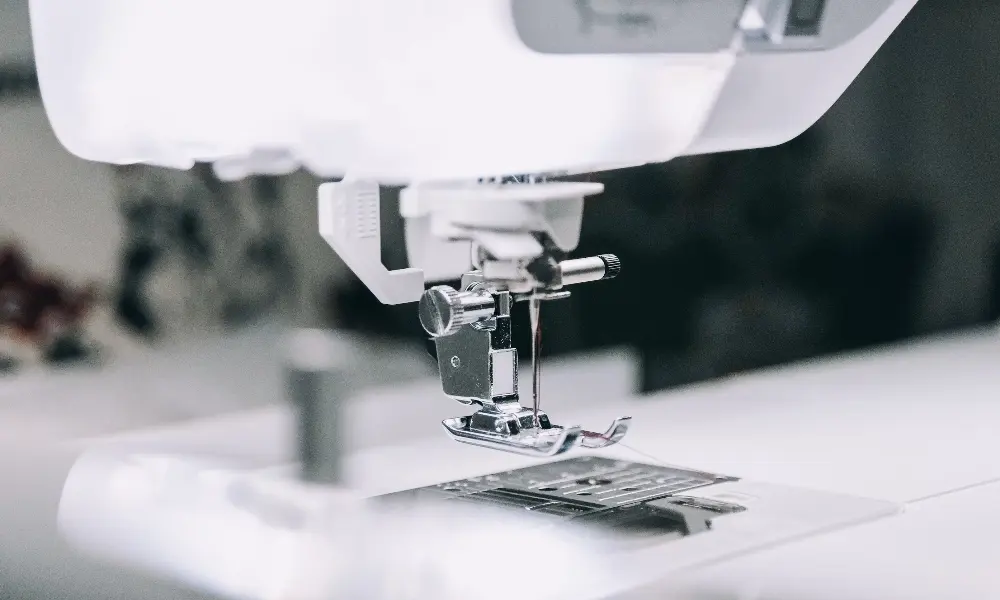
Carpet edges fail where stitching meets traffic. A correctly bound edge is the difference between a rug that keeps its shape for years and one that frays, curls, and becomes a trip hazard within months. Carpet sewing and binding machines combine heavy-material feeding with edge-folding attachments to hold tape, yarn, or binding strip under repeated load.
This guide covers the stitch classes, machine types, feeding systems, and specification points that matter when you equip a carpet, rug, mat, or floor-covering finishing line.
Carpet Binding Stitch Classes and Seam Types
Most carpet edge finishing uses an overedge chainstitch from ISO 4915 class 500, commonly a 503 or 504 stitch formation [1]. The loop structure wraps the raw edge and locks the binding to the backing. ISO 4916 then describes how the tape or ribbon is positioned in relation to the edge and the needle line [2].
For specification work, record both the stitch class and the seam construction. A three-thread overedge can seal a light synthetic edge, while heavier cut-pile or woven carpet usually needs a wider bite, longer stitch setting, and a tape folder rather than a plain serged edge. Skipping this distinction is one of the most common causes of edge failure.
Machine Types for Carpet and Rug Edge Finishing
Buyers should separate equipment into three groups:
| Machine type | Edge treatment | Best fit |
|---|---|---|
| Carpet serger | Thread-only overedge | Light mats and utility rugs |
| Carpet binding machine | Pre-folded tape or ribbon | Area rugs, runners, bordered mats |
| Heavy-duty cylinder or postbed | Tape, cord, or folded hem | Thick backings, curved edges, jumbo bags |
A carpet binding machine needs more than a standard overlock frame. The arm length, foot lift, edge guide, and tape folder must be built for dense backing and wide panels. Many carpet bag sewing machine frames share the same long-arm design and can be reconfigured for different edge materials. For operations that also close heavy sacks or technical bags, the same category overlaps with bag machine à coudres and should be compared on feed capacity and folder range.
Buyers who compare by operation rather than by produit name avoid paying for overlapping capability.
covers how machine classes separate by process, the same logic used for binding equipment.
Feed Systems and Heavy-Material Handling
Carpet backing is dense, layered, and often slippery on the bottom. A standard drop-feed machine will stall, skip, or push the top layer ahead of the backing at thick corners. Better machines use a compound or unison feed system so the needle feed, walking foot, and bottom feed move all layers together.
If binding is applied after latex or foam backing, the feed system must also resist adhesive buildup. Some operations add a puller behind the foot to keep tension even across wide rugs. The main specification point is not top speed; it is whether the feed can hold a consistent stitch when the material stack changes at seams and corners.
Machine Configuration and Operator Safety
Floor-covering work puts repeated load on the needle bar, looper drive, and edge guide. The machine should have an enclosed drive arrangement, a guarded needle area, and clearly positioned stop controls. A risk assessment under ISO 12100 applies to the complete station: pinch points at the folder, belt and pulley covers, table height, and dust extraction if latex-backed carpet creates fine particles [3].
Setup also affects safety. If the table is too low or the edge guide is misaligned, the operator fights the rug and increases the chance of needle contact. The safest carpet binding station is one where the material rotates around the needle without dragging the operator’s hands into the stitch zone.
Needle, Thread, and Tape Specification
Needle selection starts with the backing and pile density. Heavy woven carpet generally needs a larger needle with a cutting or wedge point for clean penetration through latex and jute. Synthetic loop piles often run better with a rounded point to avoid cutting loops. Thread should be high-tenacity bonded polyester or nylon so the edge does not pop when the rug is shaken, rolled, or cleaned.
Tape and binding material also control the result. Cotton tape or folded fabric binding must be cut on-grain so it does not wave as it enters the folder. If the finished rugs are exported, the binding tape and yarn must meet the destination market’s floor-covering flammability requirements, such as 16 CFR 1630 in the United States [4].
Binding Workflow: Setup, Stitch, Inspect
Set the edge guide to the finished binding width, then test on scrap that matches the production backing. Check stitch formation on both sides before starting a batch. At corners, the operator lifts the foot, rotates the rug around the needle, and resumes without pulling the panel sideways.
Inspect the first piece for tape twist, skipped stitches, loose loops, and width variation. Most carpet binding defects are setup defects: incorrect folder angle, mismatched tape width, or feed timing. They are usually not machine power problems.
Mid-Line Specification Check
If you are comparing machines, send the finished carpet width, backing type, edge treatment, and monthly quantity to sales@tzpioneer.com. The first reply should be a specification list, not a price first.
What to Specify When Buying Carpet Binding Equipment
Before requesting a quotation, record the following fields:
- Finished carpet width range
- Backing construction and total thickness
- Edge treatment: serged, bound, or folded hem
- Binding material and width
- Daily or monthly output
- Power voltage and frequency
- Available floor space and table orientation
The quote should state the stitch class, tape width range, folder options, feed system, arm length, motor drive, and whether the machine is rated for continuous carpet work. Missing any of these fields means the supplier is guessing.
Carpet edge finishing rarely stops at one machine; the same line may need trimming tables, inspection, and packaging.
covers how to consolidate multi-machine sourcing while keeping each specification traceable.
Contact UNIQUE for Carpet Sewing and Binding Machine Selection
Taizhou Unique Machine Technology Co., Ltd. supplies heavy-duty special function machine options for carpet, rug, and bag edge finishing. Send your edge treatment, material stack, and required monthly output to sales@tzpioneer.com or call +86-18069305333. A practical quotation should cover the binding attachment, feed configuration, power requirement, and shipping terms before dispatch.
FAQ
What is the difference between carpet serging and carpet binding?
Carpet serging closes the edge with thread only. Carpet binding folds and stitches a tape or ribbon around the edge. Binding is stronger and more decorative, while serging is faster and lower-cost for utility rugs.
Can one machine handle both tape binding and thread serging?
Some machines can switch between a serger head and a tape-binding folder, but the changeover must be simple. If you run both processes daily, it is often more practical to dedicate one machine to each task.
Which stitch class is used for carpet edge binding?
Carpet edge finishing normally uses an overedge chainstitch from ISO 4915 class 500, commonly a 503 or 504 formation. The exact setting depends on thread count, edge thickness, and backing density.
What should I prepare before requesting a carpet binding machine quote?
Prepare the carpet width range, backing construction, edge treatment, binding material, monthly output, and voltage requirement. A good supplier uses those points to recommend the frame size, feed system, and folder configuration.
Références
[1] ISO 4915:1991, Textiles — Stitch types — Classification and terminology. International Organization for Standardization.
[2] ISO 4916:1991, Textiles — Seam types — Classification and terminology. International Organization for Standardization.
[3] ISO 12100:2010, Safety of machinery — General principles for design — Risk assessment and risk reduction. International Organization for Standardization.
[4] 16 CFR 1630, Standard for the Surface Flammability of Carpets and Rugs (FF 1-70). U.S. Consumer Product Safety Commission.
Si vous êtes intéressé, consultez ces articles connexes :
Unique Debuts At Gtb Expo Empowering Bangladeshs Garment Industry Upgrade With Customized Automated Solutions
Unique Strength Debut At Jiam 2024
Unique Shines At Itcpe Vietnam Texprint 2025 Attracting Crowds And Media Spotlight