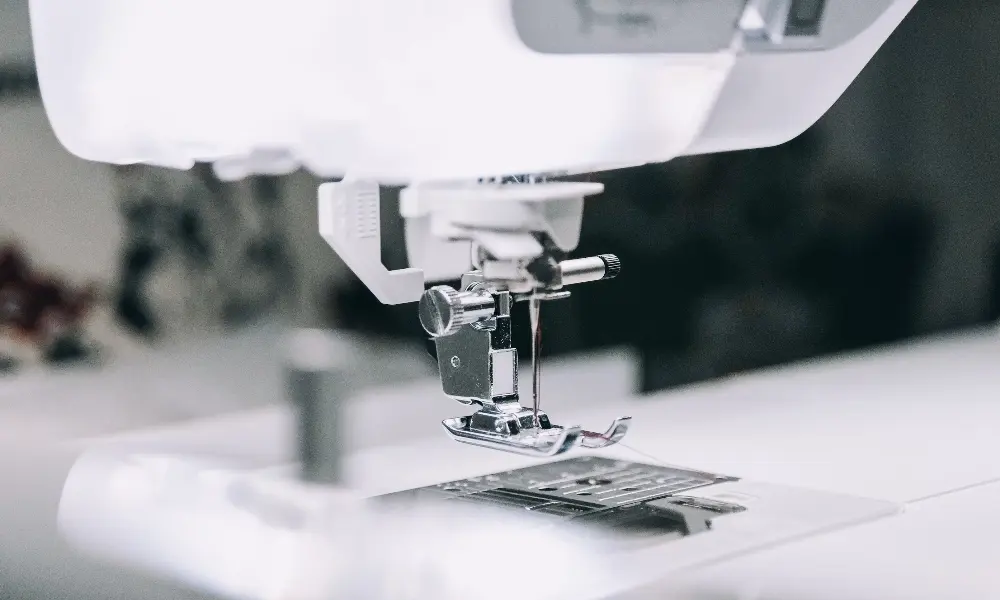
Scarf, tie and accessory manufacturing equipment is often underestimated because the individual parts look simple, while the real specification work sits in edge finishing, thin-fabric feed, and repeat positioning. A silk scarf line and a knitted accessory line may share a cutting table, but they need different folders, presser feet, and pressing recovery than a standard shirt line. I would not start with a long machine catalog. I would first lock the fabric range and the two or three trims that repeat across orders, then select machines that handle those conditions without operator-by-operator adjustment.
Which Machines Do Scarf, Tie and Accessory Manufacturing Operations Actually Need?
I group the work into four stations: cut, sew, finish, and decorate. A scarf line needs a straight knife or band knife with low-ply lay height for slippery fabrics. Tie production adds precise bias cutting and point turning, which is why a postbed lockstitch and a pattern tacker do more useful work than a generic flatbed at full speed. Accessory lines for belts, bows, hair wraps, or small bags then pull in folders and single-purpose attachments that keep trim placement repeatable.
Why does cutting setup come first?
Cutting problems follow the product through every later station. If scarf squares are cut off grain, the rolled hem spirals. If tie points are not cut cleanly on the bias, the point will not turn without a visible lump. I would rather put budget into a stable cutting table and good knife tracking than into later stitch speed.
What symaskins cover the broadest range?
For most scarf, tie and accessory work, the practical core is one single-needle lockstitch for straight seams, one overlock with a rolled hem attachment for edges, and one postbed or cylinder bed machine for shaped small parts. A multi-needle chainstitch machine enters when parallel rows or narrow bands are part of the product range.
| Operation | Machine class | What to specify first |
|---|---|---|
| Scarf edge finishing | Overlock with rolled hem attachment | Thread count, differential feed, rolled hem plate |
| Tie point and tip work | Postbed lockstitch or pattern tacker | Needle system, presser foot, point guide |
| Bias and panel cutting | Straight knife or band knife | Low-ply height, blade tracking, table vacuum |
| Narrow straps and binds | Cylinder bed with binder attachment | Bed diameter, folder width, needle position |
| Label and small part attachment | Automatic lockstitch label or pattern machine | Fixture size, stitch count, clamp sequence |
| Steam pressing and shaping | Steam boiler, iron, vacuum table | Boiler capacity, iron weight, vacuum recovery |
The table is a starting shortlist, not a final bill of materials. Before models are chosen, I ask for maximum fabric width, the thinnest material, and whether the edge is rolled, folded, or fused. Those three answers change the machine recommendation more than the product name does.
Scarf and tie work sits at the boundary between cutting accuracy and stitch formation. <Key Differences Between Sewing Embroidery Cutting Machines> covers why separating cutting, sewing, and embroidery decisions prevents a factory from buying a machine that looks versatile but performs worse than two focused units.
How Does Fabric Choice Change Scarf, Tie and Accessory Manufacturing Equipment?
Silk, polyester satin, wool challis, viscose, and knitted blends move differently through the same machine. Light woven fabrics slip under a standard feed dog and produce puckered hems. That is why scarf work often uses a fine feed dog, a walking foot, or a compound feed instead of a basic drop feed. Tie fabrics like printed twill or jacquard need a clean point turn, so the walking foot and needle plate choice is more important than maximum speed. Viscose and silk also react to needle heat, so a ball point or sharp point selection changes with the yarn structure rather than the fabric name.
Which fabric specifications must be locked before ordering?
Before quoting, I need the fiber, weave, fabric weight per square meter, and the finished edge width. For coated or laminated materials, I also need the coating type and stiffness. These details determine feed dog height, presser foot pressure, needle system, and whether the edge should be sewn, fused, or heat sealed. A quotation without these details looks lower risk than it is.
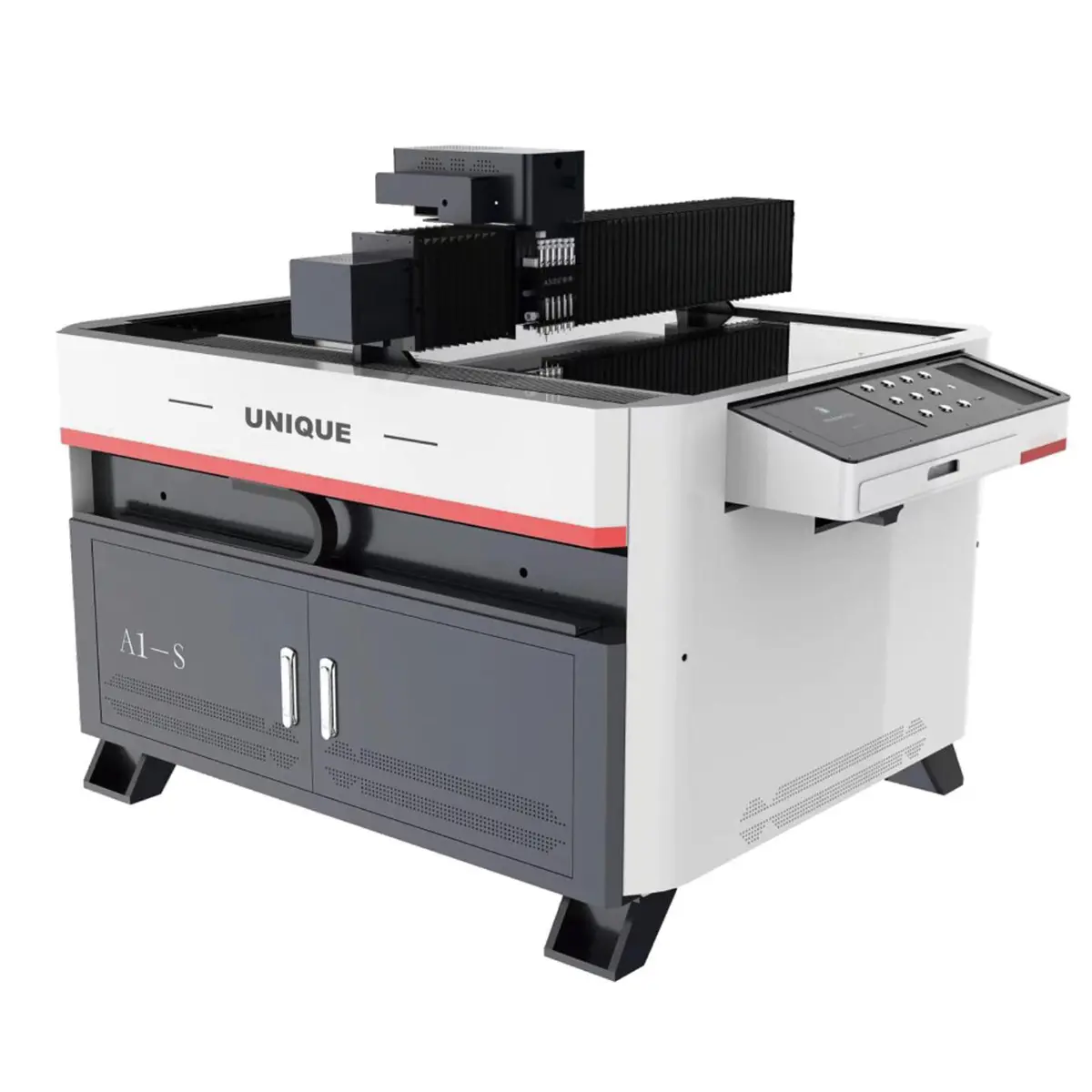
For interlining and shape, a light fusing or heat transfer step may sit between cutting and sewing.
<img src="https://uniquemachine.cn/wp-content/uploads/2026/09/A1-S_20260904_085437.webp" alt="A1-S" style="max-width: 600px; height: auto; display: block; margin: 20px auto;" />
A small fusing machine with adjustable temperature and pressure avoids overcooked silk while still bonding tie interlining. If the line includes technical coated fabrics or metallic yarns, the needle and feed choice has to be locked before motor speed is set.
I have seen factories buy high-speed flatbed lockstitch machines for tie points and then slow them down because the operator cannot turn the small part cleanly. The machine is not the bottleneck; the workholding and the edge guide are. Spending less on maximum speed and more on a folder set and a postbed usually improves repeatability at a lower actual cost per piece.
Which Accessory Attachments and Finishing Stations Are Worth Automating?
Small accessories create more handling cost than sewing cost. A belt loop, bow center, scarf label, or tie keeper is not hard to stitch once positioned. Positioning is the problem. That is where folders, binders, edge guides, automatic bartack units, and label machines pay back faster than a higher-speed general machine.
Which attachments justify automation first?
Start with the attachment that repeats across the most styles, not the most complex one. A binder for narrow straps, a folder for label placement, or a point guide for tie ends usually delivers the clearest payback because it removes operator judgment from a small part that is already hard to hold. A template machine or pattern tacker then locks the shape so the operator is loading fabric instead of deciding stitch placement.
A multi-needle chainstitch machine with a folder set can run parallel trim rows in one pass, but only if the folder spacing matches the finished trim width. For decoration, a heat transfer press or a small embroidery unit may be part of the same purchase. The decision comes down to whether orders are short-run custom or long-run repeat.
Steam finishing for scarves and tie pressing often needs a boiler with enough recovery, not just a hot iron.
<img src="https://uniquemachine.cn/wp-content/uploads/2026/09/6-9-12KW-popular_20260904_085433.webp" alt="6-9-12KW-popular" style="max-width: 600px; height: auto; display: block; margin: 20px auto;" />
When short pressing cycles repeat all shift, boiler capacity and vacuum table recovery determine output more than iron temperature.
If your product mix includes coated fabrics, narrow elastic, metallic yarns, or fused interlinings, confirm needle system, feed type, and folder spacing with the machine builder before ordering. Send your material swatch list and target stitch length to sales@tzpioneer.com or call +86-18069305333, and we can match those requirements to a short equipment list.
How Do You Compare Suppliers for Scarf, Tie and Accessory Manufacturing Equipment?
For a mixed scarf, tie, and accessory program, supplier comparison should start with machine configuration, not unit price. I prefer suppliers who ask for the actual fabric and trim details, not just the product category, because the same lockstitch model can ship with the wrong feed and folder set and still look correct on a quotation.
A useful comparison asks four questions: which feed system and needle plate come standard; what folder set is included; whether the supplier stocks the relevant spare parts; and whether the supplier can source the line as one program. If the answer to any question is handled by a separate division, the real lead time may be longer than the quotation suggests.
Most scarf and tie buyers do not need the fastest machine in the catalog. They need consistent edge finish and point accuracy across small runs. I would rank feed configuration and included folders above a speed difference of 500 stitches per minute for this product class.
A mixed accessory line usually spans several machine categories, which is where single-category sourcing falls short. <Your One Stop Sewing Equipment Procurement Platform> covers how a full-range sourcing model reduces version mismatch when a factory buys cutters, stitch machines, and pressing stations in the same program.
When pressing capacity is part of the order, the boiler type changes electricity demand.
<img src="https://uniquemachine.cn/wp-content/uploads/2026/09/6-9-12KW-energy-saving_20260904_085431.webp" alt="6-9-12KW-energy-saving" style="max-width: 600px; height: auto; display: block; margin: 20px auto;" />
A small line may run one 6 to 12 kW boiler with an iron and vacuum table; larger scarf finishing rooms may need separate steam lines and a vacuum table per pressing station.
The starting point is a short equipment list tied to your fabric range and highest-repeat trim operations. Send the product dimensions, fabric types, and target daily output to sales@tzpioneer.com or call +86-18069305333. We can prepare a line list and check which attachments should be specified from the first order so you do not pay for machines that cannot run the actual trim.
What Should Buyers Check Before Ordering Scarf, Tie and Accessory Manufacturing Equipment?
Do I need different machines for scarves and ties?
No, but you need different attachments and possibly a different bed type. Scarves rely more on rolled hems, long straight seams, and consistent edge feeding. Ties add small parts, bias turns, point pressing, and interlining. A shared lockstitch or overlock machine can cover both only if you stock the right folders, feed plates, and work guides. Accessory items such as bows, belts, or keepers add another layer of small-part fixtures rather than a completely separate machine park.
Why do tie points require a postbed machine instead of a flatbed?
A flatbed lockstitch is not automatically the wrong machine for tie points, but it is often the wrong setup. The operator has to turn a small seam allowance precisely at the point. A postbed or cylinder bed wraps the fabric around the bed and improves visibility at the point. A pattern tacker can lock the shape with a guide or fixture. If you already own flatbeds, adding point folders and a precise edge guide matters more than replacing the machine.
What is the first specification to check for silk and slippery fabrics?
It depends on whether the fabric is woven or knit. For tightly woven silk or polyester satin, the first specification is the feed system and needle plate, because a coarse feed dog can mark or pucker the surface. For lightweight knits, a fine feed and the correct ball point or stretch needle setup matter first. The second check is the presser foot pressure range; if it cannot go low enough, the fabric will shift or stretch.
How many machines are enough to start a small scarf line?
In small accessory lines we have worked on, the practical starting set is usually a straight knife cutter, one single-needle lockstitch, one overlock with a rolled hem attachment, one postbed or cylinder bed machine, and one steam boiler with an iron table. That covers cutting, seaming, edge finishing, point work, and pressing. You can add embroidery, heat transfer, fusing, or a template machine after the repeat styles are clear. This setup is less expensive than ordering a full high-speed line and then underusing half the stations. Share your planned fabric range and product list at sales@tzpioneer.com, and we can check which attachments should be included from the start.
If you’re interested, check out these related articles:
Joining Hands For Progress Empowering The Future Dubais Technical Team Completes Technical Exchange And Training At Nicerbt
Race Against Time Travel To 8 European Countries In 20 Days