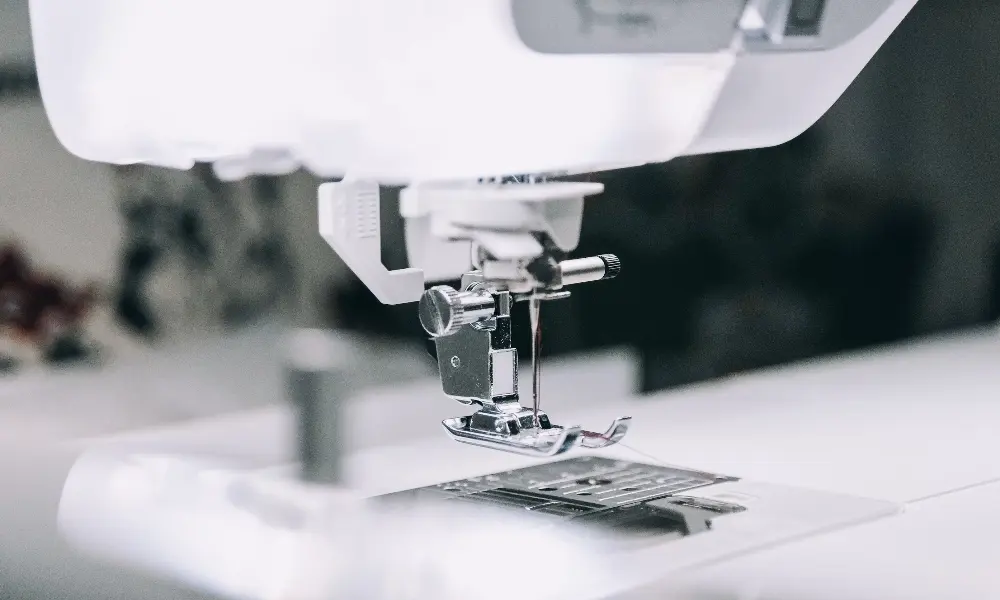
Waterproof garments rarely fail in the middle of a panel. They fail where the needle punctures a coated fabric, where the thread turns into a wicking channel, or where the seam tape lifts after flexing and washing. If you treat those three paths as one connected system, needle, thread and tape selection becomes a controllable engineering decision instead of a trial-and-error exercise.
Needle, Thread and Tape: The Real Waterproof Barrier
Before specifying equipment, define the target. Hydrostatic head testing measures how much water pressure a fabric can resist before penetration; test methods are described in ISO 811 [1] and AATCC 127 [2]. A light rain jacket may only need a 1,500 mm rating, while a performance shell may be specified at 10,000 mm or higher. EN 343 sets rain-protection classes for finished garments, including seam performance [3]. The important point is that the fabric rating and the finished seam rating are separate. A 10,000 mm fabric with unsealed needle holes will still leak.
For production planning, waterproof sewing falls into three performance groups: water-repellent, water-resistant, and waterproof with taped or welded seams. A DWR-treated woven may only need careful needle selection. A PU-coated polyester used in rainwear needs sealed seams. A three-layer laminate or heavy PVC tarpaulin may move toward hot-air taping or welding instead of conventional sewing.
Needle Selection for Coated and Laminated Fabrics
The needle is the first leak risk. A standard sharp-point needle can tear a membrane, while a ball-point needle may struggle through dense coatings.
| Fabric or barrier | Recommended point | Typical needle size | Why |
|---|---|---|---|
| Polyurethane-coated polyester or nylon | Light ball point or microtex | 70/10–80/12 | Reduces coating puncture and cracking |
| Three-layer membrane laminate | Microtex or sharp | 70/10–80/12 | Clean entry through thin face fabric |
| PVC-coated fabric or tarpaulin | Sharp or cutting point | 90/14–110/18 | Penetrates dense coating without pushing |
| Coated knit or stretch shell | Ball point | 75/11–90/14 | Slides between yarn loops rather than cutting them |
| DWR-treated woven | Universal or microtex | 70/10–90/14 | Preserves finish and reduces needle heat |
In practice, I would rather use a smaller needle and replace it more often than a larger needle that creates permanent leak paths. Coated fabrics dull needles faster than untreated textiles. If the machine starts producing a popping sound at penetration, or if the fabric shows visible stretch marks around the stitch line, the needle has usually blunted. For membrane garments, short runs and frequent needle changes are cheaper than re-taping a failed seam.
For coated and laminated materials, keep stitch length moderate. Very short stitches multiply needle holes, and very long stitches reduce seam stability under load. The stitch should be long enough to avoid a perforation line, but short enough to hold the seam during flexing. That balance depends more on the tape and seam style than on ordinary woven garment settings.
Thread Selection: Strength, Stretch and Wicking
Waterproof garments need thread that resists moisture transfer, maintains seam strength, and does not abrade the coating. Cotton thread is not suitable because it absorbs water and swells. Nylon thread is strong but can wick moisture along its fibers. For most coated outerwear, bonded continuous-filament polyester is the practical default. It has low wicking, good UV resistance, and predictable elongation.
For high-stress waterproof seams, such as load-bearing luggage seams, tarpaulin covers, or inflatable products, a PTFE or expanded PTFE thread may be specified. These threads resist moisture and chemical exposure, but they are harder to adjust and require careful tension control. Bonded polyester of Tex 35–70 covers much of the industrial range for waterproof outerwear and light technical textiles.
Match thread size to needle size. A heavy thread in a small needle eye will shred, and a thin thread in a large needle hole will not fill the puncture channel. That unfilled channel is exactly where water enters. Thread tension should be balanced without excessive top tension. High tension pulls the seam tight and can mark the coating; low tension leaves loops on the underside that interfere with tape adhesion.
Seam Tapes and Sealing Methods
Seam tape closes the two remaining leak paths: the needle holes and the seam gap. Tape selection depends on the face and back chemistry of the fabric.
- PU tape suits polyurethane-coated fabrics and is common for rainwear.
- PVC tape works with PVC coatings, tarpaulins, and industrial covers.
- TPU tape provides softer hand feel and better recovery on stretch garments.
- Two-layer or three-layer ePTFE tapes are used on high-end membrane shells where breathability must be maintained.
Tape is usually applied with a hot-air seam sealing machine. The tape is laid over the seam, heated, and pressed with a roller. A successful tape job requires a clean seam surface, controlled roller pressure, and the correct temperature for the tape chemistry. Too little heat leaves a weak bond; too much heat can melt the coating or shrink the tape edge.
Hot-air taping is not a generic fix. A heavily puckered seam will not tape cleanly because the tape cannot follow the surface. A thick four-layer crossing seam may need a seam tape with more adhesive fill or a different seam construction. For some PVC and heavy-coated fabrics, high-frequency welding or hot-wedge welding replaces sewing entirely and removes the needle-hole problem at the source.
Machine Setup and Defect Prevention
Waterproof fabrics feed differently from woven shirting or knit jersey. Coatings drag, laminated faces slip, and thick PVC panels resist forming. The machine setup should be selected around those behaviors, not around the operator’s normal lockstitch settings.
- Use a compound-feed lockstitch machine or walking-foot motion for multi-layer coated seams. The top and bottom feed must move the layers together.
- A roller foot, Teflon foot, or dual toe helps coated fabric move without scratching the surface.
- A needle-feed or unison-feed system reduces ply shift on slippery laminates.
- Differential feed on an overlock machine controls stretching on knit shells and coated stretch fabrics.
- A special function machine may be needed for rounded seams, 3D assembly, or high-stress attachment points.
Common defects in waterproof sewing are skipped stitches, coating damage, puckering, tape delamination, and leaking needle holes. Skipped stitches usually come from a blunt needle, incorrect needle point, or poor hook timing. Coating damage on the surface is often caused by a presser foot that is too hard or too heavily loaded. Puckering appears when feed ratios are unequal or thread tension is too high. Tape delamination frequently comes from oil, silicone overspray, or humidity on the seam surface before taping.
One educational example from a rainwear line illustrates the issue well: a factory using a standard feed lockstitch machine for a PU-coated trouser seam saw localized puckering at the crotch curve. Replacing the setup with a compound-feed lockstitch machine and a roller foot removed most of the ply shift without changing the operator. The tape then adhered evenly because the seam surface stayed flat.
If you are specifying a waterproof line, send the fabric type, coating chemistry, and target hydrostatic head to sales@tzpioneer.com or call +86-18069305333 with a swatch reference. That detail matters more than the garment style when recommending needle systems, feed type, and tape compatibility.
Testing and Acceptance Criteria
The seam must be tested as a system, not as fabric alone. After taping, the finished seam should be checked for hand feel, tape edge adhesion, and hydrostatic performance. A fabric-level test alone will not catch needle-hole leakage.
Seam tensile strength can be evaluated according to ISO 13935-1 using the strip method [4]. For woven coated fabrics, seam slippage under fixed load can be tested with ISO 13936-2 [5]. These tests are useful where waterproof panels carry tension, such as tensioned covers, protective shelters, or load-bearing bag seams.
In a factory acceptance plan, define three levels: fabric hydrostatic head, untaped seam reference, and taped seam result. If the taped seam falls far below the fabric rating, the issue is usually tape adhesion or stitch penetration. If the seam passes but the field fails, the fabric coating or lamination is the problem.
Procurement Notes for Waterproof Seam Lines
Waterproof production is not only about buying a better tape machine. The line must combine the right feed system, consumables, and sealing equipment. Using a high-spec tape sealer with the wrong thread tension or a damaged needle point will still produce leaks.
A waterproof-seam line usually combines a compound-feed lockstitch machine, a differential-feed overlock machine and a hot-air tape sealer. <Your One Stop Sewing Equipment Procurement Platform> covers how to specify and coordinate those machines, consumables and after-sales points under one supplier.
For a quotation, be prepared to share the coating or membrane type, nominal fabric weight, seam styles, waterproof rating, and monthly output. That information is more practical than a generic machine name. If the product range includes rainwear, protective garments, tents, bags, or technical outdoor equipment, the seam-sealing requirement should be integrated into the machine list from the start.
For direct discussion, contact the UNIQUE export team at sales@tzpioneer.com or +86-18069305333 before locking the line configuration.
Frequently Asked Questions
Can a normal lockstitch machine sew waterproof fabric?
It can, but the result depends on the fabric and finish. For light DWR-treated fabrics, a standard lockstitch machine with a sharp needle may be acceptable. For coated or laminated waterproof materials, a compound-feed or walking-foot setup reduces ply shift and seam damage. The machine itself is less important than the feed system, presser foot, and needle setup.
What is the best thread for waterproof seams?
Bonded continuous-filament polyester is the most practical default for industrial waterproof garments. It offers good strength, low wicking, and easier tension control. PTFE thread may be used for chemical exposure or demanding outdoor products, but it requires more careful setup.
Do all waterproof seams need seam tape?
No. Water-repellent garments and some lightly water-resistant products can rely on careful needle and thread selection. However, seams that must pass hydrostatic head requirements or protect against sustained rain usually need taping, welding, or another sealing method.
Why does my seam tape lift after washing?
The most common causes are poor adhesion pressure, incorrect temperature, a contaminated seam surface, or a tape chemistry that does not match the fabric coating. Silicone overspray, oil, and moisture on the seam before taping are frequent factory-level problems.
How can I reduce needle-hole leakage?
Use the smallest needle point that produces reliable stitch formation, replace needles more often on coated materials, control stitch length, and fill the needle channel with an appropriate thread size. Needle-hole leakage is usually a system issue, not a single wrong setting.
Should I sew and tape in one pass?
No. In most production lines, sewing comes first, followed by inspection and seam taping in a separate work center. This allows the operator to check for skipped stitches, thread loops, and seam distortion before the tape is applied.
References
[1] ISO 811:2018, Textiles — Determination of resistance to water penetration — Hydrostatic pressure test, International Organization for Standardization.
[2] AATCC 127, Water Resistance: Hydrostatic Pressure Test, American Association of Textile Chemists and Colorists.
[3] EN 343:2019, Protective clothing — Protection against rain, European Committee for Standardization.
[4] ISO 13935-1:2014, Textiles — Seam tensile properties of fabrics and made-up textile articles — Part 1: Determination of maximum force to seam rupture using the strip method, International Organization for Standardization.
[5] ISO 13936-2:2004, Textiles — Determination of slippage resistance of yarns at a seam in woven fabrics — Part 2: Fixed load method, International Organization for Standardization.
If you’re interested, check out these related articles:
Unique Shines At Itcpe Vietnam Texprint 2025 Attracting Crowds And Media Spotlight
Unique And Ekinci Makina Reaffirm Partnership For Iraq Market
Key Differences Between Sewing Embroidery Cutting Machines
Unveiling Ceremony Of Milin Group Taizhou Center