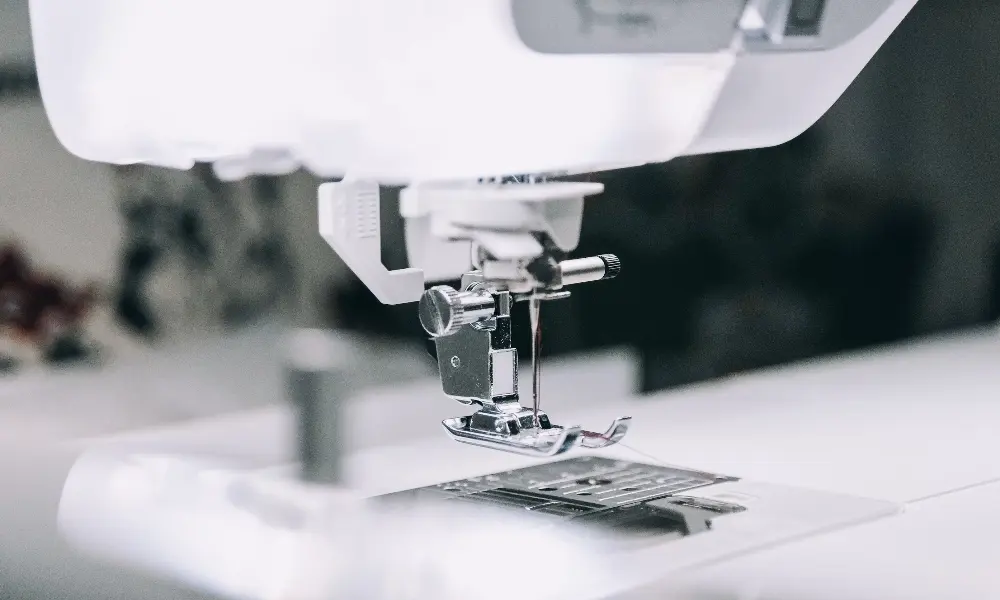
In garment and sewn-product manufacturing, standard lockstitch, overlock, and chainstitch machines handle most long, repetitive seams. Non-standard stitching is what remains: circular work on cuffs and collars, dense reinforcement points, close-radius 3D assembly, decorative patterns, thick multi-layer crossings, and materials that feed unpredictably. A машина специального назначения is not a luxury. In many factories it is the difference between a stable process and an operator forcing a general-purpose machine beyond its design envelope.
What Makes a Stitching Task “Non-Standard”?
A task becomes non-standard when one or more продуктion requirements move outside the comfort zone of a conventional flatbed lockstitch or overlock machine. The most common signals are short stitch paths, frequent direction changes, bulky material stacks, cylindrical or three-dimensional workpieces, and tight decorative or positioning tolerances.
ISO 4915 classifies stitch types and ISO 4916 classifies seam types [1][2]. Those standards remain the common language for specifying what a seam must do. The trouble is that the standard does not tell you which machine can make the seam productively. For example, a 301 lockstitch can be produced on many machines, but stitching a tapered patch pocket with consistent margin requires a template, programmable feed, or a dedicated pocket setter. The same stitch type demands different machine engineering when the workpiece changes shape.
Within a full-line portfolio, the машина специального назначения category fills the gap that standard machines cannot cover. These machines are usually built around one operation, but that focus gives them better repeatability, faster cycle time, and less operator decision-making.
Matching Machine Types to Non-Standard Operations
The most productive way to evaluate special machines is to start from the operation, not from the machine catalog. The table below organizes common non-standard tasks by machine type and specification priority.
| Non-standard task | Machine type to evaluate | Key specification points |
|---|---|---|
| Circular seaming on cuffs, necklines, sleeves | cylinder bed lockstitch sewing machine | Bed circumference, feed type, needle count, foot lift |
| Caps, bags, shoes, and 3D curved assembly | postbed lockstitch sewing machine | Post height, compound or drop feed, gauge, work clearance |
| Emblems, labels, logos, multi-directional decorative stitching | pattern sewing machine | X-Y working area, memory capacity, cлампа design, stitch regulation |
| High-stress pocket corners, belt loops, straps | special bar tacking machine | Stitch count, clamp size, throat clearance, thread weight |
| Automatic welt or jet pockets | automatic pocket welting machine | Pocket length, folding accuracy, stacker, interface |
| Shaped patch pockets and plackets | automatic pocket setter machine | Template size, hemming function, edge guide |
| Bag panels and large workpieces | сумка швейная машинаs | Arm length, puller, edge guide, needle system |
| Nonwoven, lingerie, and technical seamless bonding | ultrasonic seamless machine | Welding width, power, rotary system, material compatibility |
A postbed machine is often the first choice for curved 3D assembly on caps, bags, and footwear. <Ключевые различия между швейными машинами для вышивания и резки> covers how machine classes separate by stitching, cutting, and embroidery roles.
Specification Factors That Decide Performance
Once the machine type is identified, the real purchasing work begins. Four factors decide whether a special function machine will perform well in your plant: stitch formation, feed control, work holding, and integration.
Stitch formation. Needle system, hook type, stitch class, and thread path affect seam quality and skip resistance. For thick or sticky materials, a compound feed or unison feed is generally more stable than simple drop feed. The machine should also be matched to the correct thread and needle size for the material stack, not only for the seam appearance.
Feed control. Many non-standard operations fail because the material cannot be guided accurately. Differential feed, walking foot, puller, and programmable feed systems all exist to solve different movement problems. Specify whether the machine must handle ply changes, slippery coatings, or dense interlocks.
Work holding. Clamps, templates, folders, and stackers determine how much the operator must control by hand. The more the work holding is designed for the part, the less skill is required for consistent output. Pneumatic clamps and programmable stitch patterns reduce variation when the operator changes between shifts.
Integration and safety. Special machines should integrate with air supply, power voltage, table height, and the existing line rhythm. Industrial sewing equipment must also meet applicable safety requirements for guards, stops, and access points [3]. Where CE or local machinery-safety assessment is required, the supplier should provide documentation for risk assessment and safeguarding [4].
Automation, Template Work Cells and Labor Planning
Special function machines are often the first automation step in a sewing line because they remove the most variable manual actions. A template machine or pattern sewing machine fixes the material in a clamp and follows a programmed stitch path. That changes the operator’s job from guiding a difficult seam to loading and unloading a fixture.
The main benefit is process repeatability. When a non-standard seam is programmed, it will run the same path, stitch count, and speed on the first piece and the two-hundredth piece. That is especially valuable for decorative stitching, pocket setting, logo application, and small reinforcement cycles where the handling time can exceed the sewing time.
The second benefit is faster operator training. A machine with a clear clamp location and one or two activation controls usually requires less seat time than a manual machine that depends on hand position, feed direction, and pedal control. This matters in plants with high labor turnover or mixed product lines.
The third benefit is quality control. Many modern special machines include thread trimming, needle positioning, alarm functions, and piece counters. These functions reduce rework and make output easier to audit.
Need help matching a special function machine to your specific component? Send your seam sample, material stack, and current or target output to sales@tzpioneer.com, and ask for a machine recommendation with cycle-time and power requirements. For direct inquiry, include your factory voltage, air pressure, and preferred control type.
Selecting and Validating a Special Function Machine
Selection should follow a simple engineering sequence: define the seam, test the material, specify the work holding, and then compare machine proposals. Skipping any step often leads to buying speed that the process cannot use or automation that does not fit the part.
Start with a physical or digital sample. The machine builder or supplier should be able to test on the actual material stack. If possible, ask for a video of the test, stitch quality close-ups, cycle time, and air or power consumption. That evidence is more reliable than a catalog claim.
Then define the acceptance criteria. These should include seam appearance, stitch density, margin consistency, ply slippage, thread breakage, and output per hour. If the operation is part of a quality audit, check the stitch and seam classification against ISO 4915 and ISO 4916 [1][2]. The performance test should reuse the same criteria during pre-shipment inspection and after installation.
When the plant is moving from manual guiding to template or automated stitching, the payback calculation should include more than direct labor. It should include removal of high-skill bottlenecks, lower defect rates, faster line balancing, and the ability to take repeat orders with stable quality.
When a plant moves from manual guiding to template-based sewing, the payback calculation changes quickly. <Ваша универсальная платформа для закупок швейного оборудования> covers how full-range sourcing supports phased automation.
Plan Your Non-Standard Stitching Line With Confidence
Taizhou Unique Machine Technology Co., Ltd. supplies special function machines within a wider one-stop sewing equipment program. Our team can review your seam sample, recommend the correct machine class, and support you with technical specifications, installation guidance, and after-sales service.
To start the conversation, send your product photos, fabric stack, current seam problem, and target output to sales@tzpioneer.com or call +86-18069305333. We will help you move from a difficult manual operation to a repeatable, documentable production process.
Frequently Asked Questions
Which special function machine should I buy first?
Buy the machine that removes your most repeatable bottleneck. If the worst quality issue is a pocket, start with a pocket-related machine. If the bottleneck is decorative stitching, evaluate a pattern sewing machine. If the pain point is bulky 3D assembly, test a postbed or cylinder bed solution before other upgrades.
Can one special machine replace several general-purpose machines?
Sometimes, but not automatically. A programmable pattern sewing machine can combine stitching steps and reduce handling. A multi-needle machine can produce parallel rows in one pass. However, the machine must still fit the part size, material stack, and line speed. Replacement value comes from matching the operation, not just from having more functions.
What should I prepare before requesting a quotation?
Prepare a physical sample or clear drawing, the material stack, the required stitch type and seam classification, the target daily output, your factory voltage and air pressure, and the expected operator skill level. If you have a current machine model, include that too. This helps the supplier propose the correct bed type, feed system, work holding, and control level.
How do I validate a non-standard stitching process before bulk production?
Run a first-piece test on the actual fabric stack. Check seam appearance, stitch density, ply alignment, thread tension, margin accuracy, and cycle time. Keep the approved sample and measured parameters as the production reference. Repeat the check during pre-shipment inspection and after installation.
What support should I expect after installation?
A reliable supplier should provide installation guidance, operator and maintenance training, spare-parts identification, and a clear after-sales contact. For special machines, ask for control-panel explanations, common fault codes, lubrication points, and guidance on replacing needle, hook, or knife components.
Ссылки
[1] ISO 4915:1991, Textiles — Stitch types — Classification and terminology, International Organization for Standardization.
[2] ISO 4916:1991, Textiles — Seam types — Classification and terminology, International Organization for Standardization.
[3] ISO 10821:2005, Industrial sewing machines — Safety requirements for sewing machines, units and systems, International Organization for Standardization.
[4] ISO 12100:2010, Safety of machinery — General principles for design — Risk assessment and risk reduction, International Organization for Standardization.
Если вам интересно, прочтите соответствующие статьи:
Ваша универсальная платформа для закупок швейного оборудования
Объединяемся ради прогресса, расширяя возможности будущего Техническая команда Дубая завершает технический обмен и обучение в Nicerbt
Unique Teams May Visit To Egypt Technical Excellence And Market Confidence
Ключевые различия между швейными машинами для вышивания и резки
Уникальность сияет на выставке Itcpe Vietnam Texprint 2025, привлекая внимание толпы и СМИ