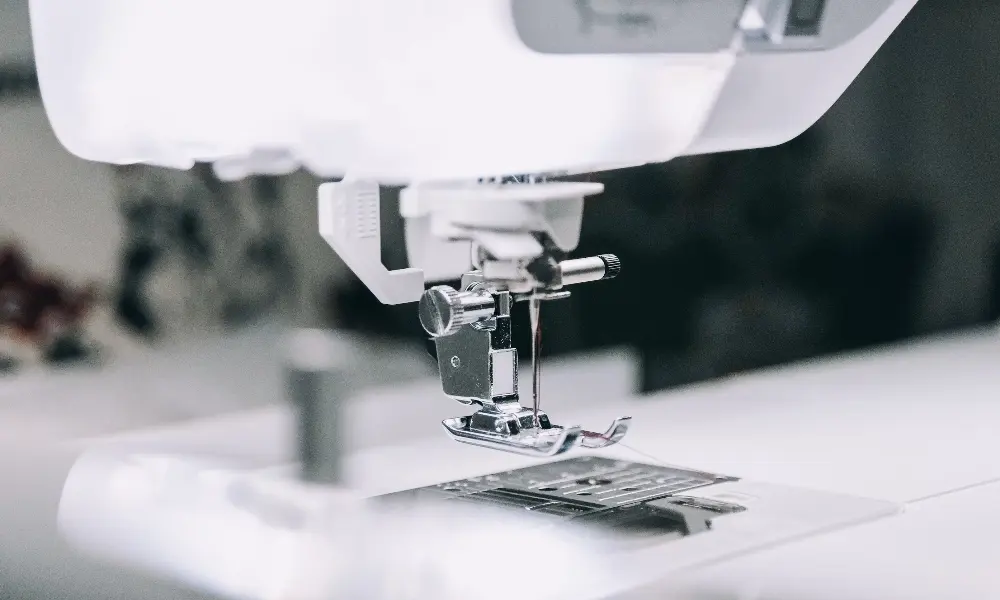
Understanding how stitch and seam standards affect quality audits begins with a practical reality: a garment is not judged by its final appearance alone. Auditors and quality managers also check whether the stitch class, seam type, stitch density, seam allowance, and reinforcement match the approved specification and the intended end use. When one of those details drifts, even a clean-looking garment can fail inspection, require rework, or create returns in the field.
Why Stitch and Seam Standards Affect Quality Audits
In garment quality audits, seam construction is a measurable quality characteristic. It links directly to seam strength, durability, appearance, and safety. It is also one of the easier areas to verify objectively. That is why ISO 9001:2015, the general quality management standard, requires organizations to control produtoion conditions and verify product requirements at appropriate stages [1]. Stitch type and seam type fit precisely into that verification loop because they can be specified in a tech pack, measured on a fabric sample, and inspected against an approved reference.
A factory can therefore sew well in daily practice and still fail an audit. If the production ticket calls for a specific ISO 4916 seam type but the operator produces a different construction, or if stitch density falls below the approved SPI, the mismatch becomes a documented nonconformity. Quality auditors use stitch and seam standards to turn subjective opinions about “good sewing” into pass/fail evidence.
The Core Standards Auditors Reference
Three standards usually form the technical backbone of stitch and seam audits:
- ISO 4915:1991, Textiles — Stitch types — Classification and terminology defines and illustrates stitch classes such as 100 chainstitch, 300 lockstitch, 400 multi-thread chainstitch, 500 overedge, and 600 covering chainstitch [2].
- ISO 4916:1991, Textiles — Seam types — Classification and terminology organizes seam constructions by component arrangement and needle penetration, using an eight-digit coding system [3].
- ASTM D6193, Standard Practice for Stitches and Seams provides practical guidance on selecting stitch and seam types and includes seam efficiency and quality considerations [4].
These standards are not only engineering references. Many buyer quality manuals and audit checklists copy clauses from them, which means an auditor can point to a specific clause and a specific seam drawing when issuing a finding.
What Auditors Check on the Stitch and Seam Level
A practical audit usually samples critical control points such as shoulder seams, armholes, side seams, crotch seams, pocket openings, zipper areas, hems, and stress points. For each sampled seam, the inspector checks:
- Stitch class match. A main seam on woven fabric may be specified as a 301 lockstitch or 401 chainstitch. Substituting an overedge seam without the required safety stitch may fail the specification.
- Seam type match. An ISO 4916 code identifies the seam construction. If the tech pack requires a felled seam, a plain superimposed seam is not an equivalent substitute unless formally approved.
- Stitch density (SPI). Too few stitches per inch reduces seam strength and may fall below the buyer’s minimum. Too many can damage the fabric or create puckering.
- Seam allowance and margins. Under-trimmed or over-trimmed allowances affect seam slippage, bulk, and pressing quality.
- Balanced tension and seam appearance. Loose loops, skipped stitches, needle cuts, and uneven feed marks are normally classified as defects.
- Backtacks and reinforcements. In stress areas, missing or short backtacks are a common finding because they directly affect seam security.
Where Nonconformities Usually Come From
In my experience, most stitch and seam failures in audits do not come from a lack of operator skill. They come from a breakdown between the approved sample, the production setting, and daily practice. Common causes include:
- The approved sample uses one seam type, but production shifts to a faster seam without updating the tech pack.
- Stitch length is changed to increase output, and SPI drops below tolerance.
- A larger needle is substituted to reduce breakage, causing fabric damage or seam grin.
- Tension is rebalanced for one fabric batch and then not locked for the next.
- A special attachment is removed to speed up a run, changing seam allowance or edge finish.
Stitch and seam problems become much easier to control when the machine list is checked against the product family and audit scope. Sua plataforma única de aquisição de equipamentos de costura covers how to build a complete sewing equipment setup without creating machine or quality gaps.
Turning Stitch Standards into Machine and Operator Controls
Preventing audit findings requires converting standards into floor-level controls. A typical control loop looks like this:
- Translate the tech pack. Write each critical seam as a simple instruction: seam code, stitch class, SPI, seam allowance, needle system and size, thread type, and required attachment.
- Preset the machine. Use mechanical stops, needle position settings, and stitch length controls to lock the planned parameters. An máquina de overlock should have differential feed and stitch length set for the specific seam, not left at a generic default.
- Use the right machine for the stitch class. Stitch class is not interchangeable without engineering approval. A bar tacking machine reinforces stress points; it is not a substitute for a correctly specified main seam.
- Inspect the first piece. Before bulk production, check the first garment against the approved sample and record the measured SPI, seam allowance, and visual result.
- Audit in process. Take hourly or two-hourly samples at the line, not only at the end. This catches seam drift before it becomes a full-batch finding.
- Train with defects, not only theory. Show operators pictures of skipped stitches, seam grin, unbalanced tension, and incorrect seam construction. Operators control most of these outcomes at the machine.
Need help matching your machines and attachments to the stitch classes and seam types in your audit plan? Send your garment samples, current SPI targets, and a list of critical seams to sales@tzpioneer.com. Our technical team will prepare a machine-by-machine recommendation and point out where preset controls can reduce audit risk.
Seam Quality by Garment Type: Audit Priorities
Different garment categories push different seams into the spotlight. Auditors often focus on the seams that carry load or face repeated stress.
- Woven shirts and blouses: side seams, armholes, collar bands, plackets, buttonholes, and hems. Lockstitch seams are common, but seam puckering and skipped stitches at collar points are frequent findings.
- Denim and trousers: inseams, side seams, crotch seams, fly fronts, and belt loops. Chainstitch seams, felled seams, and bar tacks are usually specified. Weak bar tacks or missing backtacks are immediate visual and strength issues.
- Knitwear and activewear: necklines, armholes, and hem bands. Overedge and covering stitch classes dominate. Auditors check stretch recovery, differential feed settings, and whether seams pop under elongation.
- Waterproof and outdoor garments: taped or sealed seams. The stitch line must be smooth and free of needle holes that bypass the tape, and seam intersections need extra attention.
- Lingerie and delicate fabrics: narrow seams, soft edges, and fine SPI. Needle damage, grin, and uneven feeding are more critical because the fabric is less forgiving.
This priority list does not replace the buyer’s specification, but it helps a factory allocate inspection resources where audit risk is highest.
Preparing Seam Documentation Before the Audit
A quality audit becomes easier when the factory can show controlled evidence. I recommend keeping a seam reference file or digital record with:
- Approved seam drawings for each garment style.
- ISO 4915 stitch class and ISO 4916 seam type codes.
- Approved SPI and seam allowance for each critical seam.
- Needle system and size, thread ticket, and machine type.
- First-piece and in-process inspection records.
- Corrective action notes for any seam-related nonconformity.
This documentation shows the auditor that stitch and seam standards are not only understood in the office; they are used on the floor.
Plan Your Stitch and Seam Compliance Before the Next Audit
Do not wait until the auditor arrives to measure SPI and compare seam drawings. Review the critical seam list now, verify machine settings, and close the gap between the approved sample and the production line. If you need help matching stitch classes, seam types, and machine configurations to an upcoming audit scope, contact UNIQUE at sales@tzpioneer.com or +86-18069305333. Send us your garment samples, current seam defects, and a brief list of the machines on your floor, and our technical team will provide a practical recommendation for bringing seam quality under tighter control.
Frequently Asked Questions
Do quality auditors really check stitch type and seam construction?
Yes. In garment audits, stitch class and seam type are measurable, documentable requirements. When a buyer’s quality manual or tech pack references ISO 4915, ISO 4916, or ASTM D6193, the auditor can compare the approved seam drawing with the production sample and issue a nonconformity if they do not match.
Which standards matter most for garment seam audits?
ISO 4915, ISO 4916, and ASTM D6193 are the most commonly used technical references. ISO 9001:2015 also matters because it requires controlled production conditions and verification of product requirements. Individual buyers may add their own seam strength, SPI, or appearance requirements on top of these standards.
How can I prepare seam documentation before an audit?
Build a seam reference file for each style with approved seam drawings, stitch class and seam type codes, SPI, seam allowance, needle and thread details, and first-piece inspection records. Keep in-process records that show you are checking critical seams during production, not only at the end.
What is the difference between a stitch defect and a seam defect?
A stitch defect relates to how the thread is formed in the fabric—skipped stitches, broken stitches, unbalanced tension, or wrong stitch density. A seam defect relates to how fabric plies are joined—wrong seam type, incorrect seam allowance, mismatched edges, or missed construction steps. Auditors may record either, but the corrective action is different.
Do I need automated machines to pass strict seam quality audits?
Not always. Automation can reduce variation in operations such as bar tacking, buttonholes, and pocket setting, but a well-controlled mechanical or electronic machine operated with the correct settings, attachments, and inspection checks can also pass. The audit issue is usually process control, not machine price.
Referências
[1] ISO 9001:2015, Quality management systems — Requirements, International Organization for Standardization.
[2] ISO 4915:1991, Textiles — Stitch types — Classification and terminology, International Organization for Standardization.
[3] ISO 4916:1991, Textiles — Seam types — Classification and terminology, International Organization for Standardization.
[4] ASTM D6193-16(2020), Standard Practice for Stitches and Seams, ASTM International.
Se você estiver interessado, confira estes artigos relacionados:
Sua plataforma única de aquisição de equipamentos de costura
Unique And Ekinci Makina Reaffirm Partnership For Iraq Market
Unindo as mãos para o progresso capacitando o futuro A equipe técnica de Dubai conclui intercâmbio técnico e treinamento na Nicerbt
Jantar de apreciação do fornecedor Milin Group Taizhou Center Taizhou
Unique Strength Debut At Jiam 2024