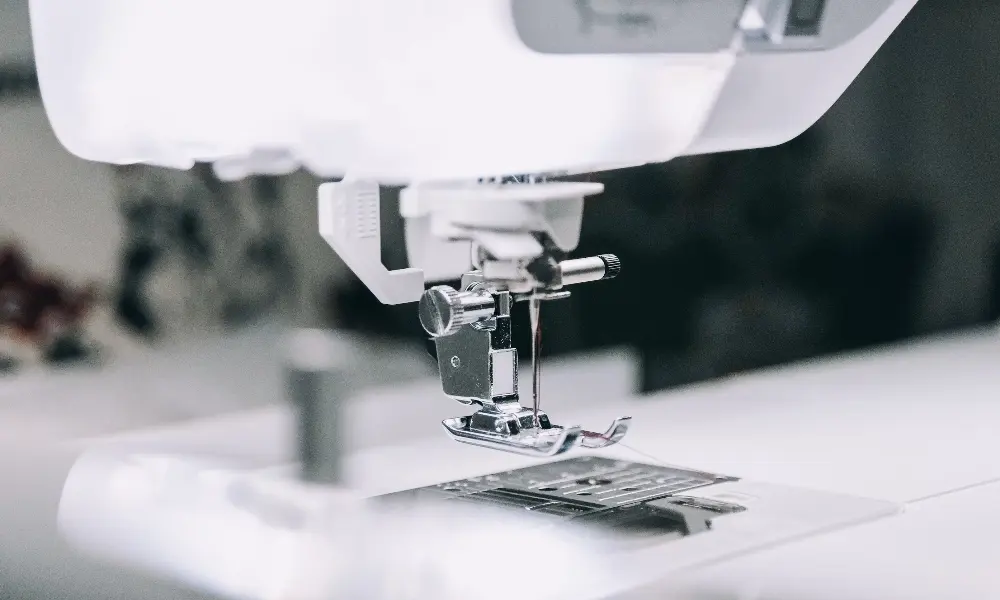
Buttonhole shape is not a styling afterthought. It changes how the stitched opening behaves under pull, which fabrics are safe to process, how the cutting cycle should be arranged, and which machine specification you should write into a purchase order. On industrial lines, the right question is not simply “keyhole or round?” but: which shape can your fabric, garment type, output target, and operator team run consistently?
Under ISO 4915, industrial buttonhole stitching is usually formed from a lockstitch or chainstitch cycle in the 300 stitch class or equivalent machine cycle [1]. That stitch system matters because the buttonhole must survive repeated strain at the ends, knife-cut edges, and laundering or dry cleaning without fraying, skipped stitches, or distortion.
Why Buttonhole Shape Is a Production Decision, Not a Styling Detail
A garment buttonhole combines three operations: stitching around the opening, cutting the slit, and reinforcing the ends with a bar tack or eyelet structure. Shape determines where stress concentrates, how the knife enters the fabric in relation to the stitch line, and whether the operator can maintain repeatability across hundreds of pieces.
The main distinction is practical. A keyhole buttonhole has an enlarged rounded eye at one end and a straight slotted cut from that eye. This puts the highest stress into a reinforced circular stitch, which is useful on tailored jackets, coated outerwear, workwear, and trouser closures. A round buttonhole uses a rounded or straight-ended opening and distributes force more evenly along a shorter slit. It is the standard for shirts, blouses, and light woven garments where the closure is not under heavy strain.
Standard stitch and seam guidance under ASTM D6193 covers the terminology and parameters used to specify stitch type, stitch density, and seam or edge construction [2]. In a buttonhole, the relevant inspection points are the stitch line around the opening, the gimp or cord placement, the end tack quality, and the cut edge alignment inside the stitch boundary.
Keyhole Buttonholes: Built for Strain and Tailored Garments
Keyhole buttonholes are the traditional choice on suit fronts, overcoat closures, trouser extensions, jean waistbands, and any point where a button pulls repeatedly against the edge of the garment. The rounded eye acts as a stress relief. Instead of ending the cut at a sharp corner, which can tear under tension, the keyhole carries the force around a curved stitch path.
This is why a formal jacket line usually specifies a keyhole buttonhole at the front closure, even when the same garment uses a round buttonhole elsewhere. On a full wool coat sewing machine line, the buttonhole station needs to produce consistent eye diameter, slit length, and tacking pressure without marking the face fabric.
The machine must also handle gimp, a reinforcing cord laid inside the stitch. In pressed suits and wool coats, gimp prevents the keyhole eye from collapsing after pressing. Machines designed for suit production usually have controlled gimp feed, adjustable eye size, and a knife action that can cut before or after the stitch sequence depending on the fabric face and backing. For delicate face cloths, cutting after stitching is often preferred because the stitched boundary stabilizes the fabric before the knife enters.
Round Buttonholes: Clean, Stable, and Shirt-Room Friendly
Round buttonholes are more common in high-volume shirt and blouse production. The shape is simpler, the cycle is faster to train, and the opening is more forgiving on light woven shirting because there is less localized fabric displacement around an enlarged eye. A dedicated shirt sewing machine line often pairs a round buttonhole station with a button attaching machine to keep the front placket flow balanced.
Round buttonholes also work on knit garments, but the machine setup changes. Knit fabric can stretch during stitching, so the buttonhole should be reinforced with gimp, the stitch length should be short enough to prevent gapping, and the cutting sequence should be tested on a sample strip. On unstable knits, the cut is often made after sewing so the stitch wall holds the opening before the knife creates the slit.
The distinction is not “round is weak and keyhole is strong.” Round buttonholes are simply suited to lower-stress points and light-to-medium woven fabrics. The failure mode is different across shapes. A keyhole buttonhole tends to wear at the eye or bar tack, while a round buttonhole usually fails at the cut ends or along the placket edge if the stitch density is too low.
Machine Technologies Compared: Mechanical, Electronic, and Automatic
Industrial buttonhole machines are not one category. The shape you choose intersects with how much automation you buy.
| Machine type | Keyhole/round flexibility | Best fit | Operator demand |
|---|---|---|---|
| Mechanical cam-driven buttonhole machine | Often one shape or kit-based changeover | Sample rooms, small batch suit and workwear lines | Higher skill |
| Electronic programmable buttonhole machine | Shape, length, density, and tack changes by program | Multi-style lines with frequent changeover | Medium |
| Automatic buttonhole station or cell | High repeatability with cutting, gimp, tacking, and optional stacking | High-output shirt, trouser, and uniform lines | Lower |
A general-purpose button holing machine can cover both keyhole and round work only if the control system and mechanical parts support that changeover. On a mechanical machine, switching from round to keyhole may require changing the cam, knife, needle plate, and clamp settings. On an electronic machine, the operator may select the shape by program, but the knife, gimp feed, and throat plate still need to be correct for the fabric stack.
Automatic machines reduce the influence of operator hand-feeding because the clamp, cycle start, cut, and thread trim are sequenced. The trade-off is changeover time. If a factory runs one buttonhole shape all day, a dedicated automatic station is fast and stable. If the line switches between suit fronts, trouser extensions, and shirt plackets in the same shift, a programmable machine with quick-change tooling is usually the safer purchase.
Selection Criteria: Fabric, Garment Type, Output, and Operator Skill
The decision should follow four questions.
First, what is the fabric? Light shirting, sheer blouse fabric, and open weaves need fine stitch density and clean knife edges without tearing. Medium wool, suiting, and workwear suit keyhole construction with gimp. Knits need stitch elongation control, gimp support, and a cutting sequence that prevents the slit from spreading.
Second, what is the garment point? A suit front or overcoat closure justifies a keyhole specification. A shirt placket or blouse front is better matched to a round buttonhole. Trousers may use either shape, but the waistband extension and tab closures in formal trousers commonly draw from the same keyhole machine used for suit fronts.
Third, what is the daily output? A low-volume tailored line can manage a mechanically controlled machine because the operator has time to check eye size, gimp placement, and tack quality. A high-volume shirt line cannot depend on operator judgment alone. The machine must repeat cut length, stitch count, and tack position part after part. This is where a template machine or automated buttonhole station adds value, even when the initial price is higher.
Fourth, how skilled are the operators? Mechanical machines reward experienced operators. Electronic and automatic machines transfer part of that skill into settings and programs. If the factory is training new operators across multiple lines, programmable machines reduce the cost of mistakes and make output more predictable.
Common Defect Causes and Machine Settings That Matter
Most buttonhole defects come from four areas: knife condition, stitch density, fabric handling, and gimp tension.
A dull knife produces ragged cut edges and can pull yarns inside the buttonhole even when the stitch outline is acceptable. The cutting block under the knife wears at the same rate and should be inspected together with the blade. On high-volume lines, the knife and block are tooling items, not afterthoughts.
Skipped stitches at the eye or tack usually indicate hook timing, needle size, or thread tension problems, not the buttonhole program alone. The machine should be checked with the actual fabric stack and thread because a setting that works on a two-ply swatch may fail on the fused placket, interlining, and facing build.
Puckering around the buttonhole often comes from excessive stitch density on a light fabric or from cutting the opening too early on an unstable material. Adjusting stitch length, cutting sequence, and gimp diameter is more productive than forcing higher thread tension.
The term “cycle time” should always be tied to the specified stitch count and cut length. A machine quoted at high speed may be slower on a long keyhole with a dense stitch because the cycle includes more stitches and a longer knife stroke. ISO 4916 provides a systematic method for describing seam and edge types when inspectors compare buttonhole construction across suppliers [3].
How to Build a Buttonhole Workstation: Knives, Gimp, and Work Aids
A reliable buttonhole station includes more than the machine head. The factory should plan for spare knives, cutting blocks, needle sizes, gimp cord, thread cones, and clamping surfaces for the fabric weight being processed.
Gimp is especially important in keyhole and knit buttonholes. It gives the stitch wall a raised, stable core and prevents the opening from stretching or pressing flat. Gimp size should be selected with the fabric thickness and button shank diameter, not copied from an unrelated line.
The workstation should also include a sample set. Before releasing the line, the sewing team should run the actual placket, facing, interlining, and button through the exact cycle. Inspect the opening from both sides, button the final button, and test the garment under light pull. A buttonhole can look clean on the top side and show thread breaks or gimp exposure on the underside.
Mid-article support: If you are already comparing buttonholing machine specifications, send your fabric swatch, button diameter, and daily target to sales@tzpioneer.com or call +86-18069305333. The technical team can confirm cut length, eye size, tack program, and tooling before you spend time evaluating models that cannot produce the exact buttonhole your garment requires.
Buying Checklist: What to Confirm Before You Quote
Before requesting a quotation, prepare these details:
- Garment type and closure point
- Fabric composition and number of plies at the buttonhole
- Button diameter, thickness, and shank type
- Keyhole or round shape, eye diameter, and slit length
- Cut-before or cut-after requirement
- Gimp or cord requirement
- Stitch density and tack type
- Daily output target and available operators
- Machine control preference: mechanical, electronic, or automatic
- Power supply, voltage, and frequency at the factory
- Required spare knives, cutting blocks, needles, and gimp stock
- Training and after-sales support expectations
When buttonhole machines are part of a broader line investment, sourcing them through a single equipment partner can simplify training, spare parts, and service coordination. <Your One Stop Sewing Equipment Procurement Platform> covers how a one-stop procurement model helps garment factories coordinate machine selection, spares, and after-sales support.
Get a Buttonhole Machine Recommendation for Your Garment Line
Send the following details to sales@tzpioneer.com or call +86-18069305333:
- Garment type and fabric sample
- Button size and shank style
- Required keyhole or round shape and slit length
- Daily output target
- Factory power supply
The UNIQUE team will recommend a matching machine configuration, tooling, gimp specification, operator training plan, and after-sales support package. For tailored clothing, workwear, shirting, or knitwear, the goal is the same: a buttonhole station that holds repeatability from the first sample to the last piece.
FAQ
Are keyhole buttonholes stronger than round buttonholes?
They are stronger at the stress point in many tailored and heavy-woven garments because the enlarged eye distributes pull around a curved stitch path. That does not make keyhole universally stronger on every fabric. A round buttonhole in light shirting is normally strong enough and is easier to produce quickly.
Can one machine produce both keyhole and round buttonholes?
Many electronic and automatic machines can switch between keyhole and round shapes through programming, but the knife, cutting block, needle plate, gimp feed, and clamp may still need mechanical adjustment. Never assume changeover is program-only until the machine has run a sample with your actual fabric stack.
Which stitch class is used for industrial buttonholes?
Under ISO 4915, industrial buttonhole stitching is generally formed from a lockstitch cycle, though some knit and stretch machines use a chainstitch cycle [1]. The stitch class, density, and gimp placement should be specified together because they determine edge durability and stretch resistance.
Do knit garments need a different buttonhole machine setup?
Yes. Knit buttonholes usually require gimp support, a shorter stitch length, controlled fabric feeding, and a cut-after-stitch sequence on unstable material. Without those adjustments, the opening can spread or distort under the button.
What causes ragged buttonhole edges?
Ragged edges are most often caused by a dull knife, a worn cutting block, the wrong cut-before or cut-after setting for the fabric, or gimp tension that allows the fabric to move during cutting. Stitch density and hook timing should also be checked if the thread line is breaking at the cut boundary.
References
[1] ISO 4915:1991, Textiles — Stitch types — Classification and terminology. International Organization for Standardization.
[2] ASTM D6193-16, Standard Practice for Stitches and Seams. ASTM International.
[3] ISO 4916:1991, Textiles — Seam types — Classification and terminology. International Organization for Standardization.
If you’re interested, check out these related articles:
Meetlin Group Conducts Technical Exchange With Zhejiang Qixing Empowering Service Upgrading Of Unique Series Equipment In The Market
Unique Debuts At Gtb Expo Empowering Bangladeshs Garment Industry Upgrade With Customized Automated Solutions
Unveiling Ceremony Of Milin Group Taizhou Center
Race Against Time Travel To 8 European Countries In 20 Days