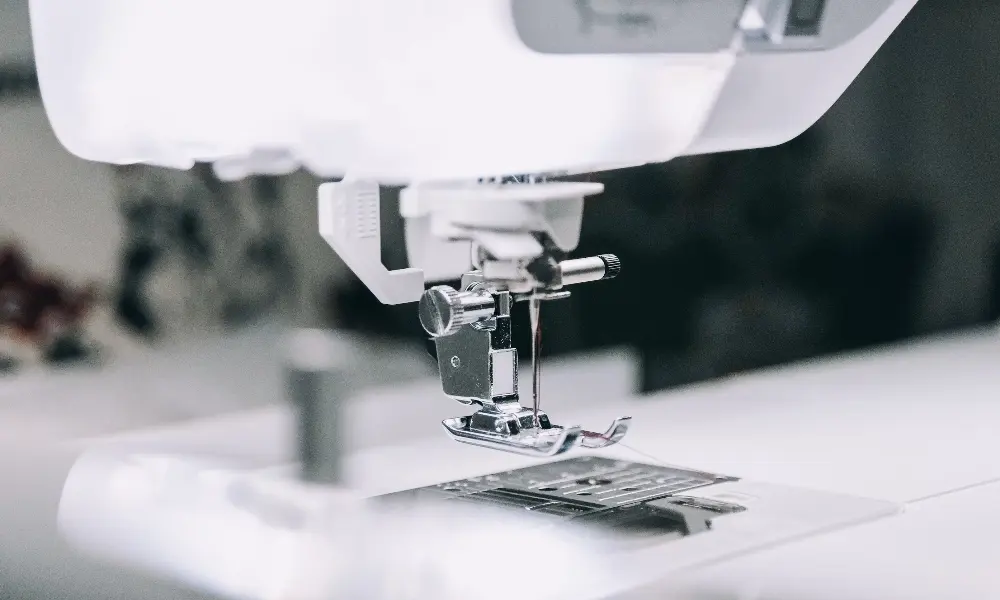
Before you compare macchina da cucire quotations, you will see the same vocabulary: lockstitch, differential feed, SPI, cylinder bed. If those terms blur together, you risk ordering a machine that cannot feed, stretch, or finish the fabric you actually run. This glossary defines the sewing terms that matter most at sourcing stage, organized by the way you will actually use them: specifying stitches, reading machine features, choosing needles and thread, and planning prodottoion.
Why These Terms Matter Before You Buy
Stitch classes follow ISO 4915 [1], while seam types follow ISO 4916 [2]. ASTM D6193 [3] gives equivalent terminology widely used in English-language specifications. When you or your supplier write “301 lockstitch, 5/8 in seam allowance, 9–11 SPI,” you are describing a measurable seam construction, not a preference. Buyers who skip this language often end up with the right machine category but the wrong feed system, bed type, or needle specification for the material they actually sew.
Stitch and Seam Terms You Should Read Without Hesitating
Core Stitch Types
Lockstitch (ISO 301) — A two-thread stitch formed by the needle thread interlocking with the bobbin thread. It is strong, stable, and low-stretch, which makes it the workhorse for woven shirts, trousers, linings, and general seaming. A lockstitch machine is usually the first machine a factory specifies [1].
Chainstitch (ISO 101/401) — A stitch formed by looped threads without a bobbin. ISO 401 is a two-thread chainstitch often used in waistbands and seams that need some stretch. ISO 101 is a single-thread chainstitch used for basting or temporary hemming where easy removal matters. A chainstitch machine is common in jeans and workwear lines.
Overlock (ISO 503/504/505) — An overedge stitch that trims the fabric edge and wraps it with thread in one pass. ISO 504 is the familiar three-thread overlock, while ISO 505 is a five-thread safety stitch for stronger seams. An macchina taglia-cuci is essential for knit garments and seam finishing.
Coverstitch (ISO 602/605) — A multi-needle stitch for hemming knits. It forms parallel top rows with a looper underneath, giving the hem the stretch needed on T-shirts, activewear, and necklines.
Zigzag (ISO 304) — A side-to-side stitch with controlled width. It is used for stretch applications, elastic attachment, and decorative work where a straight stitch would break under tension.
Blind stitch — A nearly invisible hem stitch that catches only the surface of the fabric. It is used for trouser hems, skirts, and tailored finishes.
Bar tack — A dense, short reinforcement stitch placed at stress points such as pocket openings, zipper ends, and belt loops.
Backtack — Reverse stitches sewn at the start and end of a seam to lock the thread and prevent unraveling.
Seam Terms
Seam type — A classified construction based on how fabric plies are arranged and joined. ISO 4916 classes include superimposed, lapped, bound, and flat seams [2]. Saying “superimposed seam” tells the supplier exactly how the pieces overlap.
Seam allowance — The distance between the stitch line and the cut fabric edge. This measurement affects folders, edge guides, and final seam strength. A narrow allowance saves fabric but leaves less room for adjustment.
SPI (stitches per inch) — Stitch density. Higher SPI produces a denser, potentially stronger seam but uses more thread and slows output. Lower SPI is faster but may reduce seam performance on certain materials [3].
Seam puckering — Rippling or gathering along the stitch line. It is usually caused by wrong tension, feed issues, or a needle point unsuited to the fabric.
Seam slippage — Separation of fabric yarns at the seam under stress. It is more common in slippery or loosely woven materials.
Machine Terms Buyers Misread
Feed Systems
Drop feed — The standard bottom feed dog advances fabric from below. It works well for many processes but may not move thick or slippery layers evenly.
Differential feed — Two independent feed dogs on an macchina taglia-cuci that stretch or ease the fabric as it feeds. This prevents wavy edges on knits and puckering on lightweight synthetics.
Needle feed — The needle moves with the fabric as the machine feeds. This helps stacked plies stay aligned on smooth materials.
Compound feed / unison feed / walking foot — A combination of needle feed and drop feed, often with an alternating presser foot. It moves thick, sticky, or multi-layer stacks more evenly and is preferred for leather, vinyl, and upholstery work.
Puller feed — An add-on roller behind the needle that pulls material through the machine, supporting long seams and heavy panels.
Bed Types
Flatbed — The standard flat work surface used for most garment seams.
Cylinder bed — A narrow cylindrical bed that allows circular stitching inside sleeves, cuffs, and small openings. A cylinder bed lockstitch sewing machine handles curved and tubular work more easily than a flatbed.
Postbed — A raised vertical post bed for three-dimensional parts such as shoes, bags, and luggage.
Feed-off-the-arm — A chainstitch machine design with the feed system supported on an arm. It is used for felled seams, denim hemming, and flat joining. A feed of the arm machine gives better access for long, flat seams.
Hook, Drive, and Automation Terms
Rotary hook vs oscillating hook — A rotary hook rotates continuously in one direction, which suits high-speed lockstitch production. An oscillating hook reverses direction, a design more common in lower-speed or specialized machines.
Direct-drive servo motor vs clutch motor — Direct-drive servo systems start quickly, run quieter, and consume less energy. Clutch motors run the machine continuously and are simpler but less precise for speed control.
Presser foot lift — The clearance height under the raised presser foot. This matters when sewing thick seams, folded edges, or multiple plies.
Auto thread trimmer — An automatic mechanism that cuts top and bottom threads at the end of a seam, reducing operator handling time.
Gauge / needle spacing — The distance between needles on a multi needle machine. It determines the width of parallel stitch rows.
Stitch length control — The setting that determines the forward movement per stitch. It is adjusted by dial on mechanical machines or digitally on electronic machines.
Machine type often matters more than motor speed when you switch between woven and knit production. <Differenze chiave tra le macchine da taglio per ricamo e cucito> covers how equipment choice changes the process, not just the stitch name.
Need help matching these terms to a specific machine? Send your fabric type, stitch class, and target output to sales@tzpioneer.com — we will recommend equipment instead of leaving you to guess.
Needle, Thread, and Fabric Terms
Needle system — A code that identifies the needle shank and shape for a specific machine. Common industrial systems include DBx1, DPx5, and DCx27. The wrong system will not seat correctly in the needle bar.
Ball point vs sharp point — Ball-point needles push knit fibers aside, reducing skipped stitches and holes. Sharp-point needles pierce woven fabrics cleanly. Matching needle point to fabric type prevents many quality defects.
Tex and denier — Thread weight measurements. Denier is the mass in grams per 9,000 meters; tex is the mass in grams per 1,000 meters. Both help compare thread thickness, but the right size also depends on seam strength and needle size.
Ticket number — A commercial thread size designation used by thread manufacturers. It does not always align across brands, so match supplier specifications before buying large quantities.
Grain and bias — Grain follows the lengthwise or crosswise direction of woven fabric. Bias is the diagonal direction with more stretch. Cutting and sewing on the bias requires different handling than straight grain.
Ply — A single layer of fabric. Machines are often specified by how many plies they can feed or cut without shifting.
Production and Quality Terms Used in Quotes and Planning
| Term | What it means | Why it matters |
|---|---|---|
| SMV | Standard minute value, the estimated labor time for one operation | Used for line costing and planning |
| UPH | Units per hour | Measures realistic output per machine or line |
| WIP | Work in progress, the partly finished garments between operations | High WIP can hide bottlenecks |
| AQL | Acceptable quality limit, the maximum defect level accepted in inspection | Defines how a buyer checks finished lots |
| First-piece inspection | Verification of the first completed piece against the sample | Catches errors before bulk sewing |
| Bottleneck | The slowest operation in a line | Controls overall line speed |
| Seam allowance | Fabric between the stitch line and cut edge | Affects seam strength and folder selection |
| SPI | Stitches per inch | Balances density, strength, thread use, and speed |
Need Help Matching These Terms to a Sewing Machine Line?
Clear vocabulary turns into a clearer quotation. If you can describe your stitch class, seam allowance, SPI, bed type, and likely UPH, we can help you configure a machine list instead of sending a generic price list. Contact Taizhou Unique Machine Technology Co., Ltd. at sales@tzpioneer.com or +86-18069305333 with your material types, current machines, and volume targets.
Frequently Asked Questions
What is the difference between a stitch type and a seam type?
A stitch type describes how the thread is formed inside the fabric, such as ISO 301 lockstitch or ISO 504 overlock [1]. A seam type describes how the fabric pieces are arranged and joined, such as a superimposed or lapped seam [2]. Both are needed when specifying a construction.
Which stitch class should I specify for a basic woven shirt line?
A 301 lockstitch is the standard for most woven shirt seams because it is stable and strong. For seam finishing, a 504 or 505 overlock is common on knit or edge-finished operations. The correct setup depends on the fabric, the seam function, and the quality audit requirements.
Do I need to know all of these terms before requesting a quote?
No. A useful first quote request should include fabric type, stitch class, seam type, seam allowance, SPI, and the type of operation, such as hemming, seaming, or attaching elastic. If you are unsure of exact codes, describe the product and the seam function, and a technical supplier can translate it.
How do stitch density and SPI affect machine choice?
SPI does not usually change the machine category, but it affects speed, thread consumption, and seam appearance. Dense stitches require more thread and more frequent bobbin changes. Low-density seams sew faster but may not pass strength or quality requirements. Match SPI to the product and to the stitch type [3].
Can this glossary be used to train new sewing operators?
Yes. It gives operators a shared vocabulary for reading machine settings, understanding seam requirements, and reporting defects. Use it together with physical samples and machine manuals so the terms are linked to what operators see on the floor.
Riferimenti
[1] ISO 4915:1991 — Textiles — Stitch types — Classification and terminology. International Organization for Standardization.
[2] ISO 4916:1991 — Textiles — Seam types — Classification and terminology. International Organization for Standardization.
[3] ASTM D6193-16(2020) — Standard Practice for Stitches and Seams. ASTM International.
Se sei interessato, dai un’occhiata a questi articoli correlati:
Unique Strength Debut At Jiam 2024
Unire le forze per promuovere il progresso e dare potere al futuro Il team tecnico di Dubai completa lo scambio tecnico e la formazione presso Nicerbt