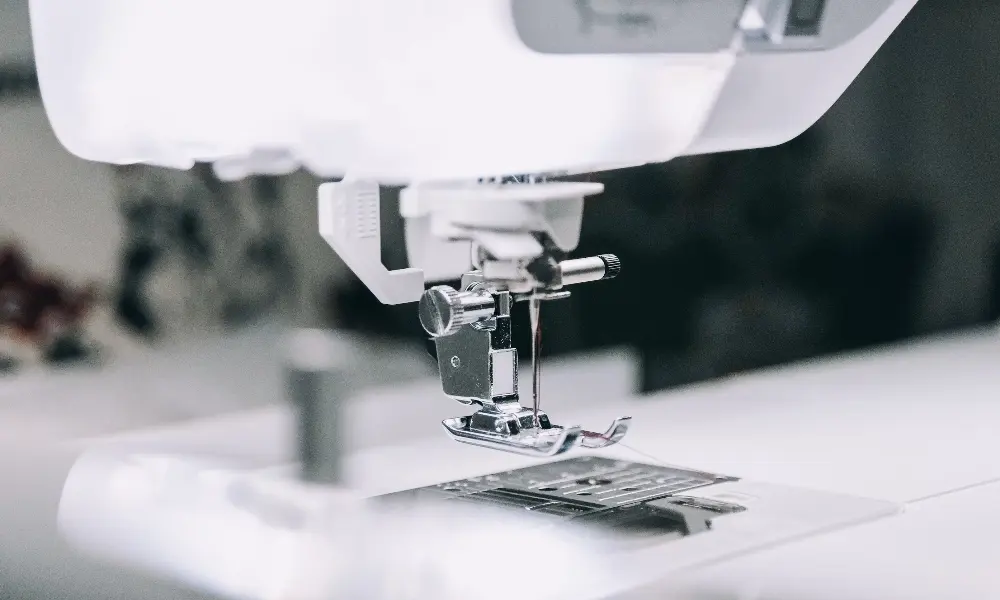
Servo motors have moved from premium option to practical retrofit on industrial sewing floors because they change the way power is delivered to the machine head. Instead of a clutch motor running continuously at full speed, a servo system applies current only when the operator demands stitch movement. That single difference affects energy consumption, noise, stopping accuracy, and stitch consistency.
The Real Difference: How a Servo Motor Changes a Sewing Station
A conventional clutch motor is an induction motor that spins the handwheel through a friction clutch. The motor is usually on or off; the operator starts and stops by pressing the pedal and engaging or releasing the clutch. A servo sewing motor replaces that on/off approach with a controller that reads pedal position, adjusts motor speed continuously, and receives needle-position signals to stop the needle where the operator wants it.
From the operator’s point of view, the first noticeable changes are quieter idle, smoother start, faster stopping, and less heat around the motor. From the factory manager’s side, the measurable values are power consumption, rework from oversewing, and training time.
| Operating factor | Clutch motor behavior | Servo motor behavior |
|---|---|---|
| Power at idle | Motor runs continuously and consumes power | Near-zero power when pedal is released |
| Speed control | Limited to clutch slip and pedal feel | Continuous speed curve from low to rated speed |
| Needle positioning | Depends on operator and clutch feel | Programmable needle-up/needle-down stop |
| Noise and heat | Higher at idle and continuous use | Lower because motor runs only when stitching |
| Maintenance | Clutch lining, belt, pulley wear | Fewer wear points; electronic controller |
Energy Savings and Payback: The Main Cost Case
The cost case for a servo motor is usually built on electricity savings. Permanent-magnet synchronous servo motors typically operate above 90% efficiency at rated load; IEC 60034-30-1 defines efficiency classes for line-operated AC motors, and the same efficiency level is comparable to IE4-class induction equipment [1]. More important in a sewing room, the servo motor does not keep consuming full power while the operator aligns fabric, trims threads, or reaches for the next piece. Field trials and motor-system guidance consistently show that variable-speed, on-demand operation cuts electricity consumption by 50–70% on many sewing workstations [2].
The exact payback depends on local electricity tariffs, shift hours, cycle time, and whether operators spend a large share of the shift handling versus stitching. If a workstation uses a motor for a full shift but the needle is only moving for a portion of that time, the idle savings are significant. That is the profile of most sewing operations, where materials handling and quality checks occupy a large share of line time [2].
Because the controller only draws power during acceleration and stitching, the transformer and wiring load in a multi-machine line also becomes more stable. This can reduce peak demand and make the workshop easier to operate in older buildings with limited electrical capacity.
Speed Control and Stitch Quality
Precise speed control matters most at seam start and seam end. In a lockstitch, speed changes affect thread tension and stitch formation; a motor that can hold low speed without stalling helps the operator approach corners, ply changes, and thick seam intersections with less concentration on the pedal. This is also why the needle-position stop is one of the first operator gains after a retrofit. It reduces the number of manual handwheel corrections and allows the next ply to be placed without the needle being in the way.
On an macchina taglia-cuci, the benefit is similar: the differential feed and knife performance are easier to judge at a controlled low speed. On a lockstitch machine, a servo motor also reduces the chance of slipping or overshooting at stop.
Operator Comfort, Noise, and Safety
Sewing lines are often loud enough to require hearing-protection planning; exposure limits in many jurisdictions require action when noise reaches 85 dBA or a permissible limit of 90 dBA for an 8-hour shift [3]. A servo motor eliminates the continuous clutch-motor hum at idle and reduces mechanical vibration during operation. Lower idle noise makes operator instructions, line communication, and quality calls easier to hear without raising voices.
The controlled stop also improves safety. Machinery electrical equipment standards set requirements for stopping functions and protection against unexpected restart [4]. A servo controller can provide fast, repeatable stopping and a lighter flywheel effect compared with a clutch system, which means less moving mass after the operator releases the pedal. This is not a substitute for proper guarding and training, but it reduces one common source of minor hand and workpiece injuries.
Retrofit or Built-In: Where Servo Makes Sense
Most conventional macchina da cucires can be converted from clutch motor to servo motor by replacing the motor, belt, pulley, and pedal sensor or controller. The machine head itself usually remains unchanged, which makes servo retrofit one of the lower-cost automation upgrades on a cutting or sewing floor. Machines with integrated direct-drive servo systems go further by removing the belt and mounting the motor on the main shaft, but a stand-alone servo motor is still a valid retrofit for older macchina da cucire fleets.
If you are planning a full line upgrade rather than one motor at a time, <La tua piattaforma unica per l'approvvigionamento di attrezzature per cucire> covers how a full-range supplier can match machine heads, stands, motors, and spare parts under the same procurement plan.
For a broader view of how machine families differ before you commit to a retrofit, <Differenze chiave tra le macchine da taglio per ricamo e cucito> covers where motor load, duty, and speed requirements vary between equipment types.
Matching the Motor to the Machine and the Line
Sizing a servo motor is not only about watts. The important points are torque at low speed, rated speed, the machine’s pulley ratio, the needle-position sensor input, and the controller’s stop adjustment. For a typical single-needle lockstitch, a compact servo motor is sufficient; heavy machines, postbed machines, and high-speed chainstitch machines need more low-speed torque to avoid stalling at thick crossings. The best selection starts from the machine’s handwheel speed and maximum stitch rate, then adds a margin for heavy fabric and start-stop frequency.
A motor with a needle-position sensor and a controller display gives the operator more useful control than a basic speed-only unit. The ability to set maximum speed, programmed stop position, and soft-start can reduce training time for new operators and keep senior operators from running machines beyond the factory’s quality window. Voltage and frequency must match the country of installation; single-phase servo motors are widely used for retrofit work because many workshop sockets are single-phase, while direct-drive and high-power models may require three-phase.
Need a motor matched to your machines? If you are planning a servo retrofit across one line or a full factory, send your machine models and local voltage to sales@tzpioneer.com or call +86-18069305333. The UNIQUE team can recommend motor wattage, mounting, and controller settings before you order.
Get a Servo Motor Recommendation for Your Factory
If you want to move beyond general benefits and confirm which servo motor setup fits your existing machines, contact us with the following details:
- machine type and model: lockstitch, overlock, chainstitch, postbed, or special machine
- current motor and belt/pulley arrangement
- local supply voltage and frequency
- number of machines to convert
Email: sales@tzpioneer.com
Phone/WhatsApp: +86-18069305333
Taizhou Unique Machine Technology Co., Ltd. can supply the motor, controller, machine head, stand, and spare parts as one order, which is often the fastest way to avoid mismatched mounting and electrical parts.
Frequently Asked Questions
Does a servo motor work on every industrial sewing machine?
Most clutch-motor machines can be retrofitted with a servo motor because the motor drives the handwheel through a standard belt and pulley. The main checks are table mounting, pulley bore and diameter, pedal or controller location, and whether the machine has a needle-position sensor input. Very old or unusual machine tables may need an adapter plate or a different pulley.
How much power does a servo motor actually save?
Savings vary by machine, shift length, and how much time the operator spends stitching versus handling. Servo systems save the most in operations where the motor would otherwise idle for long periods. On many sewing workstations, on-demand operation cuts electricity consumption by 50–70% compared with a continuously running clutch motor [2].
Can I retrofit a servo motor to an old clutch-motor machine?
Yes in most cases. The machine head is not usually modified; the retrofit replaces the motor, belt, pulley, and pedal control. The controller settings are then adjusted to the stitch rate and stopping behavior the line needs. If the machine will later be upgraded to a direct-drive head, a stand-alone servo motor can still be used during the transition.
What size servo motor do I need for a lockstitch machine?
The correct size depends on handwheel speed, fabric thickness, and the number of plies. A basic single-needle lockstitch often works well with a compact servo motor rated for light-to-medium load, while heavy compound-feed or postbed machines need more low-speed torque. The safest approach is to send the machine model and current motor plate to the supplier for a matched recommendation.
Why is needle positioning important after a servo retrofit?
Needle positioning lets the operator program whether the needle stops up or down when the pedal is released. It saves the small handwheel corrections that occur at every seam end, keeps the work area clearer for ply placement, and makes stop behavior repeatable across different operators on the same workstation.
Riferimenti
[1] IEC 60034-30-1:2014, Rotating electrical machines — Part 30-1: Efficiency classes of line operated AC motors (IE code), International Electrotechnical Commission, 2014.
[2] U.S. Department of Energy, Improving Motor and Drive System Performance: A Sourcebook for Industry, Office of Energy Efficiency and Renewable Energy, 2014.
[3] U.S. Occupational Safety and Health Administration, Occupational Noise Exposure, 29 CFR 1910.95.
[4] IEC 60204-1:2016, Safety of machinery — Electrical equipment of machines — Part 1: General requirements, International Electrotechnical Commission, 2016.
Se sei interessato, dai un’occhiata a questi articoli correlati:
Technology Empowers Fashion Nicerbt Unique Attends Hm Supplier Tech Summit Empowering Intelligent Upgrading Of Garment Supply Chain
Wu Jiling Vice Chairman Of China Sewing Machinery Association And His Delegation Visited The Leading Company For Inspection And Guidance
Unique And Ekinci Makina Reaffirm Partnership For Iraq Market
Unique Teams May Visit To Egypt Technical Excellence And Market Confidence