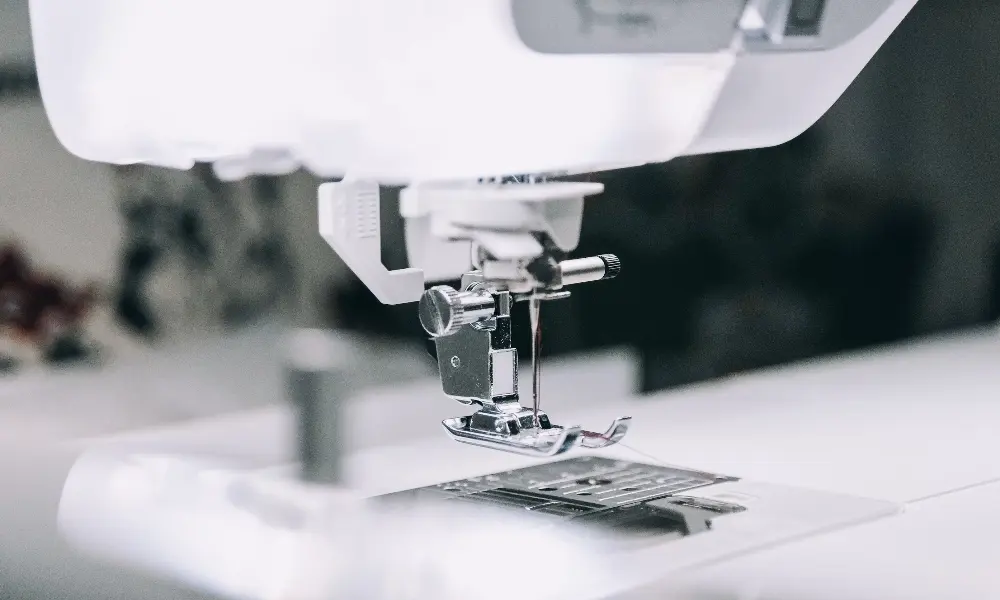
Machine guarding on a sewing floor is often treated as a bolt-on feature, but the standards treat it as part of machine design. A single-needle lockstitch machine operating at high speed concentrates hazards in a small area: a reciprocating needle, a rotating hook, a moving take-up lever, a motor, and exposed belts or pulleys on older models. Add cutting knives, hot fusing surfaces, pneumatic clamps, and steam lines, and the risk profile changes quickly. This guide explains the standards that should shape guarding, electrical safety, lockout/tagout, workstation ergonomics, and pre-purchase checks for sewing factories.
What Machine Guarding Actually Covers in Sewing
Machine guarding refers to physical barriers, interlocks, presence-sensing devices, and safety-related control functions that separate operators from hazardous motion or heat. In sewing, guarding commonly includes needle guards, belt covers, pulley enclosures, knife guards on overlock and cutting machines, and two-hand controls or light curtains on presses. It also covers less obvious exposure such as ejected needle fragments, flying thread debris, and unexpected start-up during threading or cleaning.
The baseline approach comes from ISO 12100, which requires a risk assessment before choosing guards [6]. The standard sets a hierarchical approach: eliminate the hazard first, substitute a lower-risk process, use engineering controls such as guards, and only then add procedures or personal protective equipment. A guard should therefore not be the first line of defense; it should be the visible result of a proper risk-reduction sequence.
Core Standards and Regulations
Sewing machine safety sits at the intersection of machinery safety standards, electrical standards, and workplace rules.
- ISO 10821:2005 sets safety requirements specifically for industrial sewing machines, sewing units, and systems. It covers mechanical hazards, needle access, guards, stopping performance, and noise [1].
- The EU Machinery Directive 2006/42/EC requires CE marking and a technical file for machines placed on the EU market. For sewing machines, this means the manufacturer must demonstrate conformity with applicable safety standards [2].
- In the United States, OSHA 29 CFR 1910.212 requires that machines have point-of-operation guarding and that guarding be secured and not create a new hazard [3].
- IEC 60204-1 governs the electrical equipment of industrial machines, including control panels, emergency stop functions, cable access, and protection against electric shock [5].
- ISO 13849-1 provides the framework for safety-related control systems, including how to assess a performance level for interlocks and stopping functions [8].
| Standard or rule | Scope | Practical relevance for a sewing factory |
|---|---|---|
| ISO 10821 | Sewing machine-specific safety | Guarding, needle access, stopping, and noise for sewing units and systems |
| EU Machinery Directive 2006/42/EC | CE marking and essential health and safety requirements | Technical file, declaration, and guard verification for EU imports or use |
| OSHA 29 CFR 1910.212 | General machine guarding | Point-of-operation protection, guard condition, and operator training |
| IEC 60204-1 | Electrical equipment of industrial machines | Control panel wiring, emergency stop, and protection against electric shock |
| ISO 12100 | Risk assessment and risk reduction | Hazard identification and the hierarchy of controls |
| ISO 13849-1 | Safety-related control system design | Performance level for guard interlocks and stop circuits |
Guarding by Risk Zone and Machine Type
Different machine classes demand different guards. A lockstitch machine needs a clear needle-point guard and covered belts or pulleys if it uses a clutch motor. An macchina taglia-cuci needs upper and lower knife guards and a belt or chain cover because trimming knives are close to the operator’s fingers. A band-knife or straight-knife cutting machine requires a sharp blade guard and a two-hand or barrier control where practical. Macchina di fusiones, heat transfer presses, and steam boilers introduce hot surfaces and pressure hazards, so fixed enclosures, thermal insulation, interlocks, and pressure-relief devices are part of the safety package [1][2][3].
Different machine classes carry different operating risks and guarding requirements. <Differenze chiave tra le macchine da taglio per ricamo e cucito> covers how sewing, embroidery, and cutting equipment differ in function and factory role.
Hot surfaces and steam lines should be separated from operator walkways and clearly identified. 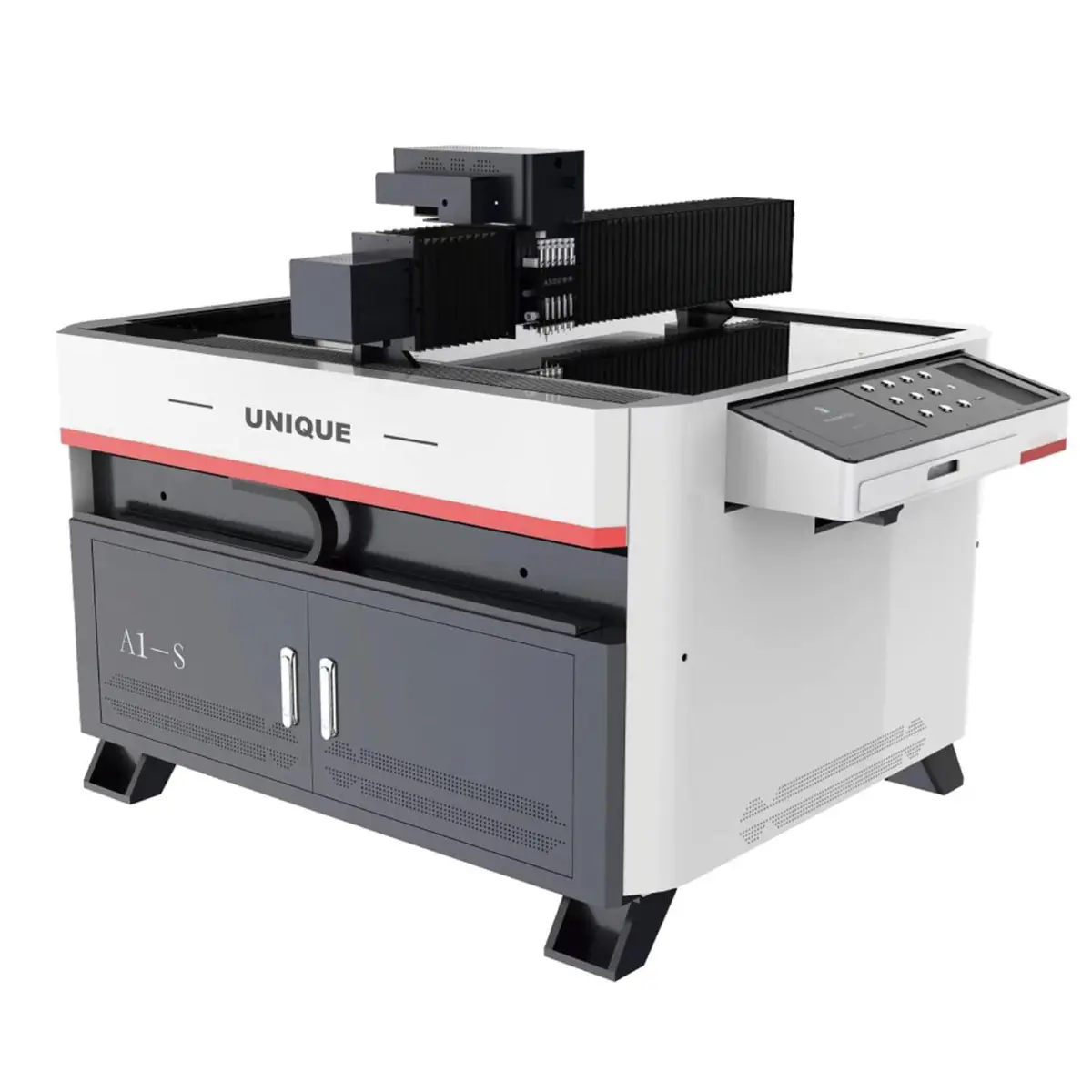
Lockout/Tagout, Electrical Safety, and Energy Control
Before maintenance, threading, or cleaning, hazardous energy must be controlled. OSHA’s lockout/tagout standard, 29 CFR 1910.147, requires a documented procedure for machines with multiple energy sources. In a sewing line, energy can be electrical, pneumatic, mechanical, thermal, and stored energy in capacitors or servo drives [4].
Electrical controls should follow IEC 60204-1, with a clearly marked emergency stop within reach of the operator, secure cable entry, and proper grounding. Older clutch motors and belt-driven systems may have exposed rotating shafts. Conversion to direct-drive servo motors can reduce some mechanical hazards, but it does not remove the need for a risk assessment [5].
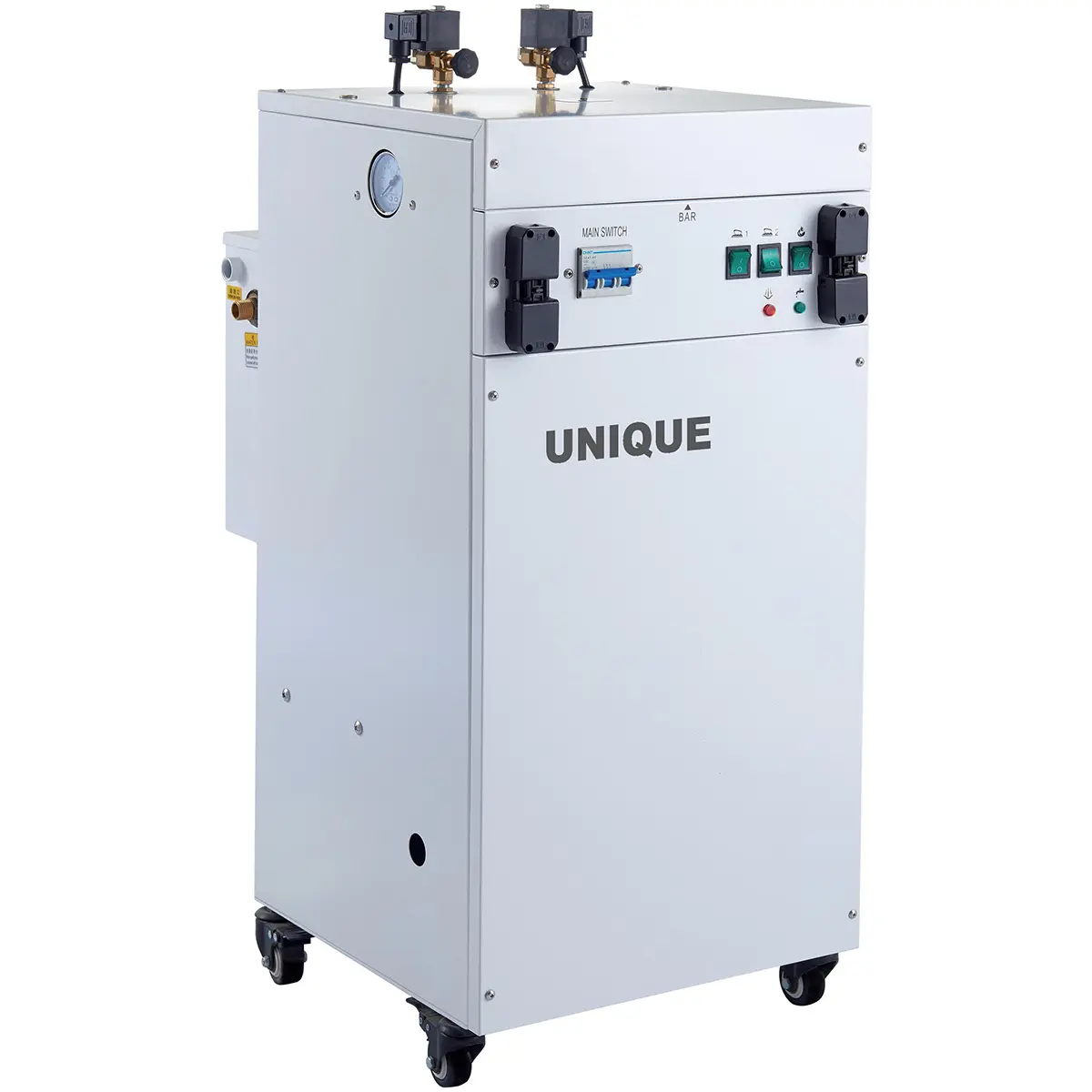
Power supply equipment also needs guarding and clearance. Steam boilers, compressor lines, and high-wattage heating systems should be placed away from operator walkways and protected from accidental contact. 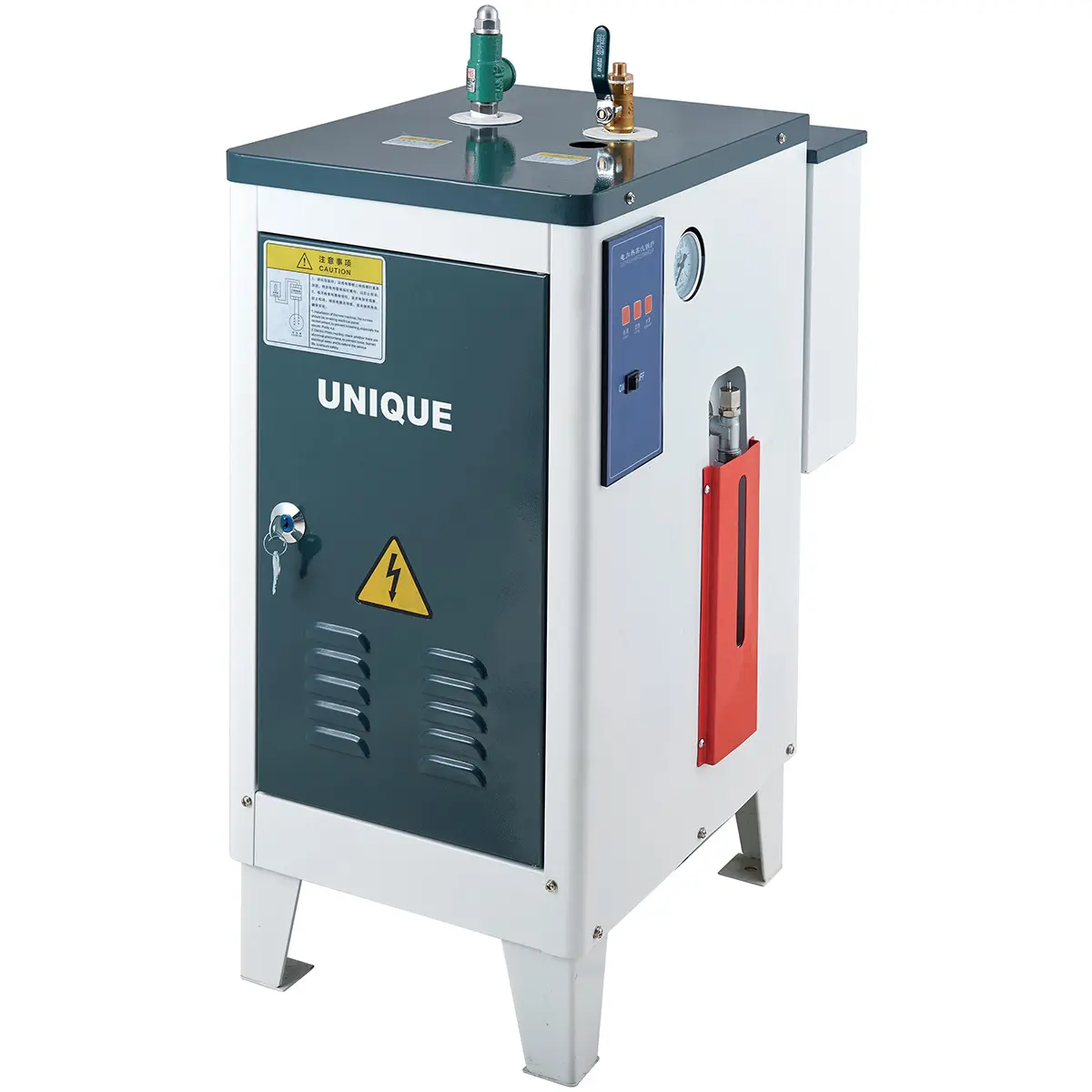

Safety documentation should not be an afterthought in an equipment purchase. If you are preparing a factory safety audit or ordering new machines, send your equipment list and destination market to sales@tzpioneer.com or call +86-18069305333. Request guarding drawings, electrical diagrams, and conformity documents with the quotation.
Ergonomic and Workstation Controls
Guarding is only one part of operator safety. A poorly adjusted workstation can force an operator close to the needle point, increasing the chance of accidental contact even with a guard installed. Table height, chair position, pedal placement, lighting, and the distance between the operator’s torso and the needle bar all affect whether the guard works in real prodottoion.
ISO 13857 provides safety distances for preventing upper and lower limb access to hazard zones. The principle is that a guard opening should be small enough and far enough away that a finger cannot reach the needle [7]. In practice, this means no open gap near the needle point, a properly positioned needle guard, and no removed covers to speed up threading.
From Compliance to a Safer System
A safe sewing line combines technical guards with management controls. Interlocked guards, emergency stops, anti-restart protection, and periodic inspection are controls. Training, standard operating procedures, supervision, and preventive maintenance are administrative layers. Neither replaces the other. The most effective systems also use near-miss reporting and regular guard audits to catch damage before an incident [6][8].
A Practical Guarding and Safety Checklist
| Area | Check |
|---|---|
| Risk assessment | Has each machine class been assessed under ISO 12100? |
| Needle point | Is a needle guard or finger guard in place and correctly adjusted? |
| Belts and pulleys | Are belt covers and motor covers fixed and free of cracks? |
| Cutting knives | Are upper and lower knives guarded, with blade changes covered by lockout/tagout? |
| Hot surfaces and pressure | Are fusing, heat transfer, and boiler surfaces guarded and labelled? |
| Electrical | Is there an emergency stop within operator reach, and are panels closed? |
| Lockout/tagout | Are energy isolation points identified and locked during cleaning? |
| Operator training | Are operators trained on guard function and prohibited removal? |
What to Ask Before You Buy
When purchasing sewing machines, ask the supplier for:
- The machine’s applicable safety standard declaration, such as ISO 10821 conformity for sewing machines or an ISO 12100-based risk assessment.
- Electrical diagrams and emergency stop function details under IEC 60204-1.
- Guarding configuration for the destination country: CE-marked machines for the EU, and OSHA-relevant safeguards for the United States.
- Whether optional guards, needle guards, belt covers, and light curtains are standard or extra. Some low-cost quotes remove safety items to reduce purchase price.
- Service and training support for safe setup, including voltage and energy isolation.
Get a Safety-Ready Equipment Proposal
UNIQUE works with garment factories and distributors to configure sewing, cutting, finishing, and utility equipment with guarding, voltage, and documentation aligned to the destination market. Send the following:
- Planned garment types and target output
- Single-phase or three-phase power supply and voltage/frequency
- Destination country or compliance requirement
- Whether machines need CE, OSHA-relevant guarding, or specific safety documentation
- Current factory layout or machine list
Contatto sales@tzpioneer.com or call +86-18069305333. The team can help you review guarding requirements, offer safety-related options, and prepare a one-stop equipment list without treating safety as a hidden afterthought.
FAQ
Does every sewing machine need a needle guard?
In most industrial settings, yes. Standards applicable to sewing machines and general machine guarding require point-of-operation protection. A needle guard should be standard or fitted before production. Exact requirements depend on machine category and local regulation.
Is CE marking enough for machine guarding?
CE marking indicates that the manufacturer declares conformity with EU requirements, usually including ISO 10821 or equivalent safety standards. It is a strong baseline, but end users still need installation checks, operator training, and maintenance. For non-EU markets, national rules may apply.
Which machine types carry the highest guarding risk in a sewing factory?
Cutting machines, overlock and trimming machines, fusing presses, and steam or hot-surface equipment tend to require more attention than a guarded lockstitch machine. The reason is the combination of sharp edges, hot surfaces, stored energy, or multiple energy sources.
Can a direct-drive servo machine eliminate guarding needs?
No. A direct-drive servo can remove external belts and pulleys, reducing some mechanical hazards, but the needle point, moving take-up lever, presser foot, and other hazards remain. Guarding and a proper risk assessment are still needed.
What documents should I ask for when buying machines?
Ask for the declaration of conformity or equivalent, electrical diagrams, risk assessment or guarding drawings, emergency stop details, and destination-country certification documents. Keep these in the factory safety file.
Riferimenti
[1] ISO 10821:2005, Industrial sewing machines — Safety requirements for sewing machines, units and systems, International Organization for Standardization, Geneva, Switzerland, 2005.
[2] Directive 2006/42/EC of the European Parliament and of the Council on machinery, Official Journal of the European Union, 2006.
[3] U.S. Occupational Safety and Health Administration, 29 CFR 1910.212, General requirements for all machines.
[4] U.S. Occupational Safety and Health Administration, 29 CFR 1910.147, The control of hazardous energy (lockout/tagout).
[5] IEC 60204-1:2016, Safety of machinery — Electrical equipment of machines — Part 1: General requirements, International Electrotechnical Commission, Geneva, Switzerland, 2016.
[6] ISO 12100:2010, Safety of machinery — General principles for design — Risk assessment and risk reduction, International Organization for Standardization, Geneva, Switzerland, 2010.
[7] ISO 13857:2019, Safety of machinery — Safety distances to prevent hazard zones being reached by upper and lower limbs, International Organization for Standardization, Geneva, Switzerland, 2019.
[8] ISO 13849-1:2015, Safety of machinery — Safety-related parts of control systems — Part 1: General principles for design, International Organization for Standardization, Geneva, Switzerland, 2015.
Se sei interessato, dai un’occhiata a questi articoli correlati:
Dare potere ad Hanoi plasmare il futuro Meetlin ospita con successo il vertice 4 0 dell'industria dell'abbigliamento in Vietnam
Cena di apprezzamento per i fornitori del Centro Taizhou del Gruppo Milin Taizhou
Wu Jiling Vice Chairman Of China Sewing Machinery Association And His Delegation Visited The Leading Company For Inspection And Guidance
Live From Cairo Unique Shines At Egy Stitch Tex 2025
Differenze chiave tra le macchine da taglio per ricamo e cucito