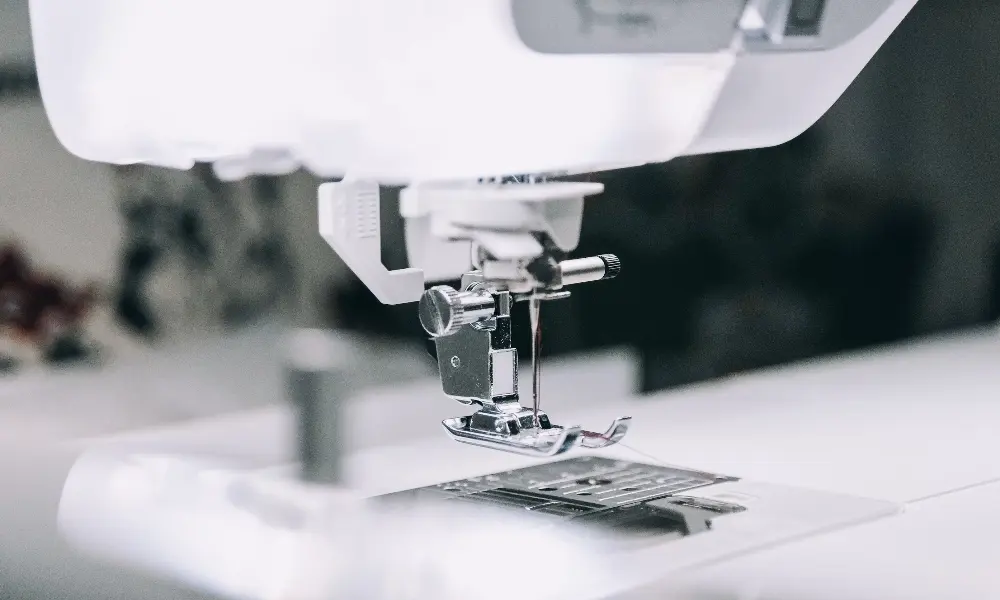
Activewear is not a single fabric problem. A compression legging, a brushed fleece hoodie, a woven running short, and a bonded jacket each ask different things from the same sewing line. What they share is this: the seam must stretch with the panel, return cleanly, and survive repeated abrasion, washing, and body heat without grinning or puckering.
The machine mix therefore follows the fabric behavior first and the garment type second. For most factories, the core line is a 4-thread overlock or safety-stitch overlock for construction, a lockstitch for topstitching and component setting, a multi-needle coverstitch or feed-of-the-arm machine for hems and bindings, and a finishing setup that sets the seam without killing the elastane. The specification details — differential feed, needle point, stitch class, pressing temperature — are what separate a stable activewear line from one that looks acceptable during first-piece inspection and fails after Produktion washing.
Stretch Fabric Behavior Should Drive Machine Choice
Activewear fabrics are usually knit-based or mechanically stretched in at least one direction. When a seam is placed under load, two things can fail: the thread can break, or the fabric can slip away from the stitch line. Standards classify stitch types and seam types separately for this reason. ISO 4915 divides machine stitches into classes, while ISO 4916 defines seam configurations and how fabric plies are joined [1][2].
On a practical floor, the first decision is feed system. A lockstitch machine with a standard drop feed will handle woven shorts and firm interlock panels, but it can stretch a lightweight single jersey forward while sewing. That produces wavy seams even when tension is correct. For those fabrics, a differential feed Overlockmaschine is the safer construction tool because the front and rear feed dogs can be adjusted independently. The same logic applies to elastic insertion: an elastic joining machine should control the relaxed elastic length against the stretched fabric length, rather than relying on operator pull.
Needle point is the second filter. Ball-point or medium ball-point needles push knit loops aside instead of cutting them. A sharp point in a tightly twisted performance knit may create holes that only become visible after dyeing or washing. Synthetic-heavy fabrics also generate more needle heat, so stitch length and speed may need to be tuned below the machine’s maximum rating.
Core Stitch Classes for Activewear Construction
Most activewear lines use only a small group of stitch classes, but the mix matters more than the number of machines.
| Garment requirement | Typical stitch class and machine | Why it is selected | Key check |
|---|---|---|---|
| Main seams in woven shorts or panels | 300-class lockstitch | Low bulk, stable seam | Balanced needle and bobbin thread |
| Cut-and-sew knit side seams | 500-class overedge / safety stitch | Seam strength plus stretch | Differential feed setting and trimming width |
| Legging and top hems | 600-class coverstitch | Stretchable multi-needle hem | Looper timing and consistent top cover |
| Elastic waistbands and bindings | Zigzag, coverstitch, or multi-needle chainstitch | Stretch with recovery | Elastic feed ratio and stitch density |
| Decorative flat seams on sportswear | Multi-needle flatseam or flatlock | Low-profile, high-stretch seam | Needle spacing and thread tension |
The stitch classes themselves are only part of the answer. ISO 4916 is the more useful reference when troubleshooting because the same 500-class stitch can sit in a superimposed seam, a bound seam, or a flat seam, and each configuration changes how the seam behaves under pressure [2]. A good rule is to write both the stitch class and the seam type on the work instruction. If operators know only “overlock the side seam,” they may still construct it correctly, but quality issues become harder to diagnose when the seam has no defined configuration.
For high-stretch panels, many factories pair a zigzag machine with a 4-thread overlock: the overlock joins and trims, and the zigzag or coverstitch provides stretch where a straight seam would pop. An interlock machine is added when two-needle stretch seams are required in rib knit, underwear-style waistbands, or hem work. The important distinction is that interlock machines produce a stitch from multiple needles and loopers, so thread consumption and needle timing must be controlled as a system, not as a single-needle adjustment.
Building the Activewear Line from Cutting to Assembly
A recommended activewear line usually starts with layer cutting or precision cutting for panels, then moves into the following sequence:
- Panel construction — 4-thread or 5-thread overlock/safety stitch for knit main seams; lockstitch for woven panels and stress points.
- Component setting — lockstitch or multi-needle machines for pockets, zippers, plackets, and labels.
- Elastic and binding work — elastic joining machines, binders, or coverstitch machines for waistbands, cuffs, and necklines.
- Hemming — flatbed or cylinder-bed coverstitch, or a feed of the arm machine for tubular hems and close cuff work.
- Topstitching and reinforcement — lockstitch, bar-tack, or specialized pattern machines at points that carry repeated load.
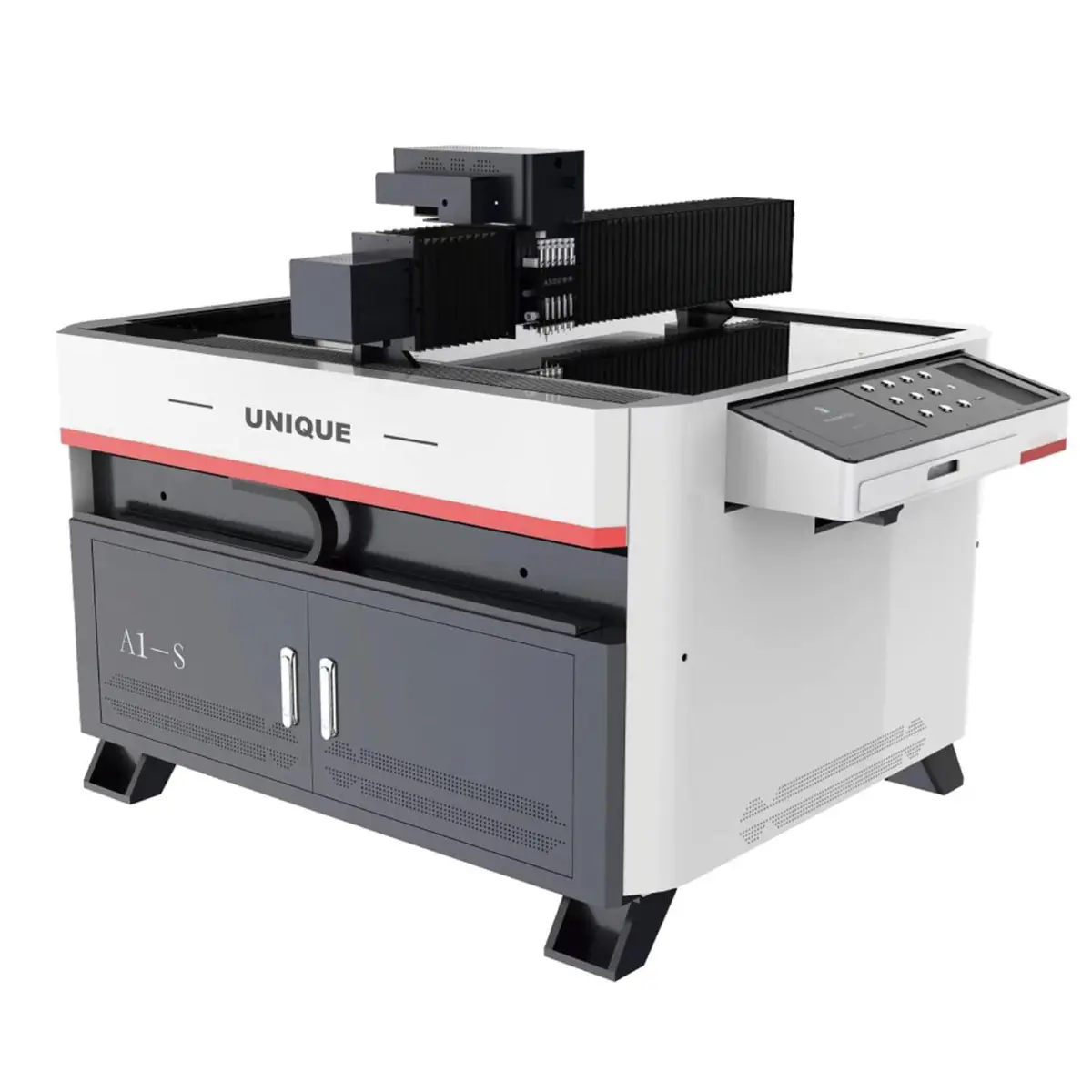
The reason to sequence the line this way is not just output. It is handling. Knit panels are difficult to control, and every extra manual turn or re-alignment increases the chance that a seam will be stretched during sewing. Automation helps most where operator decision-making is highest: edge guiding, elastic feed ratio, backtacking, thread trimming, and pocket or label placement. A multi needle machine can replace several operators on parallel rows, but only if the panel is presented consistently. The machine does not correct poor cutting or inconsistent bundle sizes.
If your line mixes several product families, the machine set should be compared as a whole. <Hauptunterschiede zwischen Näh- und Stickschneidemaschinen> covers where sewing, embroidery, and cutting equipment overlap and where a dedicated machine is the safer purchase.
For a factory that plans to source the complete activewear line rather than adding machines one by one, <Ihre One-Stop-Plattform für die Beschaffung von Nähausrüstung> covers the procurement logic behind matching machines to a production sequence. This matters most when the line must handle both standard activewear and frequent style changes.
If you are compiling a machine list for a new activewear line, send the fabric types, target daily output, and whether you need flatbed or cylinder-bed hemming to sales@tzpioneer.com. A technical sales engineer can map the line sequence and point out where a small automation upgrade removes more labor than a larger machine purchase.
Finishing Without Killing the Stretch
Finishing is where many activewear seams are damaged after they have been sewn correctly. Elastane degrades under excessive dry heat or prolonged high-temperature pressing. The objective is to set the seam and flatten the fabric without glazing the surface or reducing recovery.
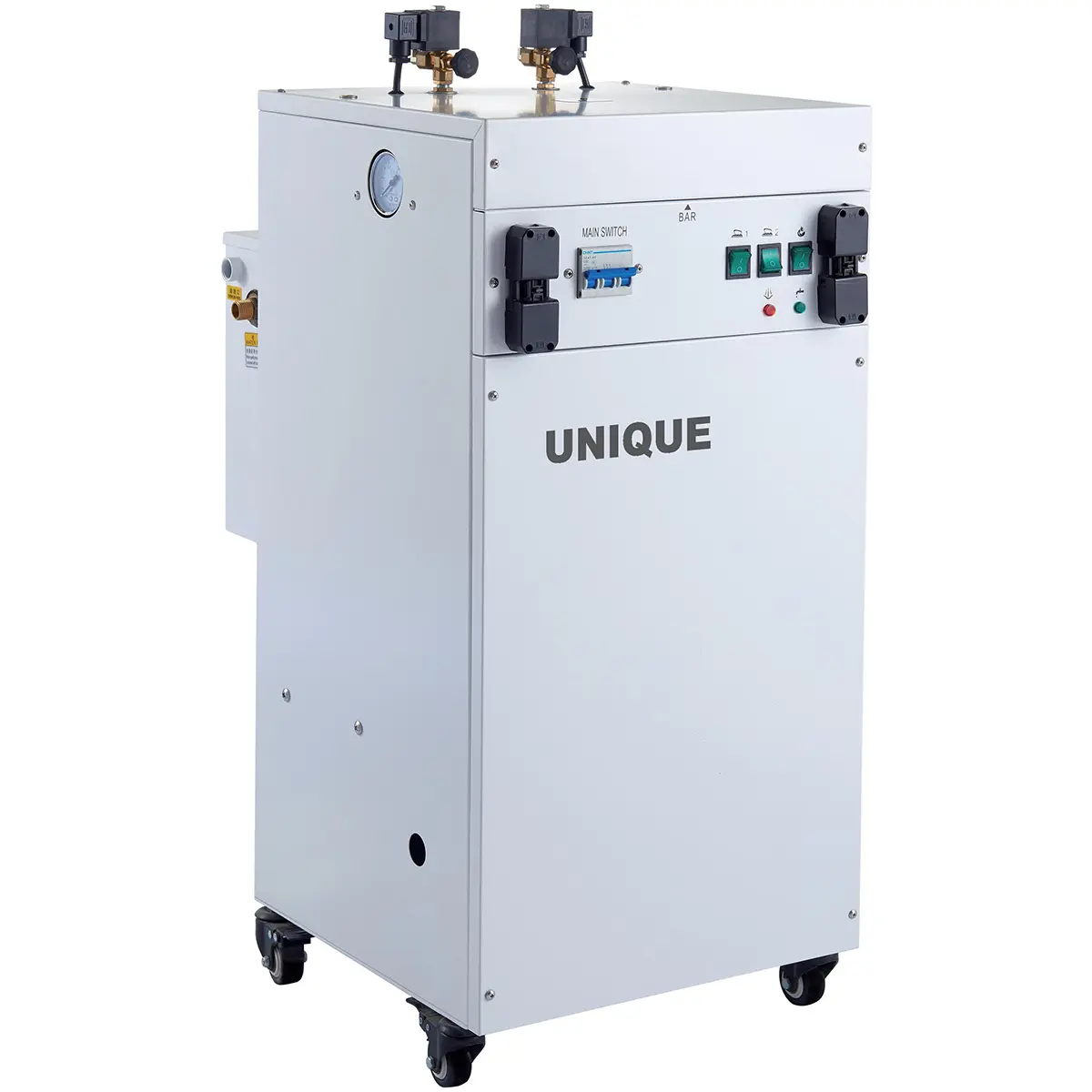
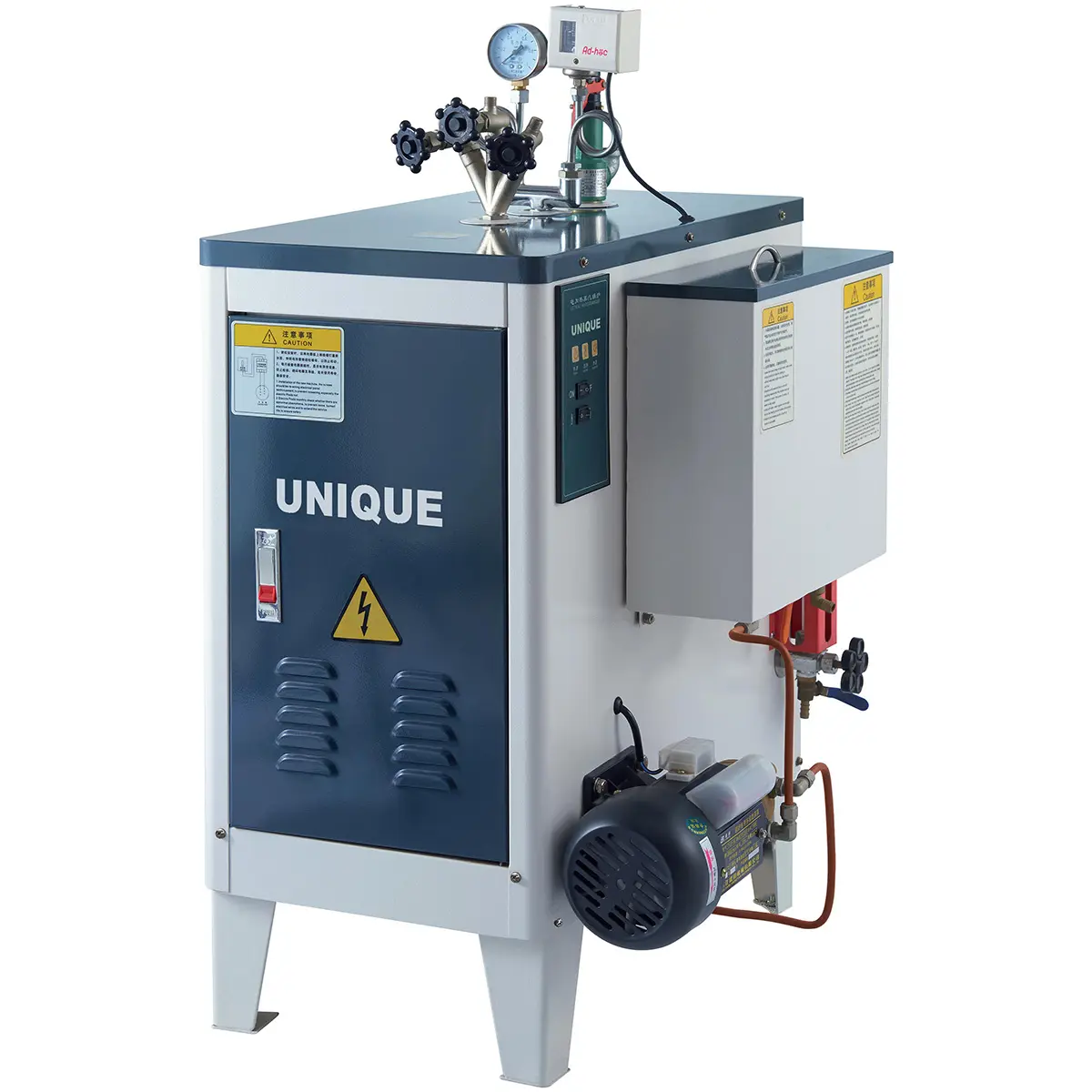
The finishing setup should include a vacuum ironing table, a correctly sized steam boiler, and controlled iron output. For production pressing, a boiler iron table provides the vacuum and blowing function that keeps the garment stable while steam relaxes the seam. The boiler should be matched to iron count and expected steam demand; an undersized boiler produces wet steam, while an oversized one wastes energy and complicates temperature control.
Finishing rules for activewear:
- Press at the lowest effective temperature for the fiber blend.
- Use steam to relax, not prolonged contact to force the seam flat.
- Keep high-heat pressing away from exposed elastic unless protected by a pressing cloth.
- Vacuum cool the panel before moving it, so the seam sets without being stretched by handling.
- Separate finishing for synthetic base layers and natural-fiber blends; a shared setting may compromise both.

A common finishing defect is visible stitch marks on the face of the fabric after pressing. That is usually caused by excessive pressure or temperature, not by stitch tension alone. If the seam was balanced before pressing and the mark appears after pressing, reduce pressing time and temperature before changing the Nähmaschine setting.
Sourcing and Specification Checklist
When requesting a quote, do not stop at “4-thread overlock.” Specify the fabric range and the seam behavior you need. The supplier should be able to confirm the machine configuration, feed system, needle system, voltage, and available attachments.
For activewear, include these points:
- Main fabric types and whether they are 2-way or 4-way stretch.
- Expected seam types: superimposed, bound, flat, or ornamental.
- Required stitch classes per operation.
- Differential feed requirement for lightweight or highly elastic panels.
- Cylinder-bed vs flatbed preference for hems and bindings.
- Thread system and needle point requirement.
- Finishing equipment: iron type, boiler capacity, and vacuum table size.
- Voltage, frequency, and compressed air availability if automation is included.
- After-sales service coverage and spare parts lead time.
A clear specification also makes incoming inspection easier. When you know the seam class, needle system, and stitch length, you can verify the machine against a fixed set of values instead of accepting a generic model description. This is the same discipline used in seam quality standards, where the seam is defined by its configuration, not by the machine name [3].
For activewear suppliers combining production with decoration or special finishing, the equipment choices multiply quickly. <Hauptunterschiede zwischen Näh- und Stickschneidemaschinen> covers the decision logic for keeping sewing, embroidery, and cutting functions separate or integrated into one line.
Get a Machine Map for Your Activewear Line
A reliable activewear line starts with the right stitch class, feed system, and finishing setup — then adds automation only where it reduces handling or improves repeatability. At UNIQUE, Taizhou Unique Machine Technology Co., Ltd. supplies industrial sewing machines, overlock and coverstitch systems, cutting equipment, and finishing lines as a one-stop garment machinery package.
Send your activewear product list, fabric types, and target output to sales@tzpioneer.com or call +86-18069305333. The technical team can recommend a machine sequence, confirm the required needle and stitch configuration, and prepare a specification-based quotation matched to your production floor.
FAQ
Which overlock machine should I use for 4-way stretch activewear?
Most activewear construction uses a 4-thread or 5-thread overlock/safety-stitch machine with differential feed. The differential feed controls stretch during sewing, while the extra threads provide seam strength. For very lightweight or highly elastic panels, specify a machine with a wide differential feed adjustment range and a stable trimming system.
Can I sew activewear with a standard lockstitch machine?
Yes, but only for the right operations. A lockstitch is suitable for woven panels, zippers, topstitching, labels, and low-stretch component work. It is not the first choice for joining highly elastic knit side seams, where the stitch’s lower extension can cause thread breakage. Use lockstitch selectively and pair it with overlock, coverstitch, or multi-needle machines.
What finishing equipment prevents heat damage to elastane?
Use a vacuum ironing table with a correctly sized steam boiler, and press at the lowest effective temperature for the blend. The vacuum cools and stabilizes the panel after pressing. Avoid prolonged dry heat directly on exposed elastic, and use a pressing cloth when high heat is required on synthetic fabrics.
How do coverstitch and flatlock differ for activewear seams?
A coverstitch is a multi-needle chainstitch commonly used for hems and bindings. A flatlock or flatseam machine creates a low-profile seam that lies flat against the body, often used for sportswear seam lines where chafing must be reduced. The choice depends on whether you need a hem edge, a joining seam, or a decorative low-bulk seam.
What should I specify when requesting an activewear machine quote?
Specify the fabric types and stretch direction, the operations to be performed, required stitch and seam classes, feed system, needle system, bed type, voltage, and whether automation such as auto-trimming or elastic feeding is needed. The more precisely you define the seam behavior, the easier it is to avoid a machine that is acceptable on paper but wrong for the fabric.
Referenzen
[1] ISO 4915:1991, Textiles — Stitch types — Classification and terminology, International Organization for Standardization, Geneva, Switzerland.
[2] ISO 4916:1991, Textiles — Seam types — Classification and terminology, International Organization for Standardization, Geneva, Switzerland.
[3] ASTM D6193-16(2020), Standard Practice for Stitches and Seams, ASTM International, West Conshohocken, PA, USA.
[4] ISO 13936-2:2004, Textiles — Determination of the slippage resistance of yarns at a seam in woven fabrics — Part 2: Fixed load method, International Organization for Standardization, Geneva, Switzerland.
[5] ISO 3759:2011, Textiles — Preparation, marking and measuring of fabric specimens and garments in tests for determination of dimensional change, International Organization for Standardization, Geneva, Switzerland.
Wenn Sie interessiert sind, schauen Sie sich diese verwandten Artikel an:
Meetlin Group Conducts Technical Exchange With Zhejiang Qixing Empowering Service Upgrading Of Unique Series Equipment In The Market
Unveiling Ceremony Of Milin Group Taizhou Center
Milin Group Taizhou Center Taizhou Abendessen zur Lieferantenanerkennung
Hauptunterschiede zwischen Näh- und Stickschneidemaschinen