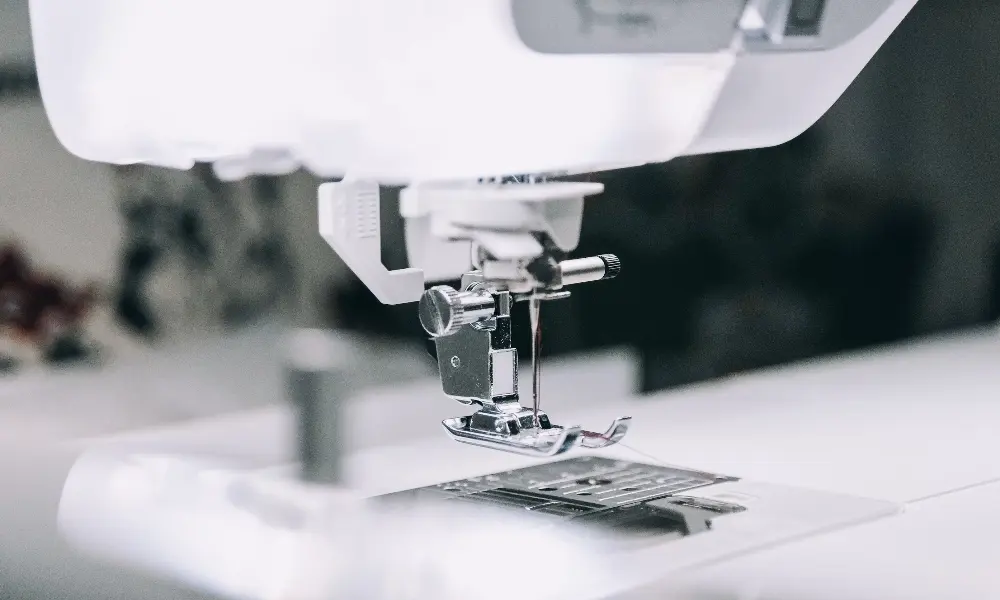
Carpet and jumbo bag sewing belongs to the same heavy-duty family, but the two jobs punish machines in different ways. Carpet binding and panel joining demand consistent feeding through pile, backing and binding tape, while jumbo FIBC production concentrates stress in load-bearing seams that may cross four or more layers of woven polypropylene. A lightweight garment lockstitch machine is not the right starting point for either application.
This guide explains the machine features that separate durable heavy-duty equipment from general industrial sewing machines: feed system, hook and bobbin capacity, presser foot lift, stitch length control, needle system and thread handling. It also shows what to specify when quoting carpet finishing lines or jumbo bag production cells.
Why Heavy-Duty Work Needs a Different Machine
Thick materials fail light machines through skipped stitches, broken needles, thread burning and uneven feeding. The problem is rarely one component; it is the combination of several forces at the needle.
Before choosing a machine, it helps to name the stitch class. ISO 4915 classifies the familiar lockstitch as class 301 and the two-thread chainstitch used on many bag closing lines as class 401 [1]. The seam type and the number of plies determine what the machine must hold together. ASTM D6193 provides the common stitch and seam definitions that help you compare specification sheets [2].
A heavy-duty carpet or jumbo bag machine needs enough mechanical power to drive the needle through dense material, an upper and lower feed system that moves all plies together, and a large hook assembly with enough thread capacity for heavy bonded thread. If any one of these is missing, the machine will run for a short time and then fail at the worst crossing point.
Carpet Sewing: Binding, Overedging and Panel Joining
Carpet work involves three common operations: overedging raw edges, binding edges with tape, and joining panels for large rugs or wall-to-wall installations. Each operation needs the material to stay flat while the presser foot moves over pile that varies in height.
A dedicated carpet bag sewing machine is often the right starting point. It combines a high-lift presser foot with a large hook and can be configured for binding folders or edge-guide attachments. For carpet panel joining, a long-arm flatbed design reduces operator fatigue because the material does not need to be folded as tightly to reach the seam line.
Pile compression is a major issue. A walking foot or compound feed holds the top layer while the bottom feed moves the backing. Without that top feeding action, the upper pile moves ahead of the backing and creates a wavy edge that is difficult to fix after sewing.
Jumbo Bag Sewing: Load-Bearing Seams and Production Speed
Jumbo bags, FIBCs and bulk packaging are different from carpet because the seams are load-bearing. Side seams, bottom seams, top hems, spouts and lifting-loop reinforcements must hold the rated load without stretching open.
For woven polypropylene and coated FIBC fabric, review bag sewing machines with heavy feed systems and large bobbins. A light industrial machine cannot keep the seam stable when the fabric is dense and the stitch length is extended. Many bag lines use a two-thread chainstitch because it provides elongation without excessive seam stiffness [2].
Reinforcement points need separate attention. Lifting loops and discharge spouts should be reinforced with dense stitch patterns such as bar tacks. A special bar tacking machine can add that strength without slowing down the main line. For angled or difficult assembly points on structured bags, a postbed lockstitch sewing machine often provides better access to the seam area.
Specification Checklist for Heavy-Duty Machines
The right machine choice comes down to a small set of criteria. Use this table as a working check before accepting a quotation.
| Specification point | Carpet work | Jumbo bag work | What to check |
|---|---|---|---|
| Feed system | Walking foot or compound feed to move pile and backing | Unison feed or compound feed to hold woven polypropylene layers | Top feed pressure and bottom feed stroke |
| Presser foot lift | High-lift design for thick binding and cross-seams | High-lift design for multi-ply seams and folded hems | Clear height at the thickest seam point |
| Stitch length control | Extended maximum for long decorative or joining seams | Extended maximum for load-bearing FIBC seams | Maximum setting and reverse-stitch consistency |
| Hook and bobbin | Large rotary hook with heavy thread capacity | Large-capacity bobbin for uninterrupted production | Hook opening, bobbin size and thread capacity |
| Needle system | Heavy-gauge system such as 135×17 | Heavy-gauge system for dense woven fabric | Needle bar stroke and clearance |
| Safety | Guarding and stop function on large moving parts | Guarding around high-speed feed and take-up areas | Compliance with applicable safety standards |
Machine guarding and operator safety are not afterthoughts on heavy-duty lines. ISO 10821 sets requirements for industrial sewing machine safety [3], while OSHA 29 CFR 1910.212 provides the general machine guarding baseline [4].
Feed Systems: Walking Foot, Compound Feed and Unison Feed
Feed system choice is the first technical decision. A drop-feed machine moves fabric only from below, which is acceptable for thin flat material but not for pile, coated fabric or multiple plies.
A walking foot adds an upper feed motion that walks the top layer at the same speed as the bottom feed. Compound feed combines needle feed with the walking foot, while unison feed drives the top and bottom feeds together for the heaviest stacks. For carpet binding and FIBC side seams, compound feed is usually the safer starting point because it reduces ply shift at cross-seams.
Needles, Thread and Tension for Dense Materials
A heavy-duty machine is only as good as the needle and thread combination. Heavy woven polypropylene, coated fabric and carpet backing need a strong needle system with enough blade length to pass through the stack. System 135×17 is a common starting point for dense woven and coated work.
Thread selection follows the seam requirement. Heavy bonded polyester or bonded nylon in a heavier Tex count holds the seam without excessive stiffness. The thread path must be smooth enough for thick thread, and the check spring and take-up need enough travel to feed consistent tension.
If the operation runs at high speed, thread heat becomes a problem. A thread stand that feeds the cone cleanly, combined with proper machine lubrication and occasional thread lubrication for difficult synthetic material, reduces the risk of heat breaks at the needle.
Common Defects and the Machine Fixes
Most heavy-duty sewing problems show up first at the thickest point. Recognizing the cause prevents unnecessary adjustment of machine timing.
- Skipped stitches at cross-seams: usually feed-related or the result of insufficient presser foot lift. Increase foot height and verify top feed engagement.
- Seam puckering on coated fabric: often caused by feed slippage between plies. A walking foot or compound feed helps keep the plies aligned.
- Broken needles in dense weave: check needle system, needle bar stroke and needle clearance before increasing machine speed.
- Thread breakage with heavy thread: inspect the thread path, eyelets, check spring and take-up stroke. A rough or undersized eyelet creates heat and snap breaks.
- Uneven stitch length on carpet pile: usually a presser foot pressure issue, not a stitch length adjustment.
Matching the Machine to Your Product Mix
Carpet and jumbo bag lines often share a factory with cutting, embroidery and other sewing processes. The decision logic is different when you are building a diversified textile plant instead of a single-product line. Sorting the machine boundary first keeps you from buying a heavy lockstitch for a job that belongs to a cutter or an embroidery unit.
Sorting machine categories becomes easier when the boundary between sewing, embroidery and cutting is clear. <Key Differences Between Sewing Embroidery Cutting Machines> covers the equipment separation decision.
Once the machine type is settled, most carpet and jumbo bag buyers are really sourcing several stations: cutting, sewing, reinforcement, inspection and packing. A one-stop supplier can simplify spare parts, training and service scheduling, especially when the line has mixed machine brands.
When the requirement spans multiple machine types, procurement is more than a model number. <Your One Stop Sewing Equipment Procurement Platform> covers one-stop sewing equipment procurement.
Plants in South and Southeast Asia often run similar bag constructions but face different voltage, service distance and operator training realities. A machine shortlist should account for local support as much as stitch speed.
For production bases in South and Southeast Asia, local service and spare parts can shape payback as much as machine specifications. <Unique Team Visited The Southeast Asian And South Asian Markets> covers regional equipment and service realities.
What to Ask Before You Buy or Quote
A clear inquiry produces a better machine proposal. Before contacting a supplier, prepare the following information.
| Information to provide | Why it matters |
|---|---|
| Exact material composition and coating | Determines feed system and needle point |
| Number of plies at the thickest cross-seam | Sets presser foot lift and machine class |
| Required stitch type and seam placement | Determines lockstitch, chainstitch or safety stitch |
| Expected daily or monthly output | Decides manual, semi-automatic or automated configuration |
| Factory voltage and air supply | Affects motor, control panel and optional pneumatics |
Need a focused shortlist instead of a general catalog pitch? Send material photos, seam sketches and monthly volume to sales@tzpioneer.com or call +86-18069305333. A practical inquiry should state your thickest stack, stitch type and voltage so the proposal matches your floor.
Get a Heavy-Duty Machine Shortlist for Your Product
If you are setting up a carpet binding line or adding jumbo FIBC capacity, the target should be a technical proposal rather than a single model number. At Taizhou Unique Machine Technology Co., Ltd., we help manufacturers define the feed system, needle configuration, stitch class and station layout before purchase.
Send material samples or photos, required stitch type and target output to sales@tzpioneer.com or call +86-18069305333. We will respond with a equipment recommendation covering machine configuration, options and after-sales support.
FAQ
What stitch type is best for jumbo bag load-bearing seams?
A two-thread chainstitch, classified as class 401 under ISO 4915, is often used because it provides elongation and continuous thread supply. The final choice depends on the bag design, rated load and seam placement [1].
Can one machine sew both carpet and jumbo bags?
It can handle both if it has compound feed, a high-lift presser foot and a large hook. However, production efficiency usually improves when the machine is configured for one primary job with the correct folder, guide or binding attachment.
What needle system do heavy polypropylene bags require?
System 135×17 is a common starting point for dense woven polypropylene and coated fabrics. Needle size and point form should be matched to the exact weave and coating.
Why do heavy cross-seams skip stitches?
Skipped stitches at heavy cross-seams are usually caused by poor ply feeding or insufficient foot lift. Check the top feed, presser foot height and needle bar stroke before changing machine timing.
What should I prepare before requesting a machine quote?
Prepare the material composition, thickest ply stack, required stitch type, daily output and factory voltage. This allows the supplier to confirm feed system, hook size, needle system and motor configuration.
References
[1] ISO 4915:1991, Textiles — Stitch types — Classification and terminology. International Organization for Standardization.
[2] ASTM D6193-16(2020), Standard Practice for Stitches and Seams. ASTM International.
[3] ISO 10821:2005, Industrial sewing machines — Safety requirements for sewing machines, units and systems. International Organization for Standardization.
[4] 29 CFR 1910.212, General requirements for all machines. Occupational Safety and Health Administration.
If you’re interested, check out these related articles:
Live From Cairo Unique Shines At Egy Stitch Tex 2025
Key Differences Between Sewing Embroidery Cutting Machines