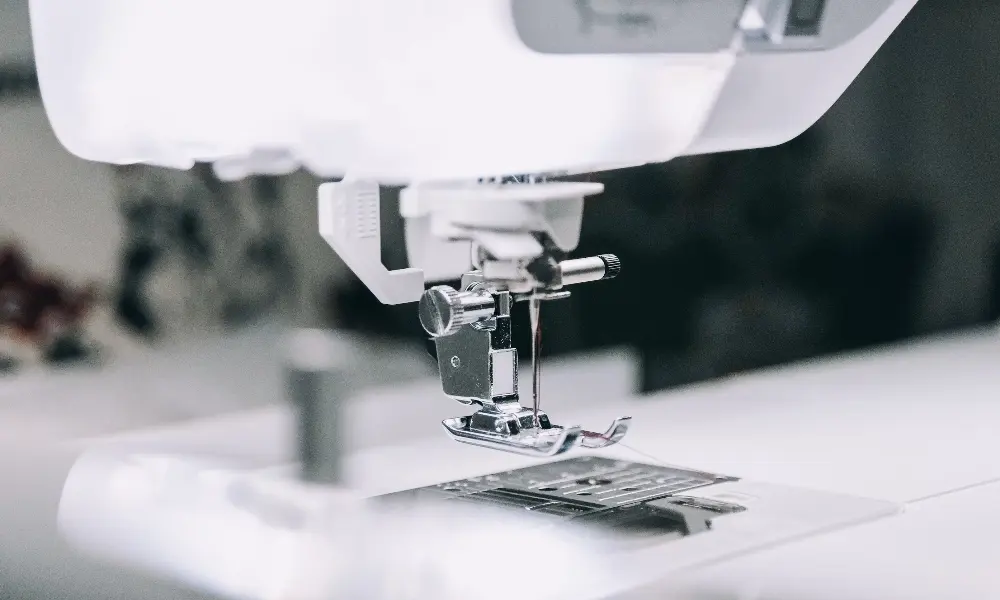
High-stress points in garments rarely fail gradually—they fail at waistband corners, pocket ends, fly fronts, belt loops, and strap attachments. In these spots, a seam must withstand repeated loading, not just hold two fabric edges together. That is why factories rely on bar tacking, and why many still use manual back-tacking on the sewing line. The practical question is not whether reinforcement matters, but which method gives the right balance of speed, strength, and consistency for a specific operation.
What Bar Tacking and Manual Back-Tacking Actually Do
A bar tack is a short, dense, multi-stitch reinforcement placed over a specific point or short length. In most garment operations it is produced as a controlled lockstitch or zigzag lockstitch pattern within the lockstitch-based stitch classes defined in ISO 4915 [1]. A dedicated bar tacking machine clamps the material, runs the programmed stitch sequence, and returns the needle or clamp automatically. The operator positions the garment and presses the pedal.
A strong bar tack is not the same as a long straight seam. The stitch density, stitch width, number of passes, and thread tension are preset, so the machine repeats the same reinforcement hundreds or thousands of times per shift.
Manual back-tacking uses the reverse lever on a lockstitch machine to sew forward, reverse, and forward again over the same short section. The operator controls the reverse timing, the length of each pass, and the final positioning. It can work well on short runs, but the result depends heavily on operator skill and attention.
Both methods can reinforce a seam end or stress point, but they are not the same process. Manual back-tacking is essentially a start/end locking sequence performed by hand control. A bar tacking machine is a separate reinforcement cycle with a defined stitch pattern.
Bar Tacking vs Manual Back-Tacking: Side-by-Side
| Factor | Bar tacking machine | Manual back-tacking |
|---|---|---|
| Stitch formation | Programmed repeat pattern | Operator-controlled forward/reverse |
| Speed per reinforcement | Faster and repeatable | Slower and operator-dependent |
| Strength consistency | High, because stitch count and placement repeat | Variable, because angle, count, and penetration can change |
| Skill required | Lower after setup | Higher for consistent results |
| Changeover | Requires pattern selection or clamp change | Immediate on a lockstitch machine |
| Cost profile | Higher initial machine cost, lower labor cost at volume | Lower initial cost, higher labor cost at volume |
| Best fit | High-volume, high-stress operations | Short runs, samples, repairs, low-stress seams |
The table shows why many factories start with manual back-tacking and later add a dedicated bar tacking machine when output volume or audit pressure increases. The decision should be based on the actual seam requirement rather than only on machine type.
Speed, Output and Consistency Differences
Speed and Output
Manual back-tacking adds several machine and operator actions per reinforcement point. The operator must stop at the stress point, switch to reverse, travel back, switch to forward, and continue sewing. Each action creates cycle-time variation. On a bar tacking machine, the clamp positioning, stitching, trimming, and release become one pedal-controlled cycle.
That difference matters most on garments with many reinforcement points: jeans, workwear, children’s clothing, bags, and safety garments. A single garment may need bar tacks at the fly front, pocket corners, belt loops, and strap attachments. The accumulated time per garment becomes significant across a line.
If your line currently runs manual back-tacking on high-stress operations, the fastest way to quantify the upgrade is to measure the full cycle time for the top three reinforcement points. Send that short list—garment, fabric, seam location, and required stitch density—to sales@tzpioneer.com or +86-18069305333, and the technical team can compare a dedicated bar tacking setup with your current lockstitch process.
Strength and Locking Performance
Strength depends on stitch class, stitch density, thread tension, and repeatability. A correctly programmed bar tack places the same number of densely packed stitches in the same short area every cycle. That repeatability helps the seam resist opening at stress points.
Manual back-tacking can produce strong reinforcement, but it is more exposed to variation. If the reverse pass is too short, the stitch count drops. If the operator shifts the fabric, the reinforcement may sit off-center. If the thread tension changes during the repeated forward-reverse movement, the tack can become loose or uneven.
When evaluating seam types and reinforcement placement, the configuration should be checked against the relevant seam classification in ISO 4916 [2] and standard stitch-and-seam practice such as ASTM D6193 [3]. This is especially important for garments that have to pass seam-strength testing, durability tests, or buyer quality audits.
When Manual Back-Tacking Still Makes Sense
Manual back-tacking is not obsolete. It remains a reasonable choice for sample rooms, repair benches, very short production runs, and operations where a dedicated machine would be idle most of the shift.
A lockstitch machine can perform start-of-seam and end-of-seam back-tacking as part of normal sewing. For many low-stress seams, that may be enough. If the factory is producing limited quantities and the operator is skilled, the cost of adding a special machine may not be justified immediately.
The problem appears when manual back-tacking is used for high-stress points in high volume. In that case, the total labor cost, rework rate, and quality variation become harder to control.
Choosing Equipment for High-Stress Reinforcement
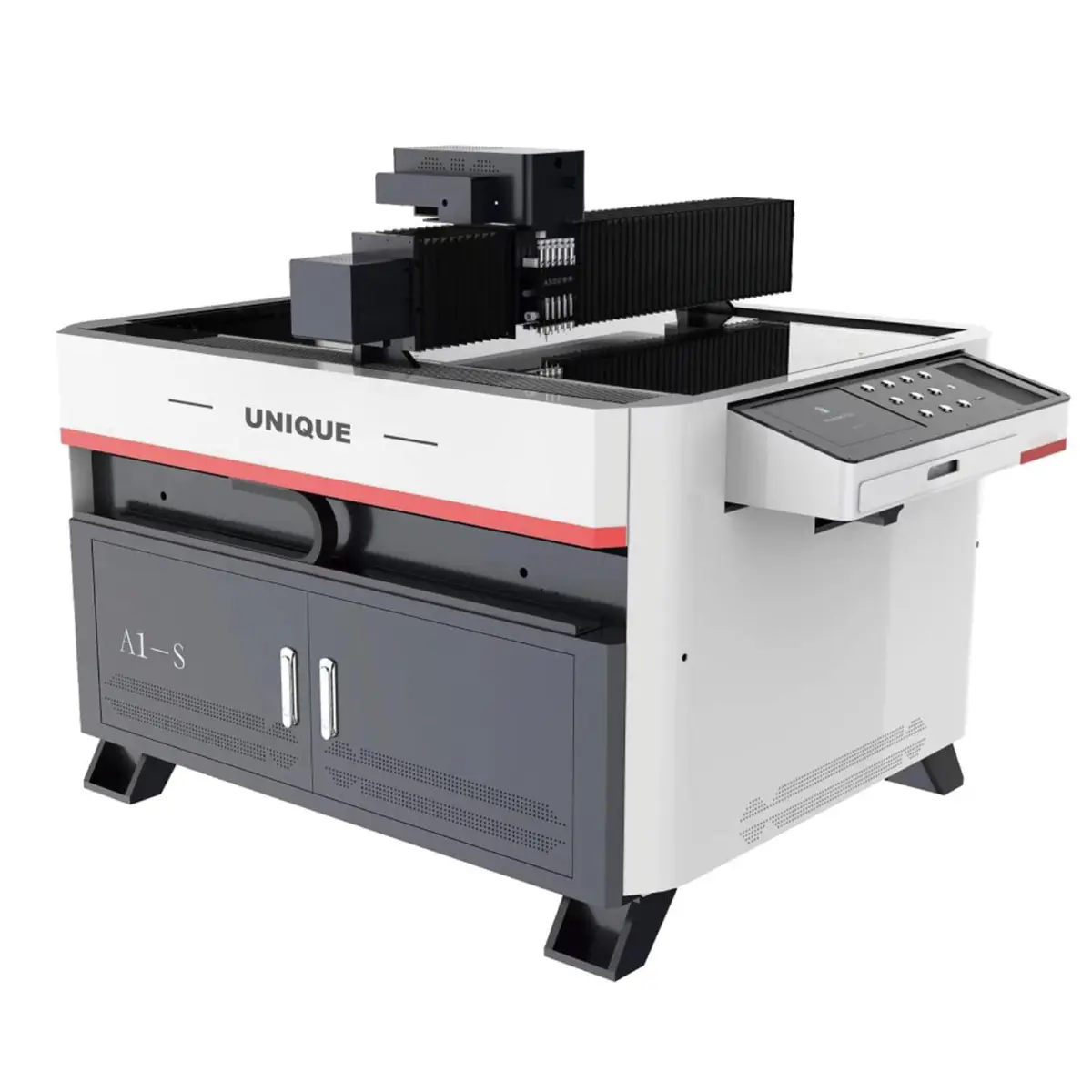
Before specifying a machine, list all operations that need reinforcement and the daily quantity per style. A dedicated bar tacking machine works well for standardized bartacks. Heavy or multi-layer operations may need a special bar tacking machine with larger clamp clearance and higher presser foot lift. For longer or non-standard reinforcement shapes, a pattern sewing machine may be a better fit because it can cover larger patterns or unusual geometries.

Evaluate the bar tack machine together with the material thickness, stitch density requirement, clamp type, thread trimmer, and whether the machine can store multiple patterns. The right set-up should hold the garment piece securely without damaging the fabric, while allowing the operator to load and unload quickly.
If you are evaluating more than one reinforcement operation at the same time, a full-line view usually leads to better equipment decisions. <Your One Stop Sewing Equipment Procurement Platform> covers the logic of building a complete sewing line from one procurement point.
For factories that are comparing manual and automated operations across a garment line, seeing how automation fits the whole flow helps avoid isolated buying decisions. <Technology Empowers Fashion Nicerbt Unique Attends Hm Supplier Tech Summit Empowering Intelligent Upgrading Of Garment Supply Chain> covers supplier technology programs that support intelligent upgrading of the garment supply chain.
Get a Configuration Review for Your Sewing Line
Send us a short brief: fabric types, seam locations, required stitch density, and daily output target per style. Contact UNIQUE at sales@tzpioneer.com or +86-18069305333, and we will recommend a reinforcement setup that balances speed, strength, and operator skill.
FAQ
Is bar tacking always stronger than manual back-tacking?
Not automatically. A poorly programmed bar tack can be weak, just as a well-executed manual back-tack can be strong. The main difference is consistency: a bar tacking machine repeats the same stitch count and placement every cycle, while manual back-tacking depends on operator control.
Can a lockstitch machine produce an acceptable back-tack for quality audits?
Yes, for many low-stress seams. The key is to control stitch length, reverse timing, and thread tension. For high-stress points or large order volumes, a dedicated bar tacking machine usually provides better repeatability and faster output.
How do I decide between a standard bar tacking machine and a special bar tacking machine?
If the products are standard weight, with reinforcement points that fit a standard clamp, a standard machine may be sufficient. If the material stack is thick, the reinforcement area is larger, or the work requires greater clamp clearance, a special bar tacking machine is usually the safer choice.
Does manual back-tacking make sense for thick materials?
It can, but it is more demanding. Thick stacks create more resistance under the presser foot, and the operator must control the forward-reverse movement without damaging the seam. A bar tacking machine with proper clamp pressure and motor torque reduces that strain.
What should I specify when requesting a bar tacking machine?
Provide the garment type, fabric weight, number of layers at the reinforcement point, stitch density requirement, clamp area, and expected daily output. That allows the equipment supplier to recommend the right machine configuration instead of offering a generic model.
References
[1] ISO 4915:1991, Textiles — Stitch types — Classification and terminology, International Organization for Standardization, Geneva, 1991.
[2] ISO 4916:1991, Textiles — Seam types — Classification and terminology, International Organization for Standardization, Geneva, 1991.
[3] ASTM D6193-16(2020), Standard Practice for Stitches and Seams, ASTM International, West Conshohocken, PA, 2020, www.astm.org.
If you’re interested, check out these related articles:
Empowering Hanoi Shaping The Future Meetlin Successfully Hosts Vietnam Garment Industry 4 0 Summit
Unique And Ekinci Makina Reaffirm Partnership For Iraq Market
Unique Strength Debut At Jiam 2024
Unique Shines At Itcpe Vietnam Texprint 2025 Attracting Crowds And Media Spotlight