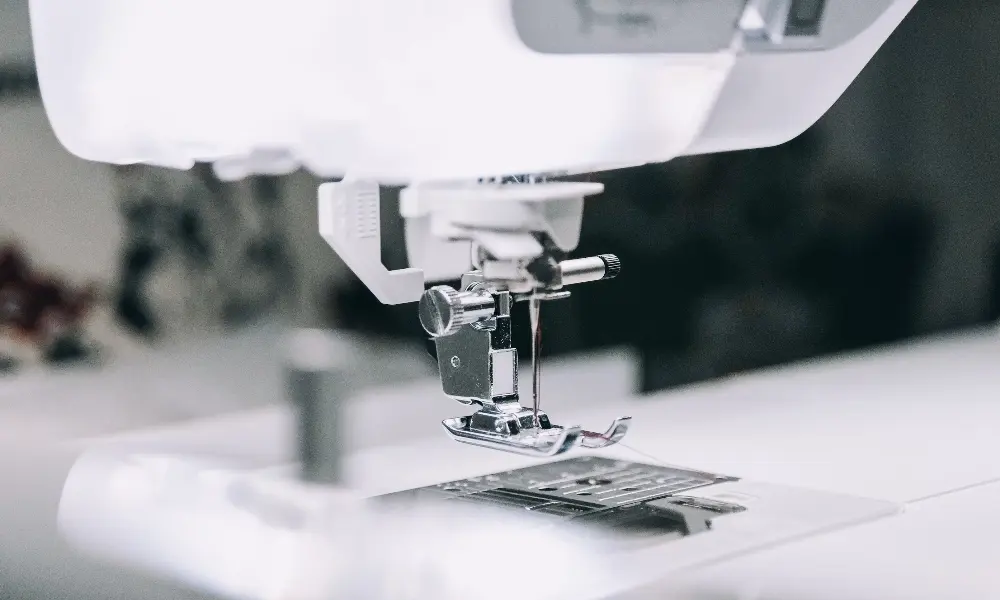
Most factory owners learn machine names before they learn seam and stitch definitions. That is the wrong order. A ماكينة الخياطة is only a tool for producing a stitch class in a controlled way. The seam type determines how plies are arranged, how the seam will behave under wear, and which machine, bed shape, feed system, needle count, and attachment belong on the line.
This guide connects the two systems that matter most in garment engineering: ISO 4915 stitch classes and ISO 4916 seam types. By the end, you should be able to walk through a sample or tech pack, identify the construction requirements, and match each operation to a machine without overbuying.
Stitch Classes Are the Thread-Level Decision
ISO 4915 organizes stitches into six classes based on how the thread interlocks with the fabric and other threads [1]. You do not need to memorize every stitch number, but a few classes appear constantly in garment منتجion.
- Class 100 – single-thread chainstitch: a flexible stitch formed by one thread interlooping with itself. It is used for basting, temporary joining, and some blind operations.
- Class 200 – hand-stitch reproduction: simulates hand-stitch appearance, often used for lapels, pick stitching, and decorative details.
- Class 300 – lockstitch: the most common class for woven garments. Stitch 301 is the straight lockstitch, while stitch 304 is the zigzag lockstitch.
- Class 400 – multi-thread chainstitch: commonly stitch 401, a two-thread chainstitch that stretches more than a lockstitch and is widely used for side seams, waistbands, and long straight runs.
- Class 500 – overedge: stitches 503, 504, and 505 trim and encase the fabric edge in the same operation. These are the standard choices for knit edge neatening and many safety seams.
- Class 600 – covering chainstitch: produces the flat, wide seams seen on activewear, coverstitched hems, and binding operations.
For a woven shirt or trouser main seam, most factories still build around a آلة الغرز المتشابكة running stitch 301. It is secure, compact, and produces the same visible appearance on both sides. Where the seam must stretch, a chainstitch machine running stitch 401 is often the better starting point.
For knit edges, the آلة الاوفرلوك is the standard first machine, with configuration depending on whether you need three-thread, four-thread, or five-thread coverage. When the operation also requires a flat hem or bound neckline, an آلة التعشيق may replace or follow the overlock operation.
Seam Types Are the Construction Decision
If the stitch class is the thread-level decision, the seam type is the construction-level decision. ISO 4916 classifies seams by how fabric plies are arranged and how the needle penetrates them [2].
The most common categories on a garment line are:
- Superimposed seams: plies are stacked together, edges aligned, and joined in one pass. Side seams, shoulder seams, sleeve seams, and many body seams fall into this category.
- Lapped seams: plies overlap each other instead of meeting at an edge. Jeans side seams, yoke attachment, and heavy topstitched constructions commonly use lapped seams.
- Bound seams: a binding strip wraps the raw edge before it is stitched. Necklines, armholes, underwear openings, and lightweight wovens often use bound seams.
- Flat seams: fabric edges are butted or very narrowly lapped and joined with multi-needle cover stitching. Activewear, lingerie, and performance garments rely on flat seams to reduce skin irritation.
- Edge neatening and hem seams: raw edges are consolidated, folded, and stitched to prevent fraying or create a clean hem. This includes serged edges, coverstitched hems, and blind-stitched finishes.
The key point is that ISO 4916 does not tell you which machine to buy. It gives you a shared language. The machine decision follows only after you know the seam class, the fabric behavior, the expected stretch, and the appearance standard.
Matching Seam Type to Machine Class
A practical way to use these standards is to create a seam-to-machine matrix before quoting equipment. The table below gives a simplified starting point for common garment operations.
| Seam task | Typical construction | Common stitch class | Machine direction | What to specify |
|---|---|---|---|---|
| Main woven side seam | Superimposed seam | 301 lockstitch or 401 chainstitch | Single-needle lockstitch or chainstitch | Needle system, seam allowance, SPI, auto trimmer |
| Jeans side seam | Lapped seam | 301 lockstitch with topstitching | Single- or double-needle lockstitch | Needle gauge, stitch length, presser feet, puller |
| Knit edge neatening | Edge neatening | 503/504 overedge | Overlock machine | Thread count, differential feed, trimmer, stitch width |
| Coverstitch hem | Edge neatening or hem seam | 406/605 covering chainstitch | Interlock or flatseamer | Needle spacing, hem width, looper timing, top cover |
| Neckline binding | Bound seam | 401 chainstitch or 406 coverstitch | Lockstitch, chainstitch, or interlock with binder | Folder size, fabric roll, differential feed, needle count |
| Decorative topstitch | Decorative/attached seam | 301, 304, or multi-needle chainstitch | Zigzag, lockstitch, or multi-needle machine | Stitch pattern, needle spacing, thread color, SPI |
| Activewear flat seam | Flat seam | 607 or 4-needle coverstitch | Flatseamer or multi-needle machine | Needle count, gauge, stitch balance, operator training |
This matrix is not universal for every product, but it prevents the most expensive mistake: buying a machine type before confirming the seam type. A multi-needle machine can solve many flat and coverstitch operations, while a zigzag machine covers the narrow range of operations that genuinely need zigzag lockstitches.
Specification Points That Change Seam Quality
Once the machine class is correct, seam quality is decided by how the machine is configured and how the work is prepared. ASTM D6193 gives a practical link between stitch and seam practice in apparel manufacturing [3].
The most important specification points are:
- Stitches per inch, or SPI: controls seam strength, stretch, thread consumption, and speed. A shorter stitch is not always better; it must match fabric density, expected load, and the customer’s quality standard.
- Seam allowance: affects how much fabric is caught in the seam and whether the seam can be pressed open or to one side. It also changes edge trimmer and guide settings.
- Needle system and point type: woven fabrics often use sharp needles; knits and technical textiles often require ball-point or special-point needles to avoid cutting yarns.
- Thread size and fiber: thread must be strong enough for the seam load without overwhelming the fabric or the machine tension.
- Feed system and differential feed: drop feed is enough for many flat woven seams, while knits and heavy multi-ply crossings often benefit from differential feed or an additional puller.
- Presser foot and folder: edge guides, binders, folders, and hemming feet determine consistency more than machine speed in high-volume production.
- Trimmer and reverse capabilities: automatic thread trimming and start/end backtacks save time, but only when the seam type actually benefits from them.
A factory owner is not expected to set every parameter by hand. What matters is that the machine is specified correctly before delivery, and that the operator team has a repeatable setup method for each seam.
Common Seam and Stitch Faults
Most recurring seam problems are not mysterious. They come from a mismatch between fabric, stitch class, seam type, or machine setup.
- Seam puckering usually comes from excessive thread tension, too fine a needle, too dense an SPI, or incorrect feed balance.
- Wavy edges on knits often occur when the overlock differential feed is set incorrectly or the edge is being stretched during sewing.
- Seam grinning or gapping means the thread tension is not burying the seam correctly for that fabric and stitch class.
- Skipped stitches generally relate to the needle point, size, timing, or the relationship between needle and hook or looper.
- Seam slippage appears when the stitch density is too low for a slippery weave or when the seam type is too weak for the load.
- Needle cutting and holes on synthetic or coated fabrics require a different needle point, a reduced needle size, or a changed stitch class.
The correct response is not always to buy another machine. In many cases the existing machine needs a feed adjustment, a needle change, a better folder, or a different stitch specification. Only after the diagnosis shows a hard limitation should the equipment list change.
From Stitch Map to Purchase List
Before requesting a quote, develop a stitch map for the product line. A simple five-step version works well:
- List every construction operation from first assembly to finishing.
- Assign each operation an ISO 4916 seam type.
- Choose the ISO 4915 stitch class that fits the fabric stretch, strength, and appearance requirement.
- Determine the machine layout: bed shape, feed system, needle count, folder or binder, trimmer, and automation level.
- Decide whether the operation should run on a standard machine, a template machine, or a pattern sewing machine for repeatability.
A broad machine portfolio helps here, because the same garment may require lockstitch, chainstitch, overlock, interlock, multi-needle, and special-function equipment. A special function machine is appropriate only when a defined operation repeats often enough to justify dedicated tooling.
If you are still clarifying how sewing, embroidery, and cutting machines split on the production floor, الاختلافات الرئيسية بين آلات قطع الخياطة والتطريز covers the boundary before you lock a seam plan.
For a full-range sourcing view, منصة واحدة لشراء معدات الخياطة explains how a single-supplier machine list helps keep seam types, attachments, and service support aligned.
Talk to UNIQUE About Your Seam and Stitch Plan
A reliable machine layout starts with a clear seam and stitch specification. If you are setting up a new line or rebalancing an existing one, send UNIQUE your operation list, fabric types, seam allowances, target SPI, and daily output target.
Contact William at UNIQUE for a practical machine mapping: sales@tzpioneer.com or +86-18069305333. We will help you convert the seam types in your tech pack into a complete equipment list, including attachments, feeding options, and automation only where it earns back the investment.
Frequently Asked Questions
What is the difference between a seam and a stitch?
A stitch is the thread formation itself, such as a lockstitch, chainstitch, overedge, or coverstitch. A seam is the constructed result: the way fabric plies are arranged and joined. The same stitch class can be used in many different seam types.
Which stitch class should I use for woven main seams?
Most woven main seams start with stitch 301 lockstitch because it is secure, stable, and produces the same seam appearance on both sides. Stitch 401 chainstitch is an alternative where the seam must stretch during wear or where higher operating speed is important.
Do I need both an overlock and an interlock machine for knitwear?
Many knitwear factories need both. The overlock trims and encases the raw edge, while the interlock or coverstitch machine produces flat hems, bound seams, and decorative multi-needle stitching. The exact combination depends on whether you produce basic tees, activewear, underwear, or heavier knit garments.
How do seam types guide a machine purchase?
The seam type tells you the fabric ply arrangement, the number of needles needed, the bed shape required, and whether you need an edge trimmer, binder, folder, or differential feed. Buying by machine name alone misses these construction requirements.
What should I prepare before requesting a sewing machine quote?
Prepare the garment sample or tech pack, fabric type and weight, seam types, stitch classes or intended SPI, seam allowance, needle and thread requirements, daily output target, available voltage and air supply, and the number of operators per line. This lets the supplier map each operation to a specific machine instead of sending a generic package.
References
[1] ISO 4915:1991, Textiles — Stitch Types — Classification and Terminology, International Organization for Standardization, Geneva, Switzerland.
[2] ISO 4916:1991, Textiles — Seam Types — Classification and Terminology, International Organization for Standardization, Geneva, Switzerland.
[3] ASTM D6193, Standard Practice for Stitches and Seams, ASTM International, West Conshohocken, PA, USA.
إذا كنت مهتمًا، فراجع هذه المقالات ذات الصلة:
عشاء تقدير الموردين لمجموعة ميلين تايتشو مركز تايتشو
Unique Strength Debut At Jiam 2024