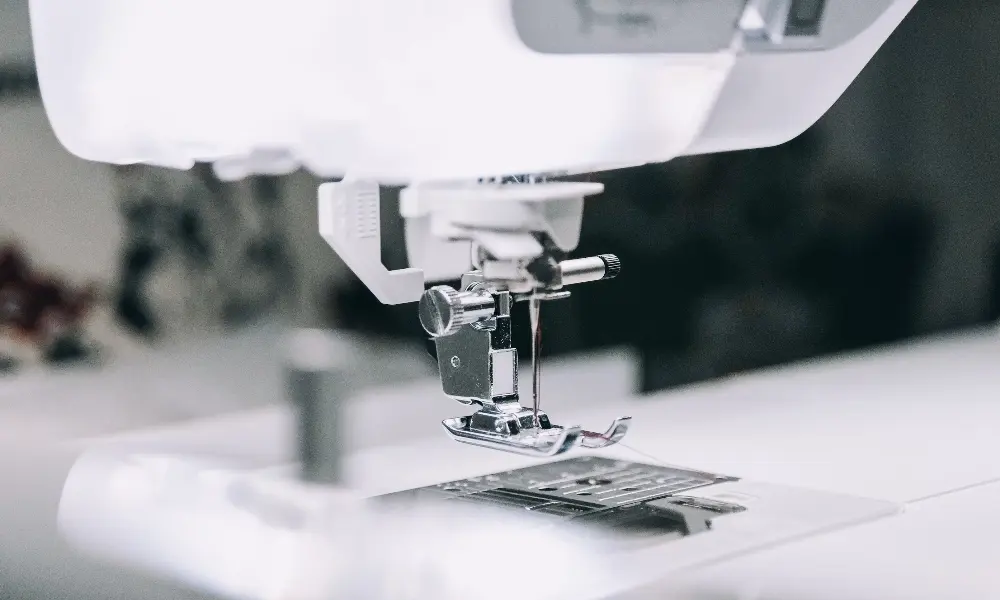
The main shaft is the timing backbone of a specialized sewing machine. It converts motor rotation into the synchronized mechanical movement that drives the needle bar, hook, looper, feed mechanism, and automated attachments. Cam systems shape that rotation into precise machine functions. When the main shaft runs true and the cam timing is locked to the correct stitch position, every cycle repeats predictably. When either drifts, the result is usually skipped stitches, uneven stitch length, heavy vibration, or damaged parts.
This guide explains how main shaft and cam systems work in cam-driven machines such as bar tacking, buttonholing, pocket setting, pattern sewing, and multi-needle operations. It keeps the discussion grounded in stitch and seam classification from ISO 4915 [1] and ISO 4916 [2], and in machine safety requirements from ISO 10821 [3].
Why the Main Shaft Is the Timing Backbone
Every stitch-forming motion depends on one rotating reference point. In most industrial ماكينة الخياطةs, that reference is the main shaft. The motor either drives the shaft through a belt and pulley system, or in direct-drive machines, the motor and main shaft share the same axis. From the main shaft, timing is distributed through cranks, eccentrics, cams, levers, and links.
On a lockstitch machine, the main shaft drives the needle bar crank, the thread take-up lever, and the rotary hook through a timing belt or gear train. On specialized machines, the same shaft often carries additional cams that trigger functions such as thread trimming, presser foot lift, clamping, folding, or pattern movement. This is why a special function machine is not simply a standard machine with a different needle plate. Its mechanical architecture is organized around the main shaft and the auxiliary motions it controls.
The main shaft needs to be rigid, well-supported, and correctly phased. If the shaft has axial or radial play, the entire machine loses its time reference. Maintenance therefore starts with checking the main shaft bearings, shaft runout, and locking collars before chasing more complex faults.
How Cam Systems Turn Rotation into Machine Function
A cam is a mechanical profile that converts rotary motion into controlled linear or oscillating motion. In sewing equipment, cams commonly appear as plate cams, groove cams, drum cams, or edge cams. A cam follower rides against the cam surface and transfers that profile to a linkage, slide, or lever.
The shape of the cam determines three things:
- When the motion starts in the stitch cycle.
- How far the connected part travels.
- How long the part stays in a given position.
For example, a cam may briefly lift the presser foot at a specific main shaft angle, or it may swing a folder into position before the needle enters the material. In a pattern sewing machine, cam or electronic pattern control defines the path and sequence of the sewing head.
A mechanical cam system is relatively simple to inspect because the motion is visible. The operator or technician can rotate the handwheel slowly and watch where the cam follower starts to move relative to a fixed reference mark. Electronic controls may replace some mechanical cams, but many specialized operations still rely on a mechanical cam set because the motion must be repeatable and robust under continuous load.
Cam Profiles in Different Specialized Machines
Different specialized machines use main shaft and cam combinations in different ways. The table below summarizes the typical mechanical role in several common cam-driven operations.
| Machine type | Main shaft and cam role | Typical timing concern |
|---|---|---|
| Bar tacking machine | Drives stitch-forming motion and pattern length control | Stitch density, tack length, and clamp release phasing |
| Button holing machine | Coordinates needle bar motion, cutting, and gimp feed | Cut timing, stitch width, and corner stitch position |
| Automatic pocket setter machine | Synchronizes folding, clamping, and stitching actions | Folder movement, panel clamping, and start position |
| Multi needle machine | Drives multiple needle bars and looper timing from a common shaft | Needle-to-looper spacing and parallel row alignment |
| Template machine | May use electronic or mechanical cams to follow a template path | Repeatability across cycles and corner speed changes |
In a button holing machine, the main shaft must coordinate the needle bar, the cutting mechanism, and the feed in a tight sequence. If the cam that commands the knife returns too early or too late, the machine can cut the thread or tear the fabric. That is why timing verification on these machines usually includes a slow handwheel rotation with the material removed.
Wear Points That Cause Timing Drift
Most cam-related timing faults come from a small number of wear points:
- Main shaft bearings. Radial or axial play changes the relationship between the shaft reference and every attached cam.
- Cam followers. A worn follower produces a slightly different motion profile, usually first visible as reduced stroke or late action.
- Cam grooves and lobes. Groove wear tends to develop on the loaded side of the profile. This changes acceleration and dwell timing.
- Keys, set screws, and locking collars. A loose key can allow the cam to rotate a few degrees on the shaft, causing a sudden timing error.
- Timing belts and gears. Belt stretch or worn gear teeth can shift the phase between the main shaft and the hook or looper.
- Linkages and pivot pins. Cumulative play in the linkage can make the follower motion less precise even when the cam itself is still within tolerance.
The symptom often depends on which element is worn. A worn main shaft bearing usually creates broad noise and vibration. A worn cam follower more often produces a specific action that is late or shorter than expected. Loose cam timing can create an intermittent defect because the shift may vary with load or speed.
ISO 10821 [3] provides safety requirements for industrial sewing machines, including guarding and stopping performance. That matters here because operators may need to rotate the handwheel during setup. A machine with excessive play or uncertain cam phasing should be powered down and locked out before inspection.
Retiming and Maintenance Checks
Before retiming any cam-driven specialized machine, record the current setting. Mark the main shaft angle at the reference point, note the position of each cam relative to the shaft, and photograph the assembly if possible. Then work through the following sequence:
- Check the main shaft for axial and radial play.
- Verify that the shaft reference mark aligns with the manufacturer setting.
- Inspect each cam follower for flat spots, roughness, or excessive clearance.
- Check timing belts and gears for wear, tension, and phase marks.
- Rotate the shaft slowly through one full cycle and note where each action begins and ends.
- Compare the observed sequence with the machine manual or a known-good reference machine.
- Lock all fasteners with the correct torque and recheck the timing after the first short run.
Many timing problems are not corrected by moving a cam. If a cam follower is worn or a bearing has play, retiming will only produce a temporary fix. The correct repair is to restore the mechanical baseline first and then set the cam position.
Timing faults are rarely solved by parts replacement alone; service depth matters. <Meetlin Group Conducts Technical Exchange With Zhejiang Qixing Empowering Service Upgrading Of Unique Series Equipment In The Market> covers how stronger technical exchange improves support for timing-sensitive UNIQUE series machines.
Need a machine-level timing check? If you are troubleshooting a main shaft or cam system, email sales@tzpioneer.com with your current specialized machine model, operation, motor type, and the timing symptom you are seeing. A service engineer will send back a focused diagnostic checklist and compatible machine options.
Matching Cam-Driven Machines to the Operation
Machine selection should start with the stitch class and the required operation. ISO 4915 [1] classifies stitch types by thread interlacing method, while ISO 4916 [2] classifies seam types by fabric arrangement. Together they help define whether the machine must produce a lockstitch, chainstitch, overedge stitch, or another stitch class before you evaluate the mechanical system.
For a high-volume trouser line, a multi needle machine may be selected for parallel rows that must stay equally spaced across the full run. That spacing depends on the needle bar geometry, but also on how rigidly the main shaft system maintains phase between needles and loopers. For a denim operation, a bar tacking machine must repeat the same tack shape at high speed without shifting the clamp sequence.
The same principle applies to automated work cells. A factory may choose a template machine for repeatable pocket and placket stitching, or a special function machine for non-standard tasks. In each case, the buyer should ask how timing is controlled, how cam changes are performed, and whether wear parts are easily accessible.
A practical example is a workwear factory running an automatic pocket setter machine. If the folder starts too late at high speed, the panel may slip before the first needle penetration. The fix may not be a new folder or a different operator; it may be a worn cam follower or a loose timing collar that shifts under load. That is the level of detail that separates a successful specialized machine investment from a recurring quality problem.
A broader look at equipment categories helps buyers avoid confusing timing architecture with machine class. <الاختلافات الرئيسية بين آلات قطع الخياطة والتطريز> covers the different mechanical systems behind common specialized equipment.
For factories planning automated lines, timing architecture is part of a larger capital decision. <التكنولوجيا تُمكّن الموضة، Nicerbt Unique تحضر القمة التقنية لموردي Hm لتمكين الترقية الذكية لسلسلة توريد الملابس> covers how supplier technical partnerships shape automation choices.
Get a Main Shaft and Cam Evaluation for Your Specialized Machines
If you are planning a specialized machine line or chasing a recurring timing fault, send us the following details for a focused recommendation:
- Machine type and current model
- Stitch class or operation required
- Main shaft speed and motor type
- Cam function involved: trimming, clamping, folding, pattern, or looper timing
- Timing symptom, photos, or short videos if available
- Target output, fabric type, and workspace or power constraints
Email: sales@tzpioneer.com
Phone/WhatsApp: +86-18069305333
We will recommend a compatible specialized machine or retrofit path, with technical support focused on the main shaft and cam system rather than a generic machine list.
Frequently Asked Questions
How do I know whether a cam fault is in the main shaft or the cam itself?
Check the main shaft first. If you feel axial or radial play, the shaft reference is no longer stable. If the shaft is tight and the timing mark is correct, rotate the handwheel slowly and watch the cam follower. A late or reduced motion usually points to the cam profile, follower, or linkage.
Do direct-drive specialized machines still use main shafts and cams?
Most still use a main shaft and mechanical cams for critical motions, even when the motor is direct-drive. Direct-drive mainly changes how the motor is coupled to the shaft; it does not automatically eliminate mechanical timing components.
How often should cam followers and main shaft bushings be checked?
They should be checked as part of preventive maintenance, typically during scheduled service intervals rather than only after a defect appears. The frequency depends on speed, duty cycle, and how clean the working environment is.
Can a cam-driven specialized machine be retimed for a different operation?
Some machines allow cam or pattern changes for different operation sizes, but the basic stitch class and mechanical design remain fixed. Retiming is usually about restoring the intended sequence, not converting the machine into a completely different type.
What is the first sign that a main shaft has excessive runout?
The first sign is often a change in machine sound or vibration, followed by intermittent stitch length variation. In cam-driven equipment, a shifting main shaft may cause functions such as trimming or clamping to become late or inconsistent.
References
[1] ISO 4915:1991, Textiles — Stitch types — Classification and terminology.
[2] ISO 4916:1991, Textiles — Seam types — Classification and terminology.
[3] ISO 10821:2005, Industrial sewing machines — Safety requirements for sewing machines, units and systems.
إذا كنت مهتمًا، فراجع هذه المقالات ذات الصلة:
Unique Debuts At Gtb Expo Empowering Bangladeshs Garment Industry Upgrade With Customized Automated Solutions
Meetlin Group Conducts Technical Exchange With Zhejiang Qixing Empowering Service Upgrading Of Unique Series Equipment In The Market
Empowering Hanoi Shaping The Future Meetlin Successfully Hosts Vietnam Garment Industry 4 0 Summit
Unveiling Ceremony Of Milin Group Taizhou Center
Unique Team Visited The Southeast Asian And South Asian Markets