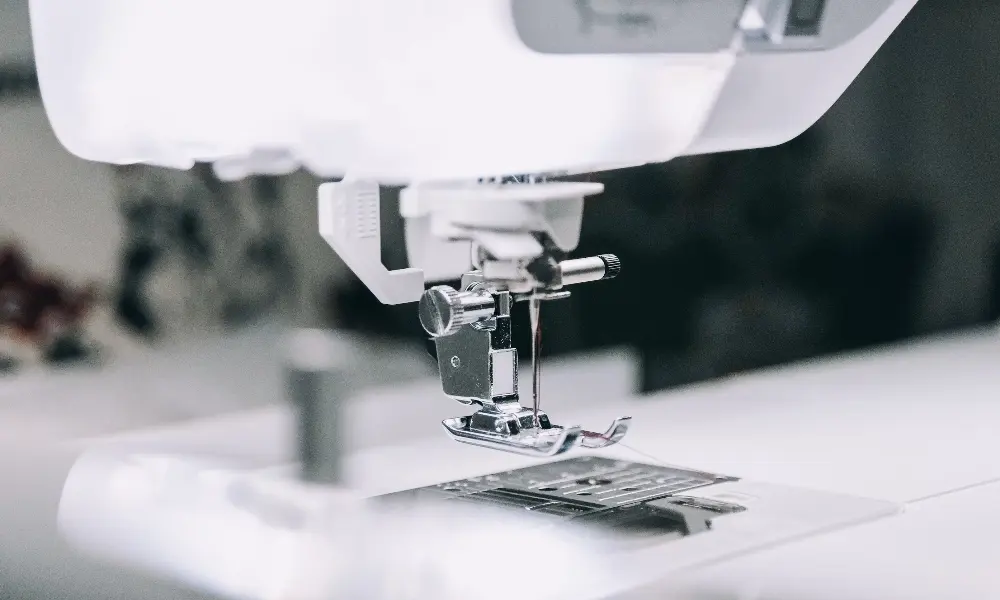
Industrial ماكينة الخياطة needles look like a small, standardized component, but the markings on the shank or pack decide whether a line runs clean or a machine starts skipping stitches, breaking thread, and damaging fabric. The problem is that factory buyers often reorder from habit: the same brand, the same box, the same size. When a new fabric or machine enters the line, that habit becomes expensive.
The correct way to read a needle is to separate three identifiers: size, system, and point. None of them is optional.
What the Markings on a Needle Pack Actually Mean
A sewing machine needle is not universal. Two needles may both appear in the storeroom as “size 14” and still be completely different because they are built for different machine classes. The marking system exists to prevent exactly that mismatch.
Most industrial packs carry three main codes: a size value, a system reference, and a point shape code. The size controls fabric penetration and thread clearance. The system controls mechanical fit in the needle bar and correct hook timing. The point controls how the tip enters the material.
Needle markings only work when they are read as part of a standardized parts specification.
(https://uniquemachine.cn/your-one-stop-sewing-equipment-procurement-platform) covers how to organize machine and consumable selection in one repeatable procurement routine.
Needle Size: Nm and Singer Number
Metric needle size, usually written as Nm, is the most technically direct marking. Nm 80 means the blade diameter is 0.80 mm. Nm 100 means 1.00 mm. This is the primary reference for matching a needle to fabric thickness and thread size [1].
Many buyers also know the older number system, often called the Singer size. A 90/14 needle carries both markings: 90 is the Nm size, and 14 is the Singer number. The Singer number is a classification, not a direct diameter in hundredths of a millimeter.
| Metric size (Nm) | Common number size | Typical fabric range |
|---|---|---|
| 65 | 9 | Light silk, fine lining |
| 70 | 10 | Lightweight synthetics, fine knits |
| 75 | 11 | Light shirting, delicate woven |
| 80 | 12 | General woven, blouse, standard knit |
| 90 | 14 | Medium woven, light denim |
| 100 | 16 | Denim, workwear, heavy woven |
| 110 | 18 | Canvas, coating, dense denim |
| 120 | 19 | Heavy canvas, coated textiles |
| 130 | 21 | Upholstery, bags, thick layers |
| 140 | 22 | Heavy technical textiles, dense leather |
A needle that is too small for the thread usually causes thread breakage and poor loop formation. A needle that is too large can leave visible penetration marks on tightly woven or coated fabric. The correct choice is a balance between fabric weight, thread size, seam density, and machine speed.
Needle System: Fit Before Performance
The system code is the first compatibility gate. It tells the buyer which needle bar, hook, and throat plate geometry the needle was designed to work with. Nm 90 does not mean the same thing in every system. The system reference may appear as a manufacturer code, an industrial system number, or both [2].
On industrial lockstitch machines, buyers commonly see DB×1 or DP×5, sometimes written with the equivalent system reference 134 or 135×5. On overlock machines and chainstitch equipment, the codes often look different, such as DC×27, DV×57, or UY×128GAS. These are not interchangeable across platforms.
The practical rule for procurement is simple: the machine manual or serial plate gives the recommended needle system. The needle pack should carry the same system reference or a documented equivalent from the needle maker. If the system is not confirmed, the correct point and size will not compensate for a mechanical mismatch.
Point Codes and Fabric Matching
Point codes describe the shape of the needle tip. They differ by manufacturer, but the logic is common across industrial needle producers. A round point passes between yarns; a sharper round point penetrates dense woven material more cleanly; a ball point deflects around knit loops rather than cutting them; cutting points are designed for dense, non-fibrous, or coated materials [3].
| Point family | Common marking examples | Typical application |
|---|---|---|
| Regular round | R, RG | Standard woven garments |
| Light ball | SES, SEN | Light knits, underwear, fine elastic |
| Medium ball | SUK | Medium knit, technical knit |
| Heavy ball | SAN | Coarse knit, elastic composites |
| Sharp/acute | SPI, FFG | Dense woven, microfibre, thin coated fabric |
| Cutting points | P, PCL, PCR, S | Leather, PVC, coated textiles |
These abbreviations are not identical across every manufacturer. SES from one needle maker may not map exactly to another maker’s light-ball code. When the point is critical, the buyer should request the needle maker’s point chart and match it to the main fabric group.
Avoid These Needle Specification Mistakes
Most needle-related rejects on a sewing floor come from four specification errors.
First, reordering by Singer size only. Two size-14 needles can belong to different systems and different point families. The size alone does not define the part.
Second, mixing point codes from different brands without checking equivalence. A second supplier may use a similar name but a slightly different tip profile, which changes performance on knits or coated fabrics.
Third, assuming a heavier needle is automatically stronger. A heavy needle may solve needle breakage on dense fabric, but it can also damage material, increase penetration resistance, and create poor seam appearance on light or tight constructions.
Fourth, keeping one point shape for the entire factory. Woven and knit lines normally need different point families. The correct point is not a preference; it is part of the منتجion specification.
Needle selection is easier when you start from the machine model and the main fabric group. Email sales@tzpioneer.com with the machine brand and model, the needle system currently fitted, and the fabric range you sew; we will return a clear size, system and point recommendation.
Putting the Markings Into a Buyable Specification
A factory can reduce needle-related downtime by writing a simple specification for every machine class, not just for the general store. The minimum line should include:
- Machine model and needle system
- Nm size and Singer number if needed
- Point code
- Thread size and thread type
- Main fabric group
- Monthly or quarterly consumption
For sewing machine accessories and replacement parts, the same specification logic applies. A clear specification prevents the buyer from accepting a lower-cost alternative that is mechanically close but not equivalent.
Needle Support for Your Production Line
At Taizhou Unique Machine Technology Co., Ltd. we supply industrial sewing equipment, accessories, and production-line solutions. If you are standardizing needle specifications across a new line or auditing a current consumables list, send the machine list, current needle system, fabric samples, and monthly needle consumption to sales@tzpioneer.com or call +86-18069305333.
We will help you turn needle markings into a repeatable selection table for each machine, so the store keeps the right system, size, and point in stock.
التعليمات
How do I find the correct needle system for my machine?
Check the machine manual or serial plate first. Most industrial machines list the recommended needle system there. You can also measure and compare the shank diameter and butt-to-eye length, but it is safer to confirm the system code through the machine supplier or needle manufacturer’s cross-reference table.
What is the difference between Nm 90 and size 14?
They usually describe the same needle size. Nm 90 is the metric value and means a 0.90 mm blade diameter. 14 is the older Singer number. Both are commonly printed together as 90/14.
Can I use a ball point needle on woven fabric?
You can, but a regular round or sharp point is usually more accurate on dense woven material. A heavy ball point may deflect more than necessary and create uneven stitch formation. Use ball points mainly for knits, elastic fabrics, and materials where yarn damage must be avoided.
Do color bands replace printed needle markings?
No. Some brands use color bands for quick visual sorting, but color coding can vary by manufacturer. The printed size, system, and point code remain the only reliable record for ordering and quality control.
How often should a factory re-check needle specifications?
Every time the fabric, thread, machine, or needle supplier changes. Even if the machine stays the same, a new fabric family or a substitute needle brand can require a different point or size. A short specification audit before the change is cheaper than a run of seam defects.
مراجع
[1] ISO 8239:1987, Sewing machine needles — Fitting dimensions and designation, International Organization for Standardization.
[2] Carr, H., & Latham, B. (2000). The Technology of Clothing Manufacture, 3rd ed., Blackwell Science.
[3] Cooklin, G. (1991). Introduction to Clothing Manufacture, Blackwell Scientific Publications.
إذا كنت مهتمًا، فراجع هذه المقالات ذات الصلة:
التكنولوجيا تُمكّن الموضة، Nicerbt Unique تحضر القمة التقنية لموردي Hm لتمكين الترقية الذكية لسلسلة توريد الملابس
تألق فريد في Itcpe Vietnam Texprint 2025 يجذب الحشود وأضواء الإعلام
الظهور الأول للقوة الفريدة في جيام 2024